配
| ||||||||
Translingual
Han character
配 (Kangxi radical 164, 酉+3, 10 strokes, cangjie input 一田尸山 (MWSU), four-corner 17617, composition ⿰酉己)
References
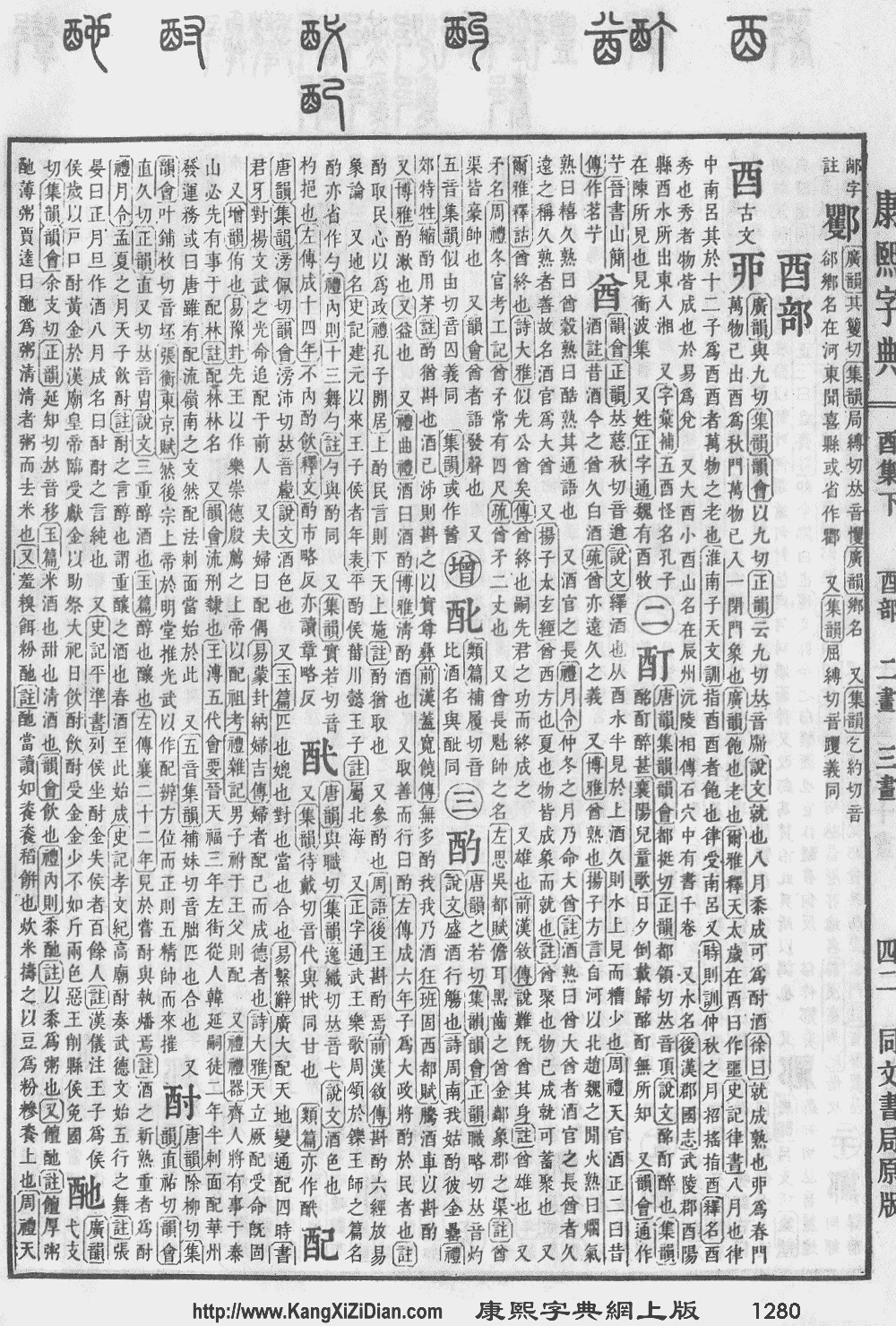
- KangXi: page 1280, character 9
- Dai Kanwa Jiten: character 39771
- Dae Jaweon: page 1779, character 5
- Hanyu Da Zidian (first edition): volume 6, page 3574, character 3
- Unihan data for U+914D
Chinese
| trad. | 配 | |
|---|---|---|
| simp. # | 配 | |

Pronunciation
Definitions
配
Synonyms
Dialectal synonyms of 菜 (“dish; vegetable or meat dish”) [map]
Compounds
Derived terms from 配
|
|
|
Japanese
| Shinjitai | 配 | |
| Kyūjitai [1] |
配󠄃 配+ 󠄃?(Hanyo-Denshi) (Moji_Joho) |
 |
| The displayed kanji may be different from the image due to your environment. See here for details. | ||
Kanji
配
Readings
Compounds
Compounds
- 配剤 (haizai, “dispensation”)
- 配置 (haichi, “formation, arrangement, layout”)
- 配置転換 (haichi tenkan, “job rotation”)
- 配点 (haiten, “allocation of points”)
- 配当 (haitō, “share; dividend”)
- 配慮 (hairyo, “consideration, attention, care”)
- 配列 (hairetsu, “arrangement; (programming) array”)
- 軍配 (gunbai, “type of war fan”)
- 気配 (kehai, “sign, indication, hint”)
- 交配 (kōhai, “mating, breeding”)
- 勾配 (kōbai, “slope, incline”)
- 支配 (shihai, “rule; control”)
- 心配 (shinpai, “worry, anxiety”)
- 分配 (bunpai, “distribution, allocation”)
Korean
Hanja
Vietnamese
This article is issued from Wiktionary. The text is licensed under Creative Commons - Attribution - Sharealike. Additional terms may apply for the media files.