闘
| ||||||||
Translingual
| Japanese | 闘 |
|---|---|
| Simplified | 斗 |
| Traditional | 鬥/鬭 |
Han character
闘 (Kangxi radical 169, 門+10, 18 strokes, cangjie input 日弓一廿戈 (ANMTI), composition ⿵門𭔰)
References
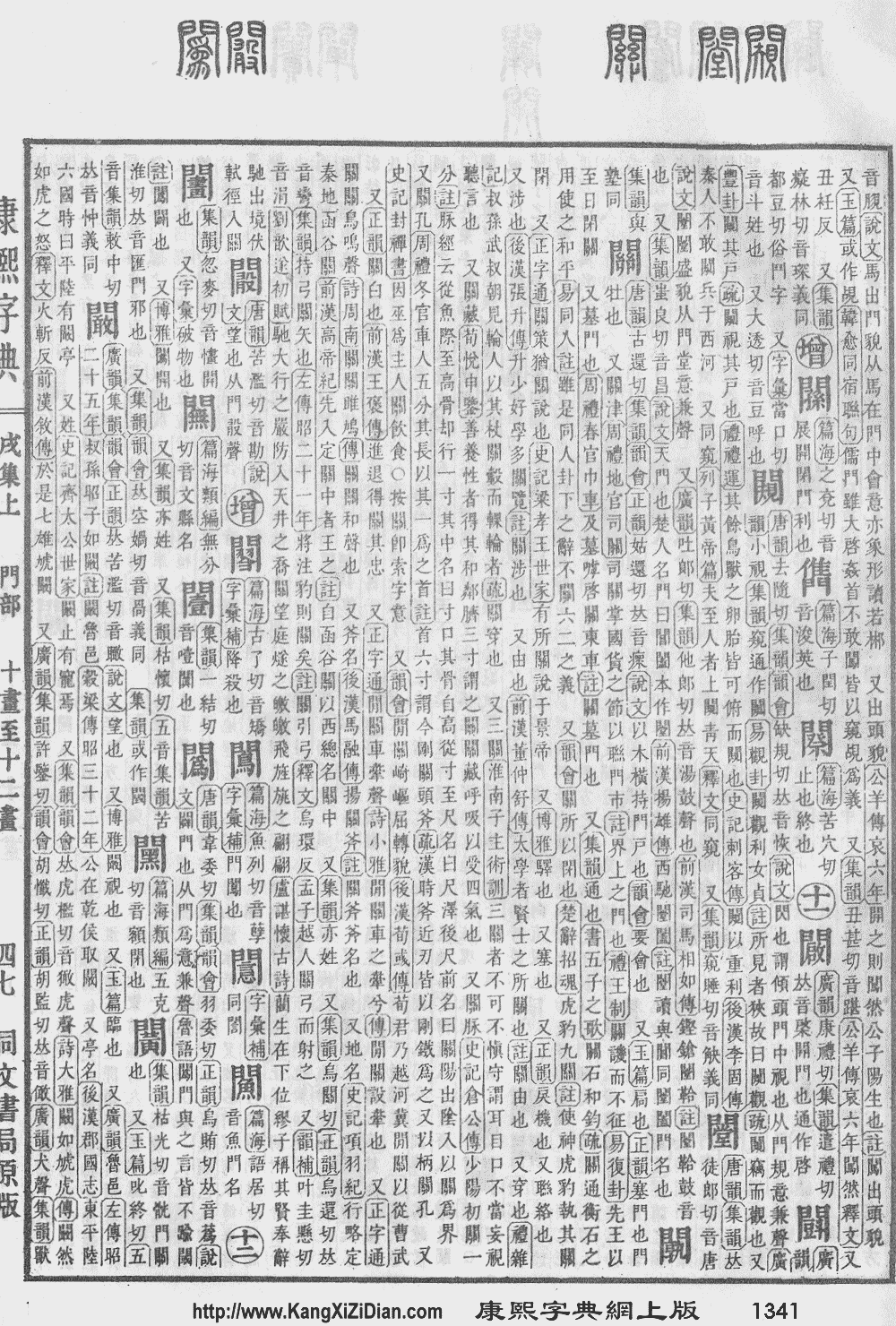
- KangXi: not present, would follow page 1341, character 3
- Dai Kanwa Jiten: character 45649
- Dae Jaweon: page 1845, character 9
- Hanyu Da Zidian (first edition): volume 7, page 4312, character 6
- Unihan data for U+95D8
Chinese
| For pronunciation and definitions of 闘 – see 鬥 (“to fight; to struggle; to make animals fight; etc.”). (This character, 闘, is a variant form of 鬭, which is in turn a variant form of 鬥.) |
Japanese
| 闘 | |
| 鬭 |
Glyph origin
Japanese Simplified from 鬪 (鬥 (dòu) → 門 (mén)), itself a simplified variant of 鬭, ultimately Phono-semantic compound (形聲) , with semantic 鬥 (“fight”) (unrelated to 門).
Phonetic is originally 斲 but this is graphically simplified to 𭔰; compare 尌, which is similar.
Compounds
- 闘牛 (tōgyū): bullfighting
- 闘牛士 (tōgyūshi): bullfighter
- 闘鶏 (tōkei): cockfighting
- 闘犬 (tōken): dogfighting
- 闘争 (tōsō): struggle
- 拳闘 (kentō): boxing
- 闘魂 (tōkon)
- 闘士 (tōshi)
- 闘志 (tōshi): fighting spirit
- 健闘 (kentō): good fight, strenuous effort
- 戦闘 (sentō): battle, combat
- 闘将 (tōshō)
- 敢闘 (kantō)
- 戦闘機 (sentōki): fighter plane
- 奮闘 (funtō): struggle
- 格闘する (kakutōsuru): struggle with/tackle (a problem)
This article is issued from Wiktionary. The text is licensed under Creative Commons - Attribution - Sharealike. Additional terms may apply for the media files.