鬭
| ||||||||
Translingual
| Japanese | 闘 |
|---|---|
| Simplified | 斗 |
| Traditional | 鬥/鬭 |
Han character
鬭 (Kangxi radical 191, 鬥+14, 24 strokes, cangjie input 中弓口一中 (LNRML), four-corner 77121, composition ⿵鬥斲)
Derived characters
- 𡆞
Related characters
- 鬪, 闘 (Variant forms of 鬭)
References
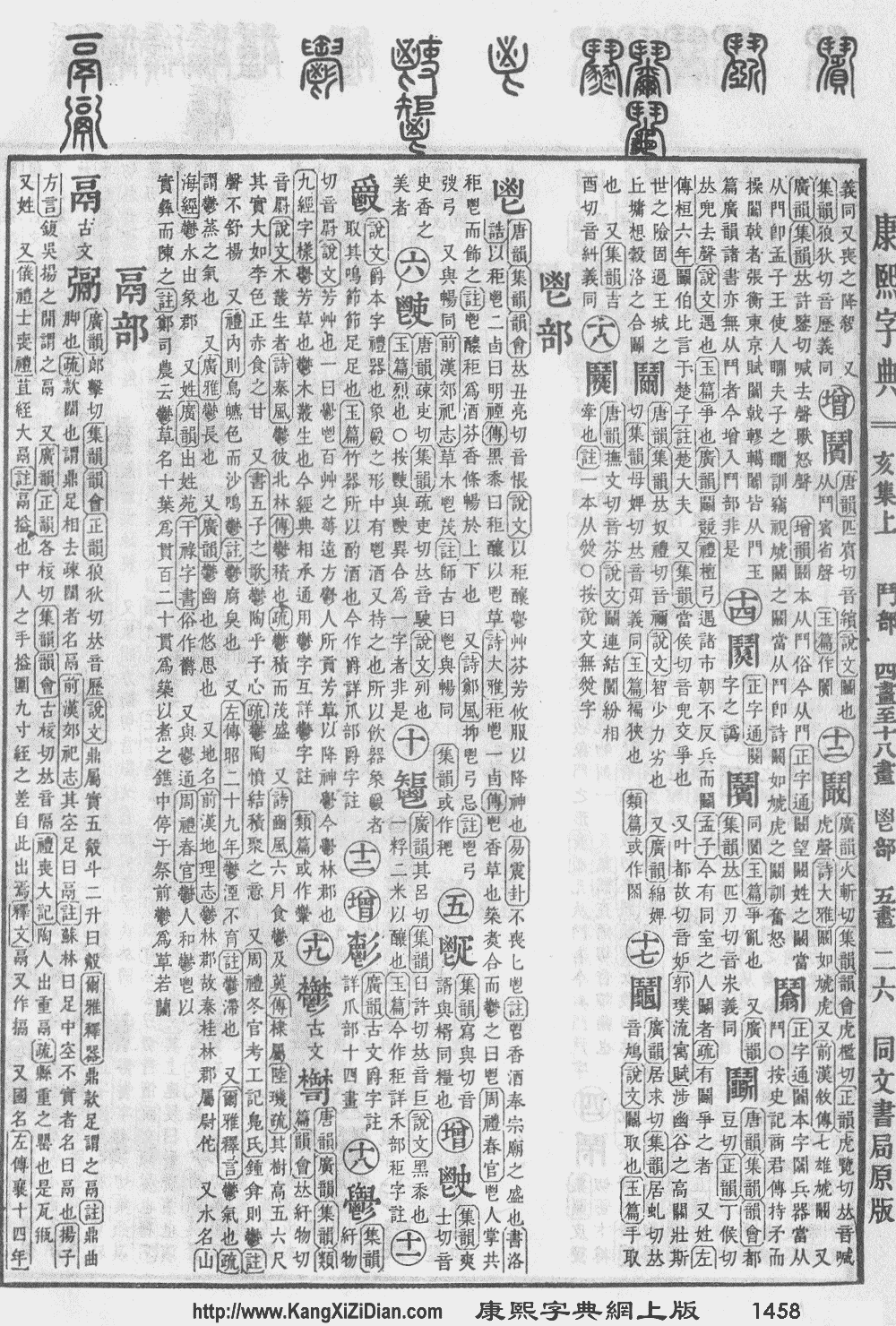
- KangXi: page 1458, character 6
- Dai Kanwa Jiten: character 45657
- Dae Jaweon: page 1990, character 9
- Hanyu Da Zidian (first edition): volume 7, page 4517, character 3
- Unihan data for U+9B2D
Chinese
Glyph origin
Phono-semantic compound (形聲, OC *toːɡs) : semantic 鬥 (“fight”) + phonetic 斲 (OC *rtoːɡ)
Japanese
Kanji
鬭
- This term needs a translation to English. Please help out and add a translation, then remove the text
{{rfdef}}.
Vietnamese
Han character
- This term needs a translation to English. Please help out and add a translation, then remove the text
{{rfdef}}.
References
This article is issued from Wiktionary. The text is licensed under Creative Commons - Attribution - Sharealike. Additional terms may apply for the media files.