阪

See also: 坂
阪 U+962A, 阪
CJK UNIFIED IDEOGRAPH-962A
← 阩
[U+9629]
CJK Unified Ideographs 阫 →
[U+962B]

Translingual

Han character

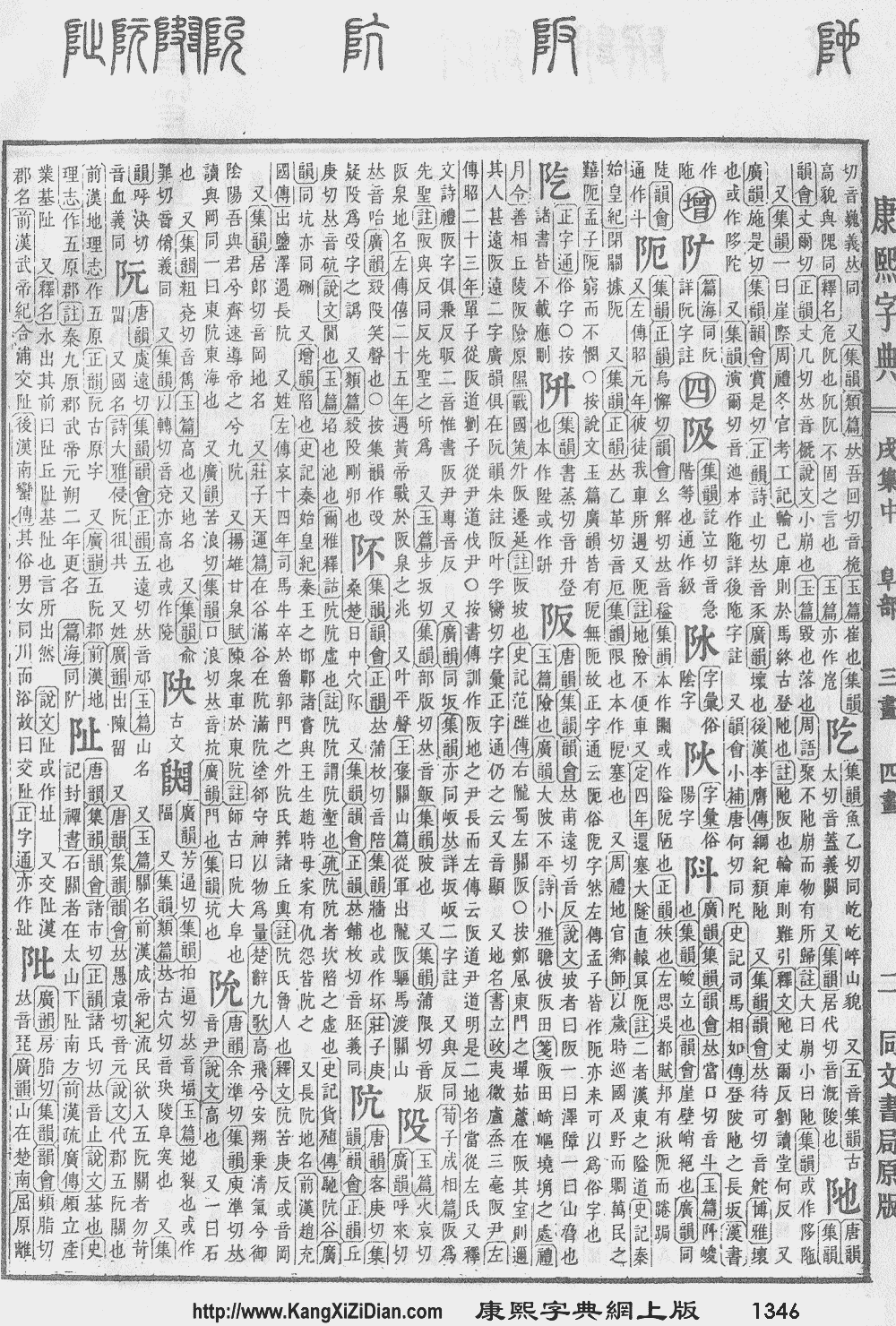
阪 (Kangxi radical 170, 阜+4, 7 strokes, cangjie input 弓中竹水 (NLHE), four-corner 71247 or 72247, composition ⿰阝反)

Derived characters

  • 𡋴

References

  • KangXi: page 1346, character 11
  • Dai Kanwa Jiten: character 41562
  • Dae Jaweon: page 1848, character 11
  • Hanyu Da Zidian (first edition): volume 6, page 4117, character 12
  • Unihan data for U+962A

Chinese

trad. 阪
simp. 坂*/阪
alternative forms 坂
岅/坂
阪 - simplified form used in some place names

Glyph origin

Historical forms of the character 阪
Warring States Shuowen Jiezi (compiled in Han)
Chu slip and silk script Small seal script

Phono-semantic compound (形聲, OC *braːnʔ, *panʔ) : semantic 阝 (“mound”) + phonetic 反 (OC *panʔ, *pʰan) – hill, slope.

Pronunciation


Rime
Character 阪 阪
Reading # 1/2 2/2
Initial (聲) 幫 (1) 並 (3)
Final (韻) 元 (66) 刪 (69)
Tone (調) Rising (X) Rising (X)
Openness (開合) Closed Open
Division (等) III II
Fanqie 府遠切 扶板切
Reconstructions
Zhengzhang
Shangfang
/pʉɐnX/ /bˠanX/
Pan
Wuyun
/pʷiɐnX/ /bᵚanX/
Shao
Rongfen
/piuɐnX/ /bɐnX/
Edwin
Pulleyblank
/puanX/ /baɨnX/
Li
Rong
/piuɐnX/ /banX/
Wang
Li
/pĭwɐnX/ /banX/
Bernard
Karlgren
/pi̯wɐnX/ /bʱanX/
Expected
Mandarin
Reflex
fǎn bàn
Expected
Cantonese
Reflex
faan2 baan6
Baxter–Sagart system 1.1 (2014)
Character 阪
Reading # 1/1
Modern
Beijing
(Pinyin)
bǎn
Middle
Chinese
‹ pjonX ›
Old
Chinese
/*pa[n]ʔ/
English slope, bank

Notes for Old Chinese notations in the Baxter–Sagart system:

* Parentheses "()" indicate uncertain presence;
* Square brackets "[]" indicate uncertain identity, e.g. *[t] as coda may in fact be *-t or *-p;
* Angle brackets "<>" indicate infix;
* Hyphen "-" indicates morpheme boundary;

* Period "." indicates syllable boundary.
Zhengzhang system (2003)
Character 阪 阪
Reading # 1/2 2/2
No. 2962 2971
Phonetic
component
反 反
Rime
group
元 元
Rime
subdivision
1 1
Corresponding
MC rime
阪 反
Old
Chinese
/*braːnʔ/ /*panʔ/
Notes 同阪

Definitions

阪

  1. hillside farmland
  2. slope

Compounds

  • 大阪 (Dàbǎn)
  • 峻阪
  • 蒲阪
  • 阪阻
  • 峻阪鹽車/峻阪盐车

Japanese

Kanji

阪

(common “Jōyō” kanji)

  1. slope, hillside

Readings

Compounds

Etymology 1

Kanji in this term
阪
さか
Grade: 4
kun’yomi
For pronunciation and definitions of 阪 – see the following entry.
【さか】
[noun] slope; hill
Alternative spellings
坂, 阪
(This term, 阪, is an alternative (only in proper nouns) spelling of the above term.)

Etymology

Kanji in this term
阪
はん
Grade: 4
on’yomi

From Middle Chinese 阪 (MC pʉɐnX, bˠanX).

Pronunciation

  • IPA(key): [hã̠ɴ]

Affix

阪(はん) • (han) ←はん (fan)?

  1. Short for 大阪 (Ōsaka, “Ōsaka (a city in Japan)”).
    阪神(はんしん) (hanshin)

Korean

Etymology

From Middle Chinese 阪 (MC bˠanX). Recorded as Middle Korean 판〮 (phán) (Yale: phan) in Hunmong Jahoe (訓蒙字會 / 훈몽자회), 1527.

Hanja

Wikisource 阪 (eumhun 언덕 판 (eondeok pan))

  1. Hanja form? of 판 (“slope; hill”).

Compounds

References

  • 국제퇴계학회 대구경북지부 (國際退溪學會 大邱慶北支部) (2007). Digital Hanja Dictionary, 전자사전/電子字典.

Vietnamese

Han character

阪: Hán Nôm readings: phản, bản

  1. This term needs a translation to English. Please help out and add a translation, then remove the text {{rfdef}}.
This article is issued from Wiktionary. The text is licensed under Creative Commons - Attribution - Sharealike. Additional terms may apply for the media files.