鞭
| ||||||||
Translingual
Han character
鞭 (Kangxi radical 177, 革+9, 18 strokes, cangjie input 廿十人一大 (TJOMK), four-corner 41546, composition ⿰革便)
References
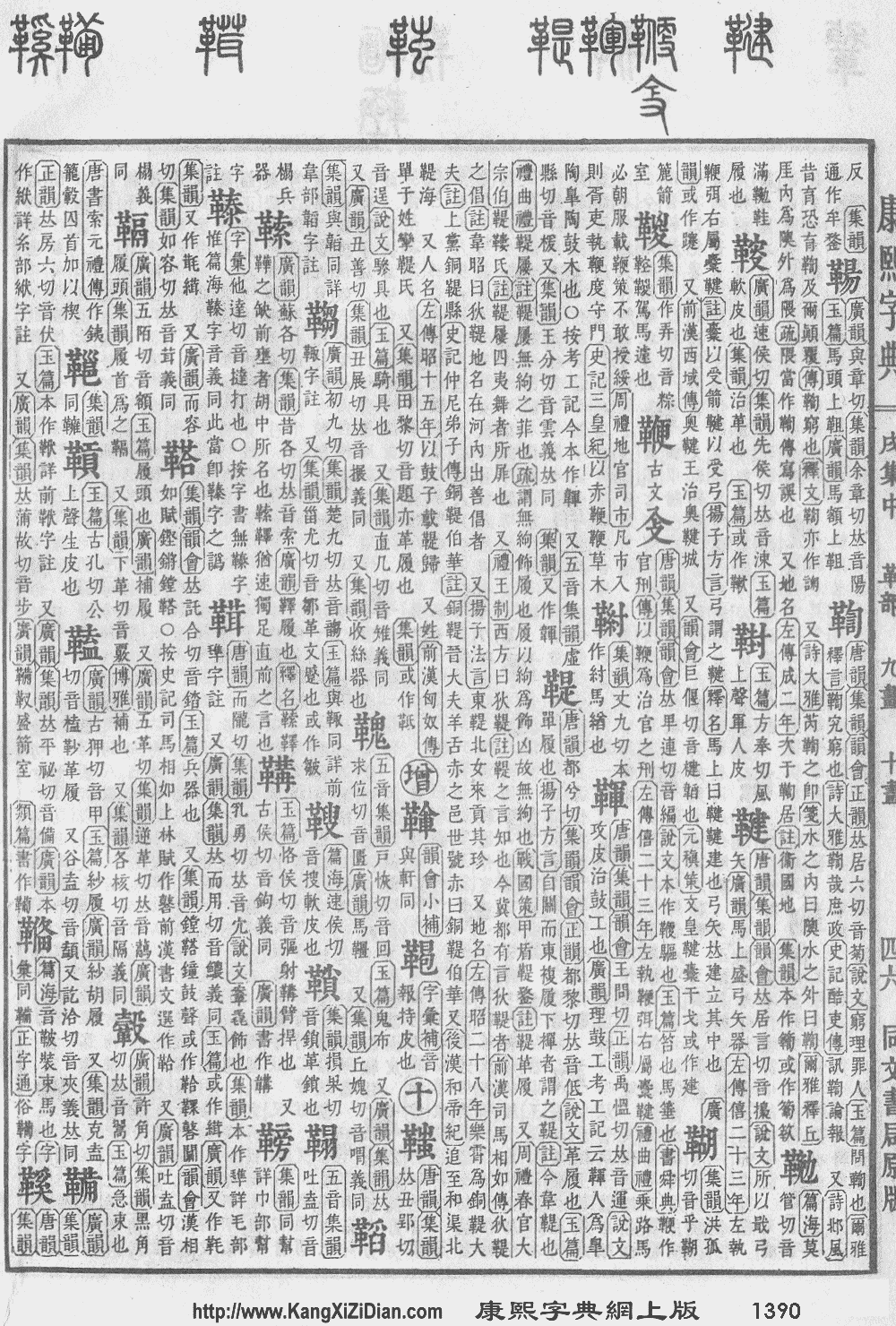
- KangXi: page 1390, character 9
- Dai Kanwa Jiten: character 42937
- Dae Jaweon: page 1904, character 30
- Hanyu Da Zidian (first edition): volume 7, page 4343, character 6
- Unihan data for U+97AD
Chinese
| simp. and trad. |
鞭 | |
|---|---|---|
| 2nd round simp. | 卞 | |

Pronunciation
Definitions
鞭
Compounds
Derived terms from 鞭
Japanese
Kanji
鞭
(“Jinmeiyō” kanji used for names)
- This term needs a translation to English. Please help out and add a translation, then remove the text
{{rfdef}}.
Readings
Etymology
| Kanji in this term |
|---|
| 鞭 |
| むち Jinmeiyō |
| kun’yomi |
(This etymology is missing or incomplete. Please add to it, or discuss it at the Etymology scriptorium.)
Noun
鞭 • (muchi)
- whip
- 鞭で打つ
- muchi de utsu
- to whip; to flog
- 1999 March 1, “グロス [Gross]”, in BOOSTER 1, Konami:
- ムチのように長い腕で、少し離れたところでも攻撃できる。
- Muchi no yō ni nagai ude de, sukoshi wa nareta tokoro de mo kōgeki dekiru.
- It attacks from a short distance with its long whip-like arms.
- ムチのように長い腕で、少し離れたところでも攻撃できる。
- 2000 July 13, “ツインテール [Twin-Tail]”, in Pharaoh’s Servant -ファラオのしもべ-, Konami:
- ムチのようなしっぽ2本を振り回し攻撃する、水中生物。
- Muchi no yō na shippo ni-hon o furimawashi kōgeki suru, suichū seibutsu.
- An aquatic creature that attacks by brandishing its 2 whip-like tails.
- ムチのようなしっぽ2本を振り回し攻撃する、水中生物。
- 鞭で打つ
Korean
Hanja
鞭 • (pyeon) (hangeul 편, revised pyeon, McCune–Reischauer p'yŏn, Yale phyen)
- This term needs a translation to English. Please help out and add a translation, then remove the text
{{rfdef}}.
Vietnamese
This article is issued from Wiktionary. The text is licensed under Creative Commons - Attribution - Sharealike. Additional terms may apply for the media files.