顙

See also: 颡
顙 U+9859, 顙
CJK UNIFIED IDEOGRAPH-9859
← 願
[U+9858]
CJK Unified Ideographs 顚 →
[U+985A]

Translingual

Han character

顙 (Kangxi radical 181, 頁+10, 19 strokes, cangjie input 水木一月金 (EDMBC), four-corner 11986, composition ⿰桑頁)

References

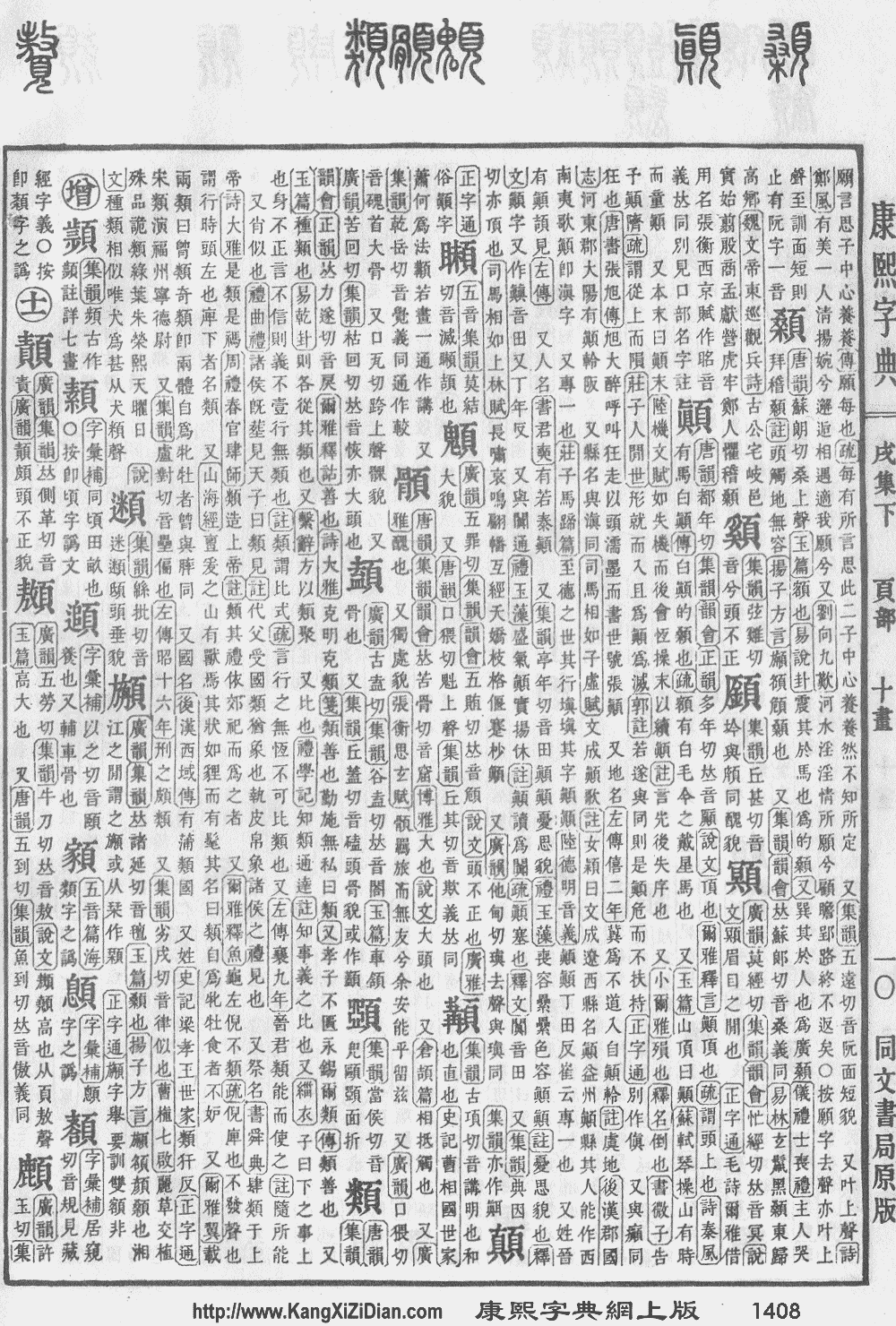
  • KangXi: page 1408, character 1
  • Dai Kanwa Jiten: character 43624
  • Dae Jaweon: page 1926, character 1
  • Hanyu Da Zidian (first edition): volume 7, page 4388, character 6
  • Unihan data for U+9859

Chinese

trad. 顙
simp. 颡
alternative forms 䫙

Glyph origin

Phono-semantic compound (形聲, OC *sŋaːŋʔ) : phonetic 桑 (OC *sŋaːŋ) + semantic 頁 (“head”).

Etymology

Unclear. Possibly from an Austroasiatic language; compare Proto-Munda *sv₂maŋ (“forehead”), which may be connected to Old Khmer saṅ (“to raise”) (Schuessler, 2007).

Pronunciation


Rime
Character 顙
Reading # 1/1
Initial (聲) 心 (16)
Final (韻) 唐 (101)
Tone (調) Rising (X)
Openness (開合) Open
Division (等) I
Fanqie 蘇朗切
Reconstructions
Zhengzhang
Shangfang
/sɑŋX/
Pan
Wuyun
/sɑŋX/
Shao
Rongfen
/sɑŋX/
Edwin
Pulleyblank
/saŋX/
Li
Rong
/sɑŋX/
Wang
Li
/sɑŋX/
Bernard
Karlgren
/sɑŋX/
Expected
Mandarin
Reflex
sǎng
Expected
Cantonese
Reflex
song2
Baxter–Sagart system 1.1 (2014)
Character 顙
Reading # 1/1
Modern
Beijing
(Pinyin)
sǎng
Middle
Chinese
‹ sangX ›
Old
Chinese
/*[s]ˁaŋʔ/
English forehead

Notes for Old Chinese notations in the Baxter–Sagart system:

* Parentheses "()" indicate uncertain presence;
* Square brackets "[]" indicate uncertain identity, e.g. *[t] as coda may in fact be *-t or *-p;
* Angle brackets "<>" indicate infix;
* Hyphen "-" indicates morpheme boundary;

* Period "." indicates syllable boundary.
Zhengzhang system (2003)
Character 顙
Reading # 1/1
No. 10982
Phonetic
component
桑
Rime
group
陽
Rime
subdivision
0
Corresponding
MC rime
顙
Old
Chinese
/*sŋaːŋʔ/

Definitions

顙

  1. † forehead
  2. † head
  3. † to kowtow

Synonyms

Compounds

  • 乾顙/干颡
  • 低顙/低颡
  • 加顙/加颡
  • 叩顙/叩颡
  • 啟顙/启颡
  • 喬聲顙氣/乔声颡气
  • 大顙/大颡
  • 搏顙/搏颡
  • 攮顙/攮颡
  • 方顙/方颡
  • 束顙/束颡
  • 泚顙/泚颡
  • 泣血稽顙/泣血稽颡
  • 浪聲顙氣/浪声颡气
  • 白顙/白颡
  • 的顙/的颡
  • 碓顙/碓颡
  • 稽顙/稽颡
  • 稽顙泣血/稽颡泣血
  • 稽顙肉袒/稽颡肉袒
  • 稽顙膜拜/稽颡膜拜
  • 闊顙/阔颡
  • 頂顙/顶颡
  • 頏顙/颃颡
  • 頓顙/顿颡
  • 頟顙/额颡
  • 頭顙/头颡
  • 顙叫子/颡叫子
  • 顙子/颡子
  • 顙子眼/颡子眼
  • 顙推之履/颡推之履
  • 顙根/颡根
  • 顙汗/颡汗
  • 顙泚/颡泚
  • 顙骨/颡骨
  • 顱顙/颅颡
  • 馰顙/馰颡
  • 黃金顙/黄金颡
  • 黃顙口/黄颡口 (Huángsǎngkǒu)
  • 黃顙魚/黄颡鱼
  • 鼓顙/鼓颡
  • 龍顙/龙颡

References

Japanese

Kanji

顙

(uncommon “Hyōgai” kanji)

  1. This term needs a translation to English. Please help out and add a translation, then remove the text {{rfdef}}.

Readings

  • On (unclassified): そう (sō)
  • Kun: ひたい (hitai)

Korean

Hanja

顙 • (sang) (hangeul 상, revised sang, McCune–Reischauer sang, Yale sang)

  1. This term needs a translation to English. Please help out and add a translation, then remove the text {{rfdef}}.

Vietnamese

Han character

顙: Hán Việt readings: tảng

  1. This term needs a translation to English. Please help out and add a translation, then remove the text {{rfdef}}.
This article is issued from Wiktionary. The text is licensed under Creative Commons - Attribution - Sharealike. Additional terms may apply for the media files.