鶏
| ||||||||
Translingual
| Traditional | 雞 |
|---|---|
| Simplified | 鸡 |
| Japanese | 鶏 |
| Korean | 鷄 |
Han character
鶏 (Kangxi radical 196, 鳥+8, 19 strokes, cangjie input 月人竹日火 (BOHAF), composition ⿰⿱爫夫鳥)
References
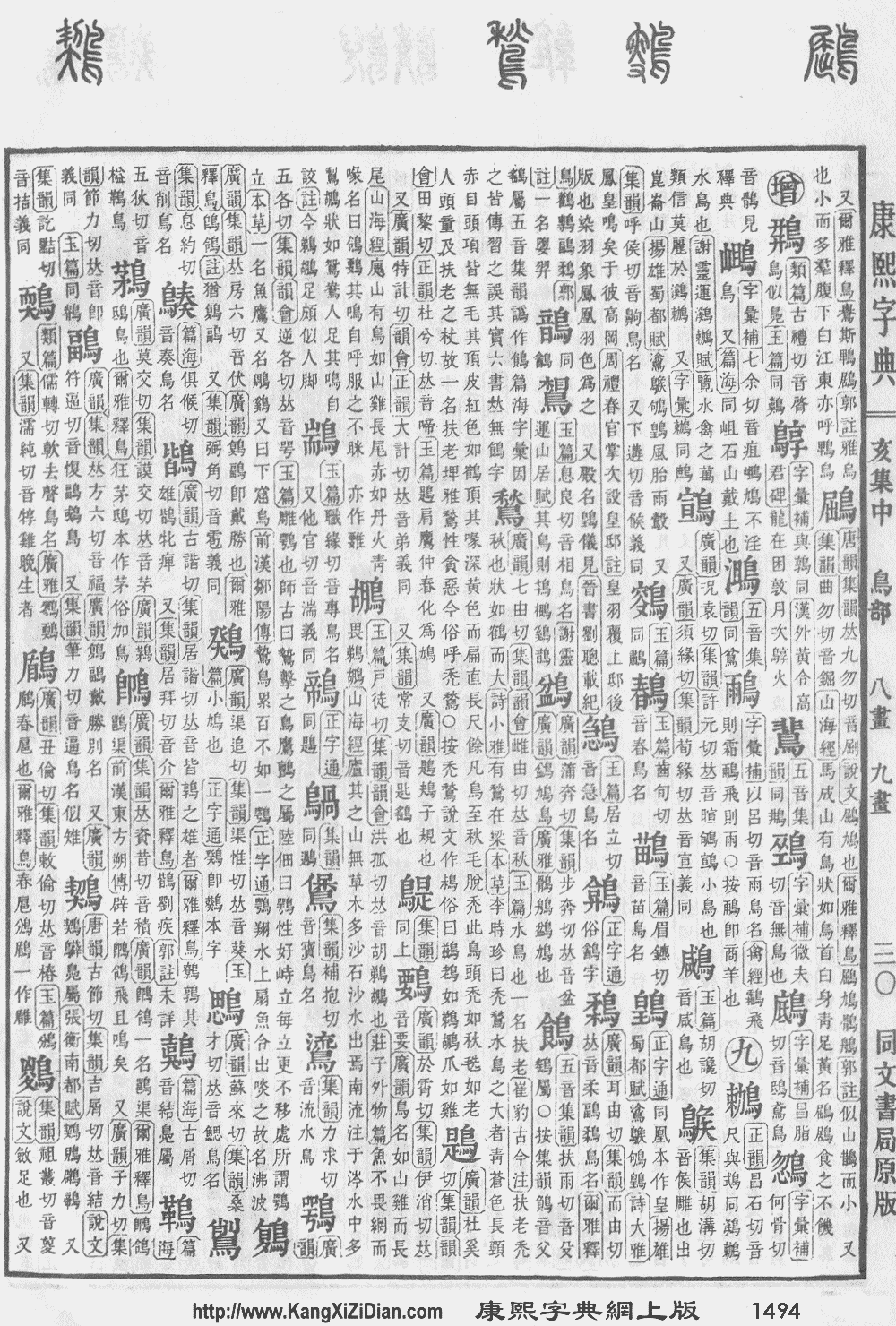
- KangXi: not present, would follow page 1494, character 10
- Dai Kanwa Jiten: character 47074
- Dae Jaweon: page 2024, character 8
- Hanyu Da Zidian (first edition): not present, would follow volume 7, page 4641, character 14
- Unihan data for U+9D8F
Japanese
| 鶏 | |
| 鷄 |
Readings
Compounds
- 鶏冠 (keikan, “cockscomb”)
- 鶏肉 (keiniku, “chicken meat”)
- 烏骨鶏 (ukokkei): silky, silkie (breed of chicken)
- 軍鶏 (gunkei)
- 水鶏 (suikei, “rail; water rail”)
- 養鶏 (yōkei, “poultry farming, chicken raising”)
- 黄鶏 (kashiwa): a Japanese native species of chicken with dark reddish-brown feathers; the meat thereof; chicken (meat)
- 水鶏, 秧鶏 (kuina, “rail, water rail”)
- 軍鶏 (shamo, “gamecock”)
- 矮鶏 (chabo, “bantam”)
Etymology 1
| Kanji in this term |
|---|
| 鶏 |
| にわとり Grade: S |
| kun’yomi |
| Alternative spellings |
|---|
| 鷄 (kyūjitai) 雞 ニワトリ |
⟨nipa tu to2ri⟩ → */nipatːəri/ → /nifatori/ → /niwatori/
Originally derived from the 枕詞 (makura kotoba, “pillow word”, an epithet as a poetic device) compound phrase 庭つ鳥 (niwa tsu tori), 庭 (niwa, “garden”) + つ (tsu, Old Japanese possessive particle) + 鳥 (tori, “bird”), used in Old Japanese poetry as an allusive introduction to kake, the older word for “chicken” (see below). The medial tsu disappeared over time, yielding modern Japanese niwatori.[1]
Usage notes
As with many terms that name organisms, this term is often spelled in katakana, especially in biological contexts (where katakana is customary), as ニワトリ.
Proverbs
- 鶏を割くに焉んぞ牛刀を用いん (niwatori o saku ni izukun zo gyūtō o mochiin, “why chop a chicken with a meat cleaver? → don't exaggerate”)
Etymology 2
| Kanji in this term |
|---|
| 鶏 |
| かけ Grade: S |
| kun’yomi |
| Alternative spellings |
|---|
| 鷄 (kyūjitai) 雞 |
⟨kake1⟩ → */kakʲe/ → /kake/
From Old Japanese, first attested in the Kojiki (712 CE).
Onomatopoeic of the sound made by a chicken.[1][2] Compare English cluck.
Noun
鶏 • (kake)
- a chicken (domesticated fowl)
- 711–712, Kojiki (poem 2)
- [...] 爾波都登理 迦祁波那久 [...] [Man'yōgana]
- [...] 庭つ鳥 鶏は鳴く [...] [Modern spelling]
- ...niwa tsu tori, kake wa naku...
- the garden bird, the chicken clucks
- Synonym: 臼辺鳥 (usubedori)
- 711–712, Kojiki (poem 2)
Etymology 3
| Kanji in this term |
|---|
| 鶏 |
| くたかけ Grade: S |
| kun’yomi |
| Alternative spelling |
|---|
| 鷄 (kyūjitai) |
From Old Japanese.
Compound of くた (kuta, root for numerous verbs, implying "low-grade, rotten, stinky") + かけ (kake, “chicken”, see above).[1] Literally “rubbish clucker”.
Formerly a derogatory term for a chicken. Over time, the derogatory sense was lost, and the term instead took on an old-fashioned or archaic sense.
References
- 1988, 国語大辞典(新装版) (Kokugo Dai Jiten, Revised Edition) (in Japanese), Tōkyō: Shogakukan
- 2006, 大辞林 (Daijirin), Third Edition (in Japanese), Tōkyō: Sanseidō, →ISBN