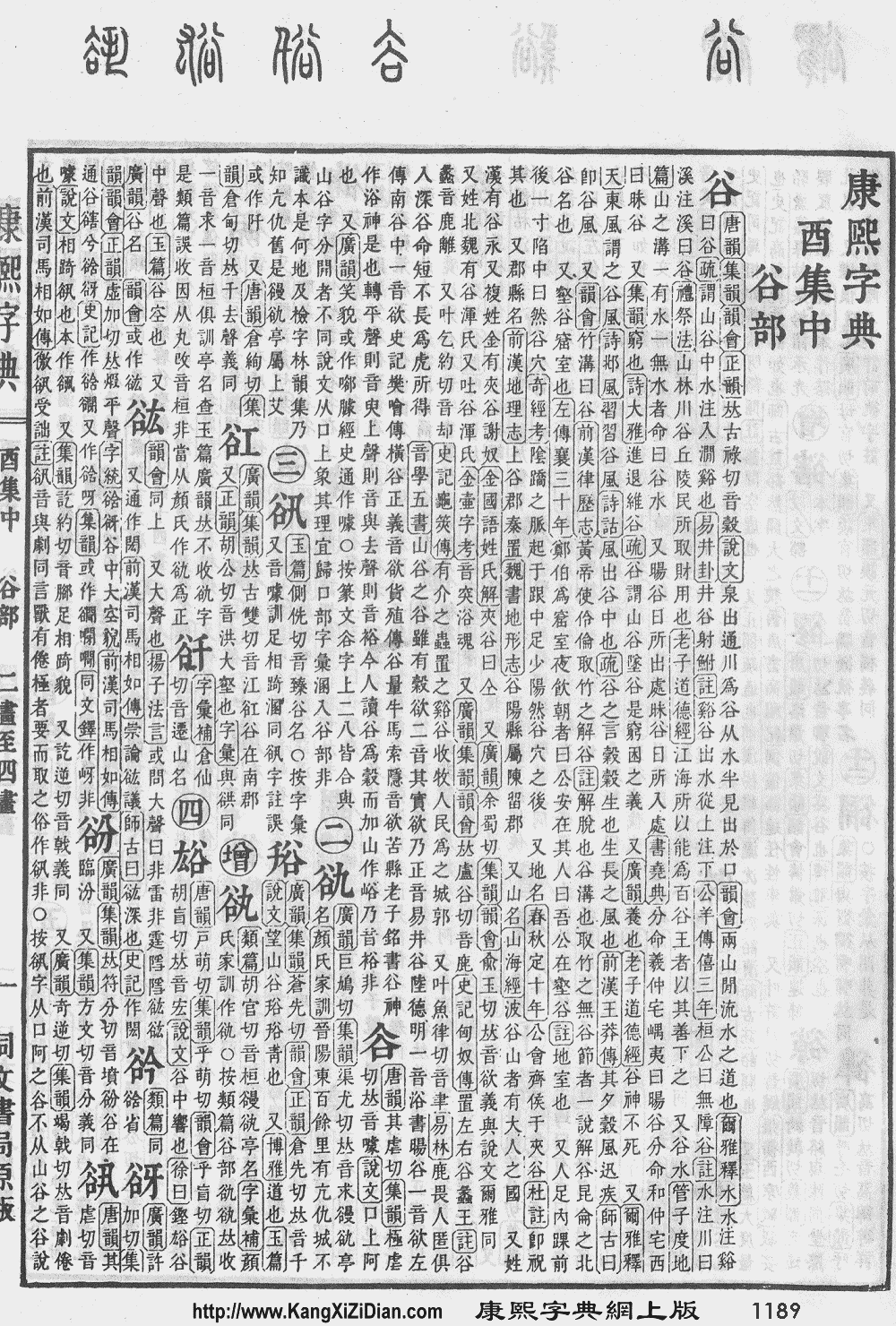
𧮫

See also: 谷 and 𠔌
𧮫 U+27BAB, 𧮫
CJK UNIFIED IDEOGRAPH-27BAB
← 𧮪
[U+27BAA]
CJK Unified Ideographs Extension B 𧮬 →
[U+27BAC]

Translingual

Han character

𧮫 (Kangxi radical 150, 谷+0, 7 strokes, cangjie input 人人口 (OOR), composition ⿳𠆢𠆢口)

  1. Shuowen Jiezi radical №48

Derived characters

References

Chinese

simp. and trad.
𧮫
alternative forms
 
谷
𠔌
𠶸
𠴷
臄
谷
𠔌
𠶸
𠴷
臄
⿱爻口

Glyph origin

Shuowen: ⿱𠆢𠆢 + 口 (“mouth”). Pictogram (象形) according to Zhang Binglin (章炳麟).

Pronunciation


Rime
Character 𧮫
Reading # 1/1
Initial (聲) 群 (30)
Final (韻) 陽 (107)
Tone (調) Checked (Ø)
Openness (開合) Open
Division (等) III
Fanqie 其虐切
Reconstructions
Zhengzhang
Shangfang
/ɡɨɐk̚/
Pan
Wuyun
/ɡiɐk̚/
Shao
Rongfen
/ɡiɑk̚/
Edwin
Pulleyblank
/gɨak̚/
Li
Rong
/ɡiak̚/
Wang
Li
/ɡĭak̚/
Bernard
Karlgren
/gi̯ak̚/
Expected
Mandarin
Reflex
jué
Expected
Cantonese
Reflex
goek6
Baxter–Sagart system 1.1 (2014)
Character 𧮫
Reading # 1/1
Modern
Beijing
(Pinyin)
jué
Middle
Chinese
‹ gjak ›
Old
Chinese
/*[ɡ]ak/
English interior of the mouth (Shuōwén)

Notes for Old Chinese notations in the Baxter–Sagart system:

* Parentheses "()" indicate uncertain presence;
* Square brackets "[]" indicate uncertain identity, e.g. *[t] as coda may in fact be *-t or *-p;
* Angle brackets "<>" indicate infix;
* Hyphen "-" indicates morpheme boundary;

* Period "." indicates syllable boundary.

Definitions

𧮫

  1. † (anatomy) palate; uraniscus; roof of mouth
  2. † Alternative form of 噱 (jué, “to laugh”).

Usage notes

This character is the original phonetic component of 卻 (què).

References

This article is issued from Wiktionary. The text is licensed under Creative Commons - Attribution - Sharealike. Additional terms may apply for the media files.