biržė
Lithuanian
Etymology 1
Cognate with Proto-Slavic *borzda and Latvian bìrze (“furrow”). Possibly derived from Proto-Indo-European *bʰers- (“top, point”) or from Proto-Indo-European *bʰerH- (“to bore a hole”), see the Proto-Slavic form for more.
Noun
bir̃žė f (plural bir̃žės)
- (agriculture) sign marking the boundary of a sown land, usually made out of twigs or straws; furrow
- Hypernyms: gairė (“stake”), riboženklis (“boundary marker”)
- (agriculture) plot of land to be sown
- Hypernym: plótas (“plot”)
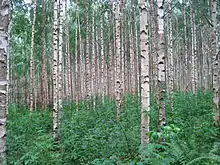
- (forestry) stretch of forest (designated for clearing, felling etc.)
- Hypernym: plótas (“plot”)
Declension
declension of biržė
| singular (vienaskaita) | plural (daugiskaita) | |
|---|---|---|
| nominative (vardininkas) | bir̃žė | bir̃žės |
| genitive (kilmininkas) | bir̃žės | bir̃žių |
| dative (naudininkas) | bir̃žei | bir̃žėms |
| accusative (galininkas) | bir̃žę | biržès |
| instrumental (įnagininkas) | biržè | bir̃žėmis |
| locative (vietininkas) | bir̃žėje | bir̃žėse |
| vocative (šauksmininkas) | bir̃že | bir̃žės |
References
- “biržė”, in Lietuvių kalbos etimologinio žodyno duomenų bazė [Lithuanian etymological dictionary database], 2007–2012
- “biržė”, in Lietuvių kalbos žodynas [Dictionary of the Lithuanian language], lkz.lt, 1941–2023
- birže (sign) in Visuotinė lietuvių enciklopedija (Universal Lithuanian Encyclopedia)
- biržė (forest land to clear), entry by Antanas Juodvalkis, in Visuotinė lietuvių enciklopedija (Universal Lithuanian Encyclopedia)
- biržė (sown land), entry by Vytautas Spečiūnas, in Visuotinė lietuvių enciklopedija (Universal Lithuanian Encyclopedia)
Noun
bìržė f (plural bìržės) stress pattern 2
Declension
declension of biržė
| singular (vienaskaita) | plural (daugiskaita) | |
|---|---|---|
| nominative (vardininkas) | bìržė | bìržės |
| genitive (kilmininkas) | bìržės | bìržių |
| dative (naudininkas) | bìržei | bìržėms |
| accusative (galininkas) | bìržę | biržès |
| instrumental (įnagininkas) | biržè | bìržėmis |
| locative (vietininkas) | bìržėje | bìržėse |
| vocative (šauksmininkas) | bìrže | bìržės |
References
- “biržė”, in Lietuvių kalbos žodynas [Dictionary of the Lithuanian language], lkz.lt, 1941–2023
This article is issued from Wiktionary. The text is licensed under Creative Commons - Attribution - Sharealike. Additional terms may apply for the media files.