㞞
| ||||||||
Translingual
Han character
㞞 (Kangxi radical 44, 尸+11, 14 strokes, cangjie input 尸竹人人 (SHOO), composition ⿸尸從)
References
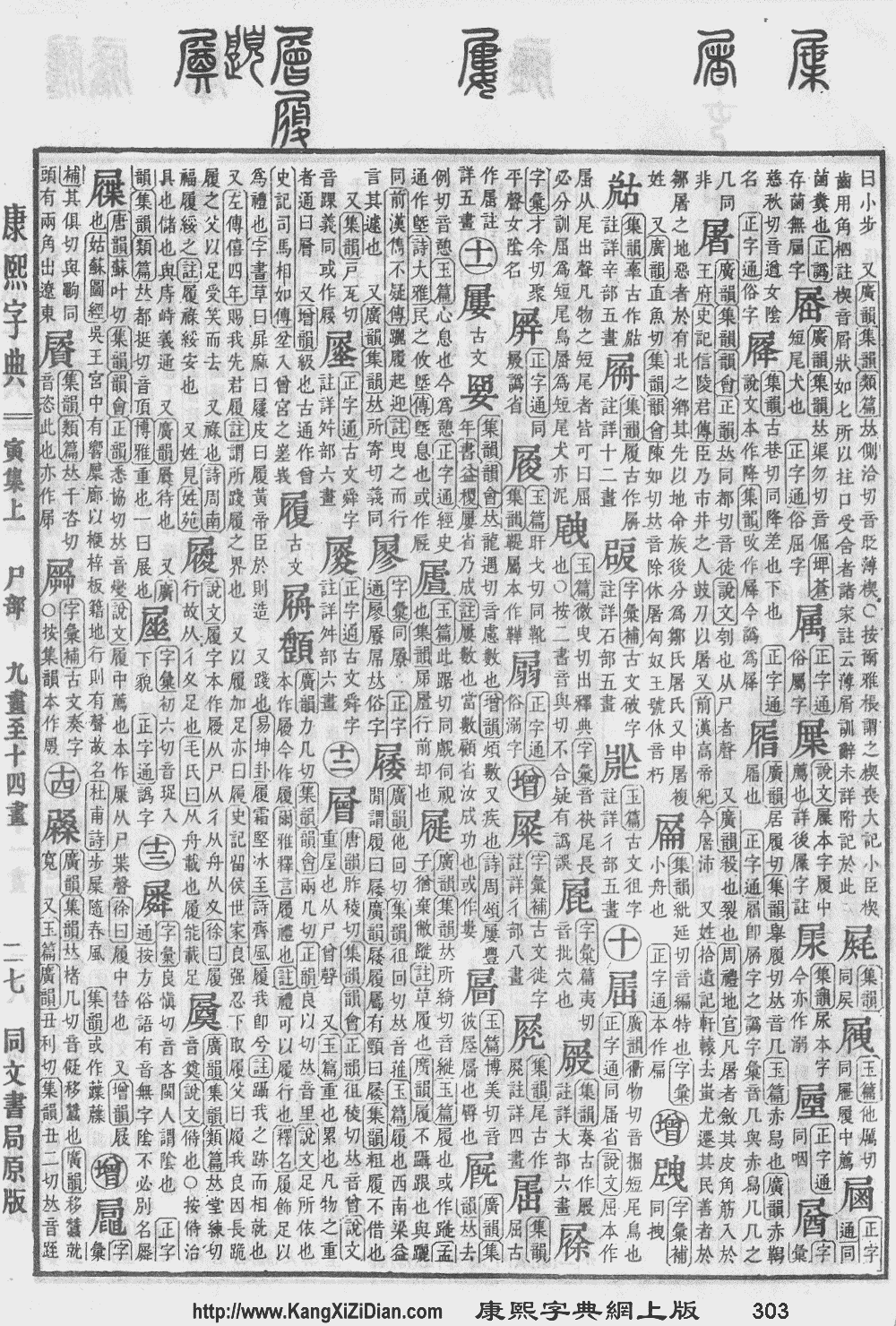
- KangXi: not present, would follow page 303, character 39
- Hanyu Da Zidian (first edition): volume 8 (in addendum), page 18, character 1
- Unihan data for U+379E
Chinese
| trad. | 㞞 | |
|---|---|---|
| simp. | 𪨊 | |
| alternative forms | 𩩺 鬆/松 倯 “weak; useless” 慫/怂 “weak; useless” 蟲/虫 Wu | |
Glyph origin
Phono-semantic compound (形聲) : semantic 尸 (“body”) + phonetic 從.
Etymology
(This etymology is missing or incomplete. Please add to it, or discuss it at the Etymology scriptorium.)
Pronunciation
Definitions
㞞
Usage notes
The simplified form 𪨊 of this character is frequently missing from character sets and dictionaries.[1]
Synonyms
Dialectal synonyms of 精液 (“semen”) [map]
Compounds
|
References
- Victor Mair (2022-09-09), “The mystery of sóng (U+2AA0A) ("semen")”, in Language Log, retrieved 2022-09-09
This article is issued from Wiktionary. The text is licensed under Creative Commons - Attribution - Sharealike. Additional terms may apply for the media files.