松
See also: 鬆
| ||||||||
Translingual
| Stroke order | |||
|---|---|---|---|
 | |||
Han character
松 (Kangxi radical 75, 木+4, 8 strokes, cangjie input 木金戈 (DCI), four-corner 48932, composition ⿰木公)
References
- KangXi: page 514, character 11
- Dai Kanwa Jiten: character 14516
- Dae Jaweon: page 901, character 14
- Hanyu Da Zidian (first edition): volume 2, page 1173, character 5
- Unihan data for U+677E
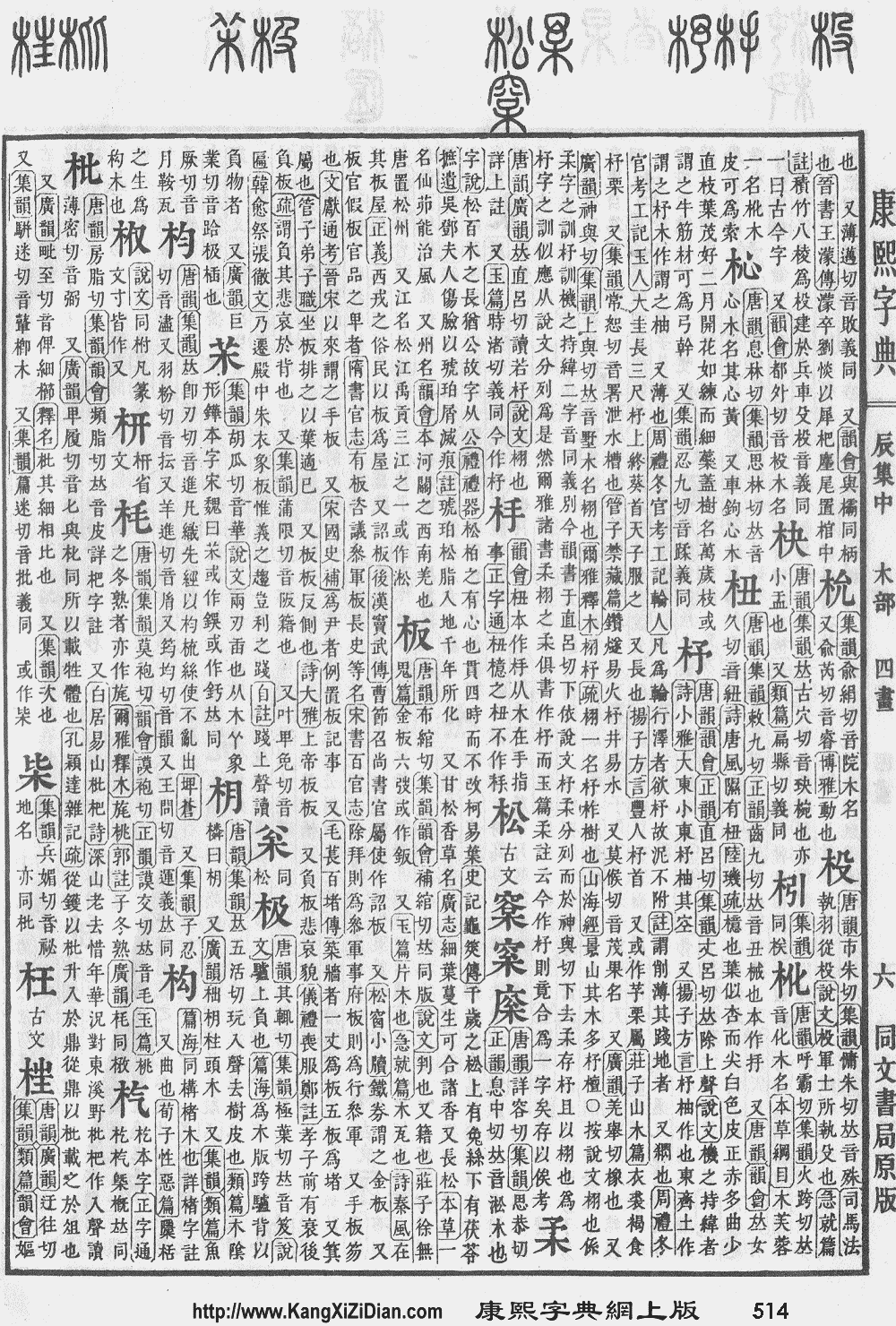
Chinese
Glyph origin
Characters in the same phonetic series (公) (Zhengzhang, 2003)
| Old Chinese | |
|---|---|
| 慃 | *qroːŋʔ |
| 袞 | *kluːnʔ |
| 蔉 | *kluːnʔ |
| 滾 | *kluːnʔ |
| 忩 | *sʰloːŋ |
| 鬆 | *sqʰloːŋs, *sqʰluːŋ, *skʰloŋ, *sqʰloŋ |
| 凇 | *sqʰloːŋs, *sqʰloŋ, *sɢloŋ |
| 公 | *kloːŋ |
| 蚣 | *kloːŋ, *kljoŋ |
| 翁 | *qloːŋ |
| 螉 | *qloːŋ |
| 蓊 | *qloːŋ, *qloːŋʔ |
| 嗡 | *qloːŋ |
| 滃 | *qloːŋʔ |
| 暡 | *qloːŋʔ |
| 勜 | *qloːŋʔ |
| 塕 | *qloːŋʔ |
| 瓮 | *qloːŋs |
| 崧 | *sqʰluŋ |
| 菘 | *sqʰluŋ |
| 硹 | *sqʰluŋ |
| 淞 | *sqʰloŋ, *sɢloŋ |
| 蜙 | *sqʰloŋ |
| 倯 | *sqʰloŋ |
| 松 | *sɢloŋ |
| 訟 | *sɢloŋ, *sɢloŋs |
| 頌 | *sɢloŋs, *loŋ |
| 忪 | *kljoŋ |
| 彸 | *kljoŋ |
| 衳 | *kljoŋ |
| 伀 | *kljoŋ |
| 妐 | *kljoŋ |
| 炂 | *kljoŋ |
| 鈆 | *kljoŋ, *lon |
Phono-semantic compound (形聲, OC *sɢloŋ) : semantic 木 (“wood”) + phonetic 公 (OC *kloːŋ).
Etymology 1
| trad. | 松 | |
|---|---|---|
| simp. # | 松 | |
| alternative forms | 枩 柗 梥 枀 | |
Miyake (1997), apud Schuessler (2007), associated 松 (OC *sɢloŋ) with Old Japanese 杉 (sugi2, “cryptomeria”); superficially similar to Thai สน (sǒn, “pine”).
The regular Mandarin pronunciation as predicted from Middle Chinese is sóng. The sound change to the yinping (陰平/阴平) pronunciation in Mandarin dialects is to avoid homophony with the word 㞞/𪨊 (sóng, “semen”).
Pronunciation
Definitions
松
- pine tree
- 淇水滺滺、檜楫松舟。 [Pre-Classical Chinese, trad.]
- From: The Classic of Poetry, c. 11th – 7th centuries BCE, translated based on James Legge's version
- Qíshuǐ yóuyóu, guìjí sōngzhōu. [Pinyin]
- The waters of the Qi flow smoothly; there are the oars of juniper and boats of pine.
淇水滺滺、桧楫松舟。 [Pre-Classical Chinese, simp.]
- a surname, 216th in the Baijiaxing
Compounds
Derived terms from 松
|
|
|
Etymology 2
| For pronunciation and definitions of 松 – see 鬆 (“disheveled; unkempt; loose; etc.”). (This character, 松, is the simplified form of 鬆.) |
Notes:
|
References
- “松”, in 漢語多功能字庫 (Multi-function Chinese Character Database), 香港中文大學 (the Chinese University of Hong Kong), 2014–
Japanese
| Shinjitai | 松 |  |
| Kyūjitai [1][2][3] |
松󠄁 松+ 󠄁?(Adobe-Japan1) |
 |
| 松󠄃 松+ 󠄃?(Hanyo-Denshi) (Moji_Joho) | ||
| The displayed kanji may be different from the image due to your environment. See here for details. | ||
Readings
Compounds
Compounds
- 松衣 (shōi)
- 松陰, 松蔭 (shōin)
- 松筠 (shōin)
- 松韻 (shōin)
- 松雨 (shōu)
- 松雲 (shōun)
- 松影 (shōei)
- 松液 (shōeki)
- 松煙 (shōen)
- 松下 (shōka)
- 松火 (shōka)
- 松柯 (shōka)
- 松檟 (shōka)
- 松鶴 (shōkaku)
- 松間 (shōkan)
- 松巌 (shōgan)
- 松菊 (shōkiku)
- 松毬 (shōkyū)
- 松炬 (shōkyo)
- 松魚 (shōgyo)
- 松嶠 (shōkyō)
- 松狗 (shōku)
- 松径 (shōkei)
- 松契 (shōkei)
- 松扃 (shōkei)
- 松軒 (shōken)
- 松骨 (shōkotsu)
- 松根 (shōkon)
- 松釵 (shōsai)
- 松子 (shōshi): pinecone
- 松脂 (shōshi): pine resin
- 松樹 (shōju)
- 松楸 (shōshū)
- 松梢 (shōshō)
- 松心 (shōshin)
- 松針 (shōshin)
- 松蕈 (shōjin)
- 松翠 (shōsui)
- 松声 (shōsei)
- 松石 (shōseki)
- 松雪 (shōsetsu)
- 松鼠 (shōso)
- 松窓 (shōsō)
- 松亭 (shōtei)
- 松濤 (shōtō)
- 松煤 (shōbai)
- 松柏 (shōhaku)
- 松風 (shōfū)
- 松棚 (shōhō)
- 松明 (shōmei)
- 松門 (shōmon)
- 松蘿 (shōra)
- 松籟 (shōrai)
- 松陵 (shōryō)
- 松林 (shōrin)
- 松露 (shōro)
- 松醪 (shōrō)
- 松明 (taimatsu)
- 松浦 (Matsuura)
- 松江 (Matsue)
- 松風 (matsukaze)
- 松皮 (matsukawa)
- 松阪 (Matsusaka)
- 松崎 (Matsuzaki)
- 松桜 (matsuzakura)
- 松島 (Matsushima)
- 松代 (Matsushiro)
- 松脂 (matsuyani): pine resin
- 倚松
- 雲松 (unshō)
- 簷松
- 哦松 (gashō)
- 門松 (kadomatsu)
- 寒松 (kanshō)
- 危松
- 旧松
- 喬松 (kyōshō)
- 暁松
- 勁松 (keishō)
- 孤松 (koshō)
- 枯松 (koshō)
- 小松 (komatsu)
- 小松 (Komatsu)
- 杉松
- 深松
- 青松 (seishō)
- 石松
- 高松 (Takamatsu)
- 聴松 (chōshō)
- 低松
- 貞松 (teishō)
- 盤松 (banshō)
- 風松
- 碧松 (hekishō)
- 暮松
- 茂松 (茂松)
- 瘦松 (yasematsu)
- 老松
- 若松 (wakamatsu)
- 若松 (Wakamatsu)
Etymology
| Kanji in this term |
|---|
| 松 |
| まつ Grade: 4 |
| kun’yomi |
(This etymology is missing or incomplete. Please add to it, or discuss it at the Etymology scriptorium.)
Noun
References
- 白川静 (Shirakawa Shizuka) (2014), “松”, in 字通 普及版 (Jitsū fukyūban, “Jitsū trade edition”) (in Japanese), Tōkyō: Heibonsha, →ISBN
- 1914, 漢和大辭書 (Kanwa Dai Jisho, “The Great Kanji-Japanese Dictionary”) (in Japanese), page 1112 (paper), page 607 (digital), Tōkyō: 興文社 (Kōbunsha)
- 1927, 新漢和辭典 (Shin Kanwa Jiten, “The New Kanji-Japanese Dictionary”) (in Japanese), page 669 (paper), page 347 (digital), Ōsaka: 松雲堂 (Shōundō)
- 2006, 大辞林 (Daijirin), Third Edition (in Japanese), Tōkyō: Sanseidō, →ISBN
- 1998, NHK日本語発音アクセント辞典 (NHK Japanese Pronunciation Accent Dictionary) (in Japanese), Tōkyō: NHK, →ISBN
- 2011, 新明解国語辞典 (Shin Meikai Kokugo Jiten), Seventh Edition (in Japanese), Tōkyō: Sanseidō, →ISBN
Vietnamese
This article is issued from Wiktionary. The text is licensed under Creative Commons - Attribution - Sharealike. Additional terms may apply for the media files.