侀
| ||||||||
 | ||||||||
Translingual
Han character
侀 (Kangxi radical 9, 人+6, 8 strokes, cangjie input 人一廿弓 (OMTN), four-corner 22200, composition ⿰亻刑)
References
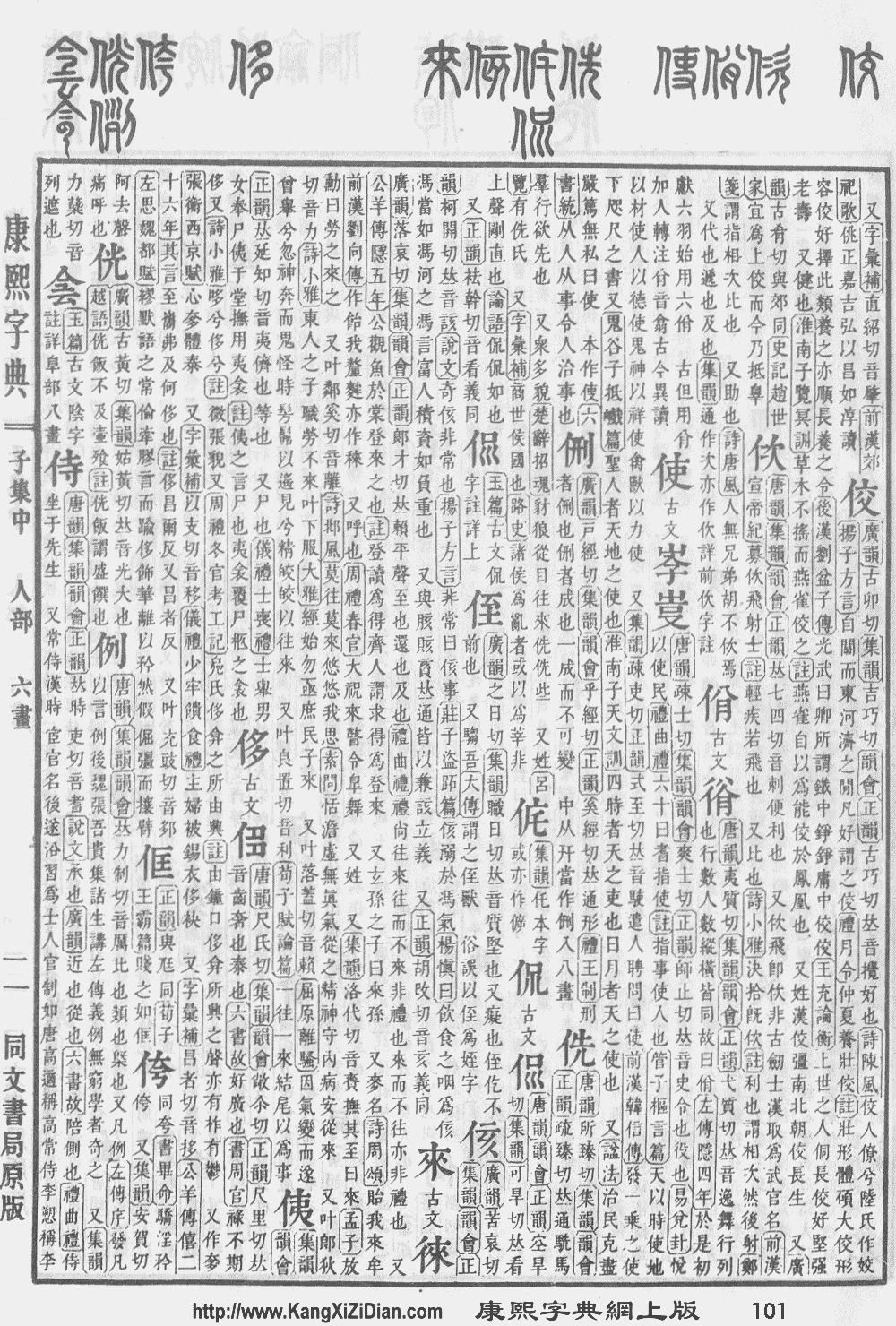
- KangXi: page 101, character 8
- Dai Kanwa Jiten: character 574
- Dae Jaweon: page 214, character 1
- Hanyu Da Zidian (first edition): volume 1, page 143, character 14
- Unihan data for U+4F80
- Unihan data for U+FA73
Chinese
| simp. and trad. |
侀 | |
|---|---|---|
Glyph origin
Pronunciation
Definitions
侀
- † form; shape; thing that has taken shape
- 刑者侀也,侀者成也,一成而不可變,故君子盡心焉。 [Classical Chinese, trad.]
- From: The Book of Rites, c. 4th – 2nd century BCE, translated based on James Legge's version
- Xíng zhě xíng yě, xíng zhě chéng yě, yī chéng ér bùkě biàn, gù jūnzǐ jìnxīn yān. [Pinyin]
- Punishment may be compared to the body. The body is a complete thing; when once completed, there cannot be any subsequent change in it. Hence the wise man will do his utmost (in deciding on all these inflictions).
刑者侀也,侀者成也,一成而不可变,故君子尽心焉。 [Classical Chinese, simp.]
Japanese
Kanji
侀
- This term needs a translation to English. Please help out and add a translation, then remove the text
{{rfdef}}.
Korean
Hanja
侀 • (hyeong) (hangeul 형, revised hyeong, McCune–Reischauer hyŏng)
- This term needs a translation to English. Please help out and add a translation, then remove the text
{{rfdef}}.
This article is issued from Wiktionary. The text is licensed under Creative Commons - Attribution - Sharealike. Additional terms may apply for the media files.