兔
| ||||||||
 | ||||||||
Translingual
| Stroke order | |||
|---|---|---|---|
 | |||
Alternative forms
A variant form with 刀 rather than ⺈ on top exists. A compatibility ideograph (U+2F80F) exists for the character with 刀 on top.
Han character
兔 (Kangxi radical 10, 儿+6, 8 strokes, cangjie input 弓山戈 (NUI), four-corner 17413, composition ⿷免丶(GHTJV) or ⿷免丶(K))
References
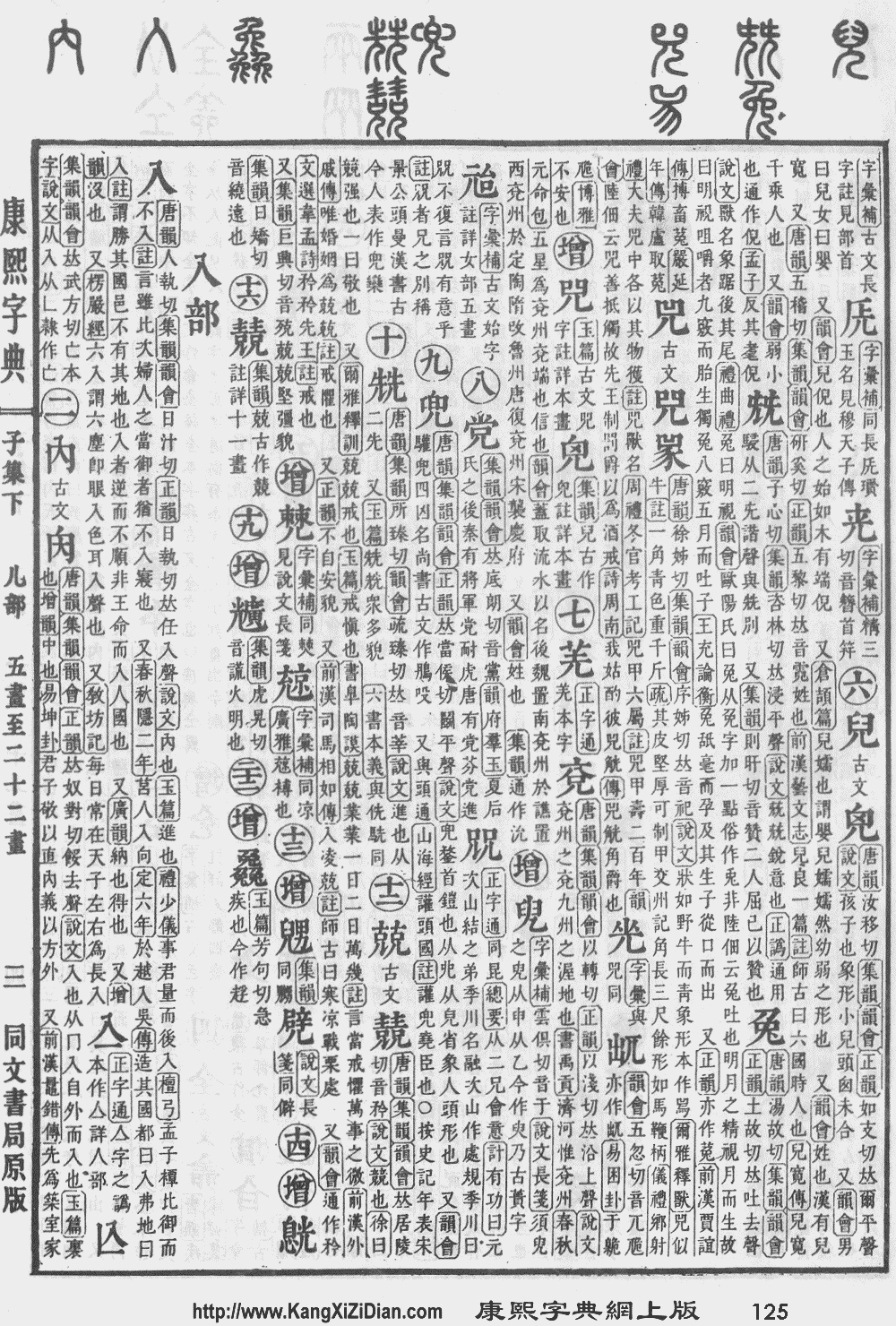
- KangXi: page 125, character 6
- Dai Kanwa Jiten: character 1368
- Dae Jaweon: page 265, character 9
- Hanyu Da Zidian (first edition): volume 1, page 273, character 4
- Unihan data for U+5154
- Unihan data for U+2F80F
Chinese
| simp. and trad. |
兔 | |
|---|---|---|
| alternative forms | 兎 | |
Glyph origin
| Historical forms of the character 兔 | |||||||||||||||||
|---|---|---|---|---|---|---|---|---|---|---|---|---|---|---|---|---|---|
| Shang | Western Zhou | Shuowen Jiezi (compiled in Han) | Liushutong (compiled in Ming) | ||||||||||||||
| Oracle bone script | Bronze inscriptions | Small seal script | Transcribed ancient scripts | ||||||||||||||
 |
 |
 |
 | ||||||||||||||
|||
|
References: Mostly from Richard Sears' Chinese Etymology site (authorisation),
| |||||||||||||||||


Characters in the same phonetic series (兔) (Zhengzhang, 2003)
Pictogram (象形) – a rabbit.
Etymology 1
Probably Sino-Tibetan; compare Japhug qala (“rabbit”) (with animal prefix qa-), Lisu ꓕꓳꓽ ꓡꓻ (tʰò lɑ) (Schuessler, 2007; Zhang et al., 2019).
Pronunciation
Synonyms
Dialectal synonyms of 兔子 (“rabbit; hare”) [map]
Compounds
Derived terms from 兔
Pronunciation
Japanese
| 兎 | |
| 兔 |
This article is issued from Wiktionary. The text is licensed under Creative Commons - Attribution - Sharealike. Additional terms may apply for the media files.