啩
| ||||||||
Translingual
Han character
啩 (Kangxi radical 30, 口+8, 11 strokes, cangjie input 口土土卜 (RGGY), composition ⿰口卦)
References
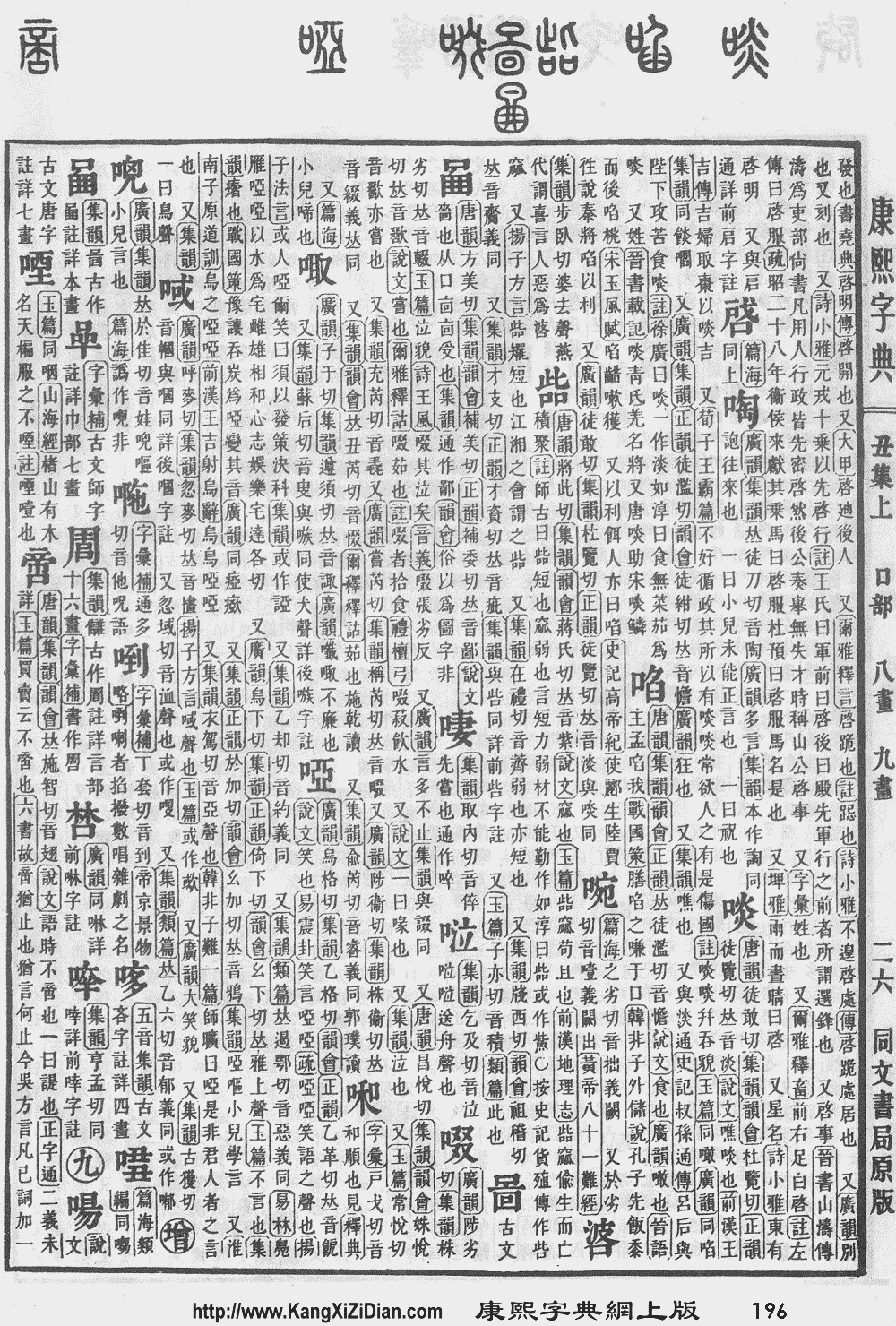
- KangXi: not present, would follow page 196, character 26
- Hanyu Da Zidian (first edition): not present, would follow volume 1, page 636, character 2
- Unihan data for U+5569
Chinese
| simp. and trad. |
啩 | |
|---|---|---|
Etymology
Fusion of 估 (gu2, “to guess”) and 啊 (aa3, “sentence final particle”) (Chao, 1947). This is supported by attestation of the unfused version in Early Cantonese:
Pronunciation
Definitions
啩
Usage notes
In Mainland China, the implication of uncertainty has weakened due to confusion with Mandarin 吧 (ba).
Synonyms
- (Mandarin) 吧 (ba)
Vietnamese
This article is issued from Wiktionary. The text is licensed under Creative Commons - Attribution - Sharealike. Additional terms may apply for the media files.