得
See also: 🉐
| ||||||||
Translingual
| Stroke order | |||
|---|---|---|---|
 | |||
| Stroke order | |||
|---|---|---|---|
 | |||
Han character
得 (Kangxi radical 60, 彳+8, 11 strokes, cangjie input 竹人日一戈 (HOAMI), four-corner 26241, composition ⿰彳㝵)
Further reading
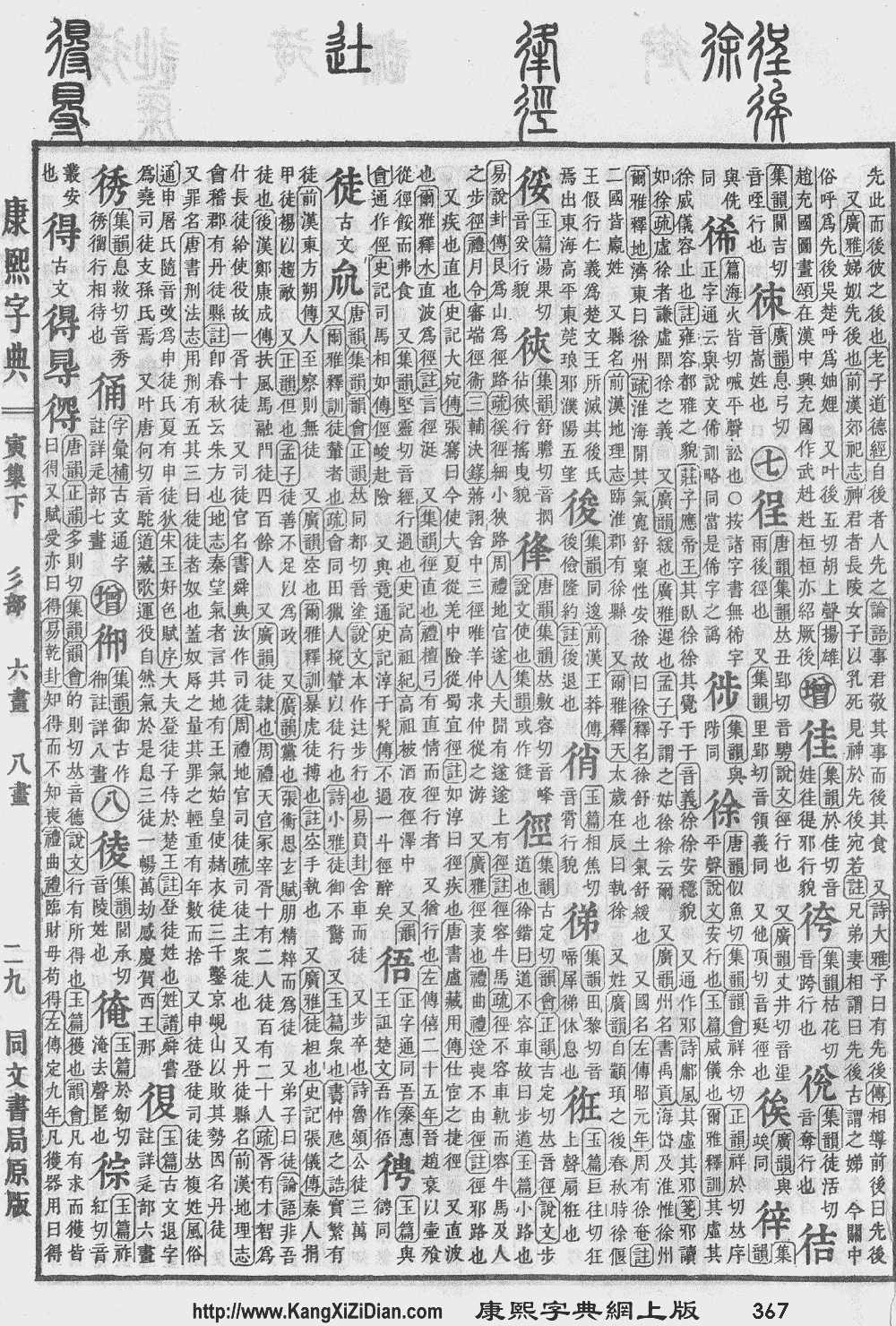
- KangXi: page 367, character 31
- Dai Kanwa Jiten: character 10137
- Dae Jaweon: page 691, character 16
- Hanyu Da Zidian (first edition): volume 2, page 828, character 3
- Unihan data for U+5F97
Chinese
| simp. and trad. |
得 | |
|---|---|---|
| 2nd round simp. | 𬁟 | |
| alternative forms | 㝵 𠭁 𧴫 䙷 㝶 | |
Glyph origin
| Historical forms of the character 得 | ||||
|---|---|---|---|---|
| Shang | Western Zhou | Warring States | Shuowen Jiezi (compiled in Han) | |
| Bronze inscriptions | Oracle bone script | Bronze inscriptions | Chu slip and silk script | Small seal script |
 |
 |
 |
 |
 |
Characters in the same phonetic series (得) (Zhengzhang, 2003)
Ideogrammic compound (會意) . The ancient form of 得 is 㝵, composed of 貝 (“cowry”) + 又 (“hand”) — to pick up a cowry > to obtain valuables. A component 彳 was sometimes added to show that the cowry was picked up on the road.
In the Qin Bamboo and Slip script:
- a horizontal line was added to the 又, which means it is replaced with the related 寸. This is a feature of Qin script, and many characters that used to compound with 又 now compound with 寸.
In the Shuowen seal script:
- the 貝 corrupts into something resembling 見. However, this should be an error of Shuowen because it can only be only found in Shuowen and not in historical Qin Seal script, Qin Bamboo, and Slip script.
In the clerical script:
- the 貝 is simplified as 目 (“eye”); such simplification can be seen in its early form in Spring and Autumn and Warring States bronze inscriptions, Chu Bamboo, and Silk script, as well as other characters such as 具. Then it corrupts into 旦 (“dawn”) in later clerical script, and Regular script inherited it.
Etymology
Pulleyblank (1991) relates it to Tibetan ཐུབ (thub, “to be able to; to withstand”).
This etymology is incomplete. You can help Wiktionary by elaborating on the origins of this term.
Pronunciation 1
Definitions
得
- to get; to obtain; to gain, to acquire
- to contract (disease); to become ill with
- to result in; to produce
- to be ready; finished
- to suit; to fit
- satisfied; contented
- 洋洋自得 ― yángyángzìdé ― to be very pleased with oneself; to be self-satisfied
- (formal, often used in the negative) can; may; to be permitted
- 非依法定程序之逮捕、拘禁、審問、處罰,得拒絕之。 [MSC, trad.]
- From: Article 8, Constitution of the Republic of China (Taiwan)
- Fēi yī fǎdìng chéngxù zhī dàibǔ, jūjìn, shěnwèn, chùfá, dé jùjué zhī. [Pinyin]
- Any arrest, detention, trial, or punishment which is not in accordance with the procedure prescribed by law can be resisted.
非依法定程序之逮捕、拘禁、审问、处罚,得拒绝之。 [MSC, simp.]
- (Cantonese) to only have; to just have
- interjective particle expressing approval or prohibition; see 得了
- 得了,別再說了。/得了,别再说了。 ― Dé le, bié zài shuō le. ― OK! OK! That's enough.
- 得喇,知道喇。 [Cantonese] ― dak1 laa3, zi1 dou3 laa3. [Jyutping] ― OK! Got it.
- 我有個表姪女兒,今年二十六,談了好幾個對象了都沒談成。她媽啊,一直託我幫忙呢。得,甭別人了,就是她了。 [Beijing Mandarin, trad.]
- From: 2000, 梁左 and 梁欢, 《闲人马大姐》, episode 7
- Wǒ yǒu ge biǎozhínür, jīnnián èrshíliù, tán le hǎo jǐ ge duìxiàng le dōu méi tán chéng. Tā mā a, yīzhí tuō wǒ bāngmáng ne. Dé, béng biérén le, jiù shi tā le. [Pinyin]
- I've got a niece who's 26 years old this year, who's already dated several guys but none worked out. Her mum's been nagging me to find a guy for her. Alright, we'll set the two up then. There's no need to find someone else.
我有个表侄女儿,今年二十六,谈了好几个对象了都没谈成。她妈啊,一直托我帮忙呢。得,甭别人了,就是她了。 [Beijing Mandarin, simp.]
- interjective particle expressing frustration or helplessness
- (Cantonese) OK; good
- (Cantonese, often sarcastic) remarkable
Synonyms
Dialectal synonyms of 能 (“can”) [map]
| Variety | Location | Words |
|---|---|---|
| Classical Chinese | 能 | |
| Formal (Written Standard Chinese) | 能, 能夠, 可以 | |
| Mandarin | Taiwan | 能, 能夠, 可以 |
| Malaysia | 能 | |
| Singapore | 能, 能夠, 可以 | |
| Cantonese | Hong Kong | 可以 |
| Hakka | Kuching (Hepo) | 得 |
| Min Dong | Singapore (Fuqing) | 會 |
| Min Nan | Penang (Hokkien) | 會, 會使 |
| Singapore (Hokkien) | 會, 會使 | |
| Manila (Hokkien) | 會, 會通 | |
| Wu | Shanghai | 好 |
| Suzhou | 好 | |
| Ningbo | 好 | |
Compounds
- 一得
- 一無所得/一无所得 (yīwúsuǒdé)
- 一索得男 (yīsuǒdénán)
- 一舉兩得/一举两得 (yījǔliǎngdé)
- 一舉數得/一举数得
- 一蹴而得
- 不付得
- 不可得
- 不得
- 不消得
- 乞漿得酒/乞浆得酒
- 亡戟得矛
- 亡羊得牛
- 人善得人欺,馬善得人騎/人善得人欺,马善得人骑 (rén shàn dé rén qī, mǎ shàn dé rén qí)
- 何得 (hédé)
- 但得
- 佐饔得嘗/佐饔得尝
- 佹得佹失
- 偶得
- 償得夙願/偿得夙愿
- 先馳得點/先驰得点
- 出手得盧/出手得卢
- 分得
- 到得 (dàodé)
- 動輒得咎/动辄得咎
- 勒里勒得
- 勢不得已/势不得已
- 博得 (bódé)
- 取得 (qǔdé)
- 只得 (zhǐdé)
- 各得其宜
- 各得其所 (gèdéqísuǒ)
- 哭笑不得 (kūxiàobùdé)
- 啞子得夢/哑子得梦
- 唾手可得 (tuòshǒukědé)
- 喜得 (xǐdé)
- 因禍得福/因祸得福 (yīnhuòdéfú)
- 垂手可得 (chuíshǒukědé)
- 垂手而得
- 塞得港
- 多得 (duōdé)
- 失而復得/失而复得 (shī'érfùdé)
- 奧得河/奥得河 (Àodé Hé)
- 安得 (āndé)
- 巴得
- 幸得 (xìngdé)
- 引得 (yǐndé)
- 彼得 (Bǐdé)
- 彼得大帝 (Bǐdé Dàdì)
- 得一望十
- 得不償失/得不偿失 (débùchángshī)
- 得不補失/得不补失
- 得不酬失
- 得主 (dézhǔ)
- 得了
- 得人
- 得令
- 得以 (déyǐ)
- 得似
- 得來不易/得来不易 (déláibùyì)
- 得償所願/得偿所愿 (déchángsuǒyuàn)
- 得先手
- 得其三昧
- 得其所
- 得其所哉
- 得分 (défēn)
- 得利 (délì)
- 得到 (dédào)
- 得力 (délì)
- 得勁/得劲 (déjìn)
- 得勝/得胜 (déshèng)
- 得勢/得势 (déshì)
- 得勿
- 得匣還珠/得匣还珠
- 得名 (démíng)
- 得命
- 得天獨厚/得天独厚 (détiāndúhòu)
- 得失 (déshī)
- 得婿如龍/得婿如龙
- 得宜 (déyí)
- 得實/得实
- 得寵/得宠 (déchǒng)
- 得寸思尺
- 得寸進尺/得寸进尺 (décùnjìnchǐ)
- 得尺得寸
- 得差
- 得年 (dénián)
- 得幸
- 得得
- 得心應手/得心应手 (déxīnyìngshǒu)
- 得志 (dézhì)
- 得悉 (déxī)
- 得意 (déyì)
- 得成秦晉/得成秦晋
- 得所
- 得手 (déshǒu)
- 得挹芝眉
- 得救 (déjiù)
- 得新厭舊/得新厌旧
- 得新忘舊/得新忘旧
- 得新棄舊/得新弃旧
- 得時/得时 (déshí)
- 得未嘗有/得未尝有
- 得未曾有 (déwèicéngyǒu)
- 得果
- 得標/得标
- 得樣兒/得样儿
- 得權重任/得权重任 (dé quán zhòngrèn)
- 得步進步/得步进步
- 得民
- 得法 (défǎ)
- 得沾化雨
- 得濟/得济
- 得無/得无
- 得獎/得奖 (déjiǎng)
- 得理
- 得用
- 得當/得当 (dédàng)
- 得病 (débìng)
- 得益 (déyì)
- 得知 (dézhī)
- 得神
- 得票 (dépiào)
- 得福不知
- 得空 (dékòng)
- 得竅/得窍
- 得第
- 得米 (dak1 mai5)
- 得缺
- 得罪 (dézuì)
- 得而復失/得而复失 (dé'érfùshī)
- 得而誅之/得而诛之
- 得職/得职
- 得臉/得脸
- 得色
- 得著/得着
- 得衷
- 得親順親/得亲顺亲
- 得解
- 得計/得计 (déjì)
- 得詔/得诏 (dézhào)
- 得逞 (déchěng)
- 得運/得运
- 得過/得过
- 得道 (dédào)
- 得采
- 得錢賣放/得钱卖放
- 得閒/得闲 (déxián)
- 得間/得间
- 得隴望蜀/得陇望蜀 (délǒngwàngshǔ)
- 得雄
- 得雋/得隽
- 得體/得体 (détǐ)
- 得魚忘筌/得鱼忘筌
- 心安理得 (xīn'ānlǐdé)
- 心得 (xīndé)
- 必不得已
- 必得 (bìdé)
- 志在必得 (zhìzàibìdé)
- 志得意滿/志得意满 (zhìdéyìmǎn)
- 志滿氣得/志满气得
- 患得患失 (huàndéhuànshī)
- 情非得已 (qíngfēidéyǐ)
- 意得志滿/意得志满
- 意滿志得/意满志得
- 所得 (suǒdé)
- 打自得兒/打自得儿
- 拔十得五
- 抵得
- 拔得頭籌/拔得头筹
- 拾得 (shídé)
- 捷足先得
- 探驪得珠/探骊得珠
- 敖得薩/敖得萨
- 既得利益 (jìdé lìyì)
- 既得權/既得权
- 旱苗得雨
- 會堪得/会堪得 (ē-kham-tit)
- 有一得一
- 有得
- 楚弓楚得
- 樂得/乐得 (lèdé)
- 死得其所
- 毋得
- 氣滿志得/气满志得
- 求仁得仁 (qiúréndérén)
- 求漿得酒/求浆得酒
- 沒可得/没可得
- 浪得虛名/浪得虚名 (làngdéxūmíng)
- 焉得
- 特利可得
- 猶魚得水/犹鱼得水
- 獲得/获得 (huòdé)
- 王得祿墓/王得禄墓
- 玩不得的
- 理得辭順/理得辞顺
- 疾足先得
- 直得
- 盲者得鏡/盲者得镜
- 相得 (xiāngdé)
- 硬是要得
- 萬不得已/万不得已 (wànbùdéyǐ)
- 種瓜得瓜/种瓜得瓜 (zhòngguādéguā)
- 種豆得豆/种豆得豆
- 種麥得麥/种麦得麦
- 算得 (suàndé)
- 罪有應得/罪有应得 (zuìyǒuyīngdé)
- 羝乳得歸/羝乳得归
- 老年得子
- 聖彼得堡/圣彼得堡 (Shèng Bǐdébǎo)
- 自得 (zìdé)
- 苟得
- 莫得
- 落得
- 蛟龍得水/蛟龙得水
- 見得/见得 (jiàndé)
- 談得攏/谈得拢
- 負所得稅/负所得税
- 貪多務得/贪多务得
- 貪得無厭/贪得无厌 (tāndéwúyàn)
- 買得/买得
- 賦得/赋得
- 贏得/赢得 (yíngdé)
- 軒軒甚得/轩轩甚得
- 迫不得已 (pòbùdéyǐ)
- 逐兔先得
- 逼不得已
- 道得應得/道得应得
- 適得其反/适得其反 (shìdéqífǎn)
- 適得其所/适得其所 (shìdéqísuǒ)
- 那得 (nǎdé)
- 鑽火得冰/钻火得冰
- 開普威得/开普威得
- 難得/难得 (nándé)
- 馬是得/马是得
- 鴟得腐鼠/鸱得腐鼠
Pronunciation 2
Definitions
得
- Used after a verb or an adjective and before a degree complement.
- alt. forms: 的 historical or nonstandard
- 好得很 ― hǎo de hěn ― very good
- 他痛得直哭。 ― Tā tòng de zhí kū. ― He is in so much pain that he won't stop crying.
- 他跑得快。 ― Tā pǎo de kuài. ― He runs fast.
- 他跑得像一陣風。/他跑得像一阵风。 ― Tā pǎo de xiàng yī zhèn fēng. ― He runs like wind.
- 他畫得好。/他画得好。 ― Tā huà de hǎo. ― He paints well.
- Used after a verb to express possibility or capability.
- (Cantonese) Used after a verb to form an adjectival phrase expressing capability.
Usage notes
- When it is used between a verb and the complement, and the complement is used to indicate possibility or capacity, the negative form replaces 得 with 不 (bù).
- If it is used after a verb-object construction, the verb is repeated again as "verb-object-verb-得-complement".
Compounds
- 下得
- 下得去
- 不值得 (bùzhídé)
- 不到得
- 不捨得/不舍得 (bùshěde)
- 不曉得/不晓得
- 不爭得/不争得
- 不由得 (bùyóude)
- 不省得
- 不見得/不见得 (bùjiàndé)
- 不認得/不认得
- 不道得
- 乾落得/干落得
- 亂得慌/乱得慌
- 了不得
- 了得 (liǎodé)
- 了得了
- 使不得
- 使得 (shǐde)
- 來得/来得 (láide)
- 來得及/来得及 (láidejí)
- 來得巧/来得巧
- 信得過/信得过 (xìndéguò)
- 值得
- 做得 (zuòde)
- 做得了
- 免不得
- 免得 (miǎnde)
- 兜得轉/兜得转
- 去得
- 受不得
- 受得了 (shòudeliǎo)
- 可了不得
- 吃不得
- 吃得
- 吃得住 (chīdezhù)
- 合得來/合得来 (hédelái)
- 吃得來/吃得来 (chīdelái)
- 吃得光
- 吃得消 (chīdexiāo)
- 合得著
- 吃得開/吃得开
- 天曉得/天晓得
- 對得起/对得起 (duìdeqǐ)
- 少不得
- 巴不得
- 幹得了/干得了
- 幹得來/干得来
- 怨不得
- 怪不得 (guàibude)
- 恨不得 (hènbude)
- 悶得慌/闷得慌
- 想得美 (xiǎngdeměi)
- 想得開/想得开 (xiǎngdekāi)
- 懂得 (dǒngde)
- 懶得/懒得 (lǎnde)
- 戳得住
- 打得火熱/打得火热
- 打得逼直
- 投至得
- 拿得住
- 拿得起
- 捨不得/舍不得
- 捨得/舍得 (shěde)
- 撐得住/撑得住
- 擱得住/搁得住
- 曉得/晓得 (xiǎode)
- 會得/会得 (huìde)
- 沒得/没得
- 沒得主意/没得主意
- 沉得住氣/沉得住气
- 沒得工夫/没得工夫
- 沒得空兒/没得空儿
- 沒得說的/没得说的
- 沒得養/没得养
- 犯得上 (fàndeshàng)
- 犯得著 (fàndezháo)
- 玩得轉/玩得转
- 由不得
- 由得 (yóude)
- 當不得/当不得
- 白得發亮/白得发亮
- 省得 (shěngde)
- 看得上眼
- 看得起 (kàndeqǐ)
- 看得開/看得开
- 眼見得/眼见得 (yǎnjiànde)
- 瞧不得
- 瞧得起 (qiáodeqǐ)
- 禁不得
- 禁得
- 禁得住
- 禁得起
- 稱得上/称得上 (chēngdeshàng)
- 稱得起/称得起
- 站得住 (zhàndezhù)
- 紅得發紫/红得发紫
- 累得慌
- 罩得住
- 美得冒泡
- 虧得/亏得 (kuīde)
- 行不得
- 要得 (yàodé)
- 覺得/觉得 (juéde)
- 記得/记得 (jìde)
- 說不得/说不得
- 說得來/说得来 (shuōdelái)
- 說得著/说得著
- 說得過去/说得过去 (shuōdeguòqù)
- 說得響/说得响
- 諒得過/谅得过
- 走得開/走得开
- 趕得上/赶得上
- 趕得及/赶得及 (gǎndejí)
- 過得去/过得去 (guòdeqù)
- 過得著/过得著
- 還了得/还了得
- 靠得住 (kàodezhù)
- 顧得過來/顾得过来
- 顯得/显得 (xiǎnde)
Pronunciation 3
Definitions
得
Synonyms
- (must):
References
- Dictionary of Chinese Character Variants (教育部異體字字典), A01291
- “得”, in 漢語多功能字庫 (Multi-function Chinese Character Database), 香港中文大學 (the Chinese University of Hong Kong), 2014–
Japanese
Etymology 1
| Kanji in this term |
|---|
| 得 |
| とく Grade: 5 |
| on’yomi |
| Alternative spelling |
|---|
| 徳 |
From Middle Chinese 得 (MC tək̚).
Alternative forms
- (honorific) お得 (o-toku)
Adjective
得 • (toku) ←とく (toku)?-na (adnominal 得な (toku na), adverbial 得に (toku ni))
- beneficial; with gain
- Antonym: 損 (son)
- 500円お得
- go-hyaku-en o-toku
- (please add an English translation of this example)
Inflection
Inflection of 得
| Stem forms | |||
|---|---|---|---|
| Imperfective (未然形) | 得だろ | とくだろ | toku daro |
| Continuative (連用形) | 得で | とくで | toku de |
| Terminal (終止形) | 得だ | とくだ | toku da |
| Attributive (連体形) | 得な | とくな | toku na |
| Hypothetical (仮定形) | 得なら | とくなら | toku nara |
| Imperative (命令形) | 得であれ | とくであれ | toku de are |
| Key constructions | |||
| Informal negative | 得ではない 得じゃない |
とくではない とくじゃない |
toku de wa nai toku ja nai |
| Informal past | 得だった | とくだった | toku datta |
| Informal negative past | 得ではなかった 得じゃなかった |
とくではなかった とくじゃなかった |
toku de wa nakatta toku ja nakatta |
| Formal | 得です | とくです | toku desu |
| Formal negative | 得ではありません 得じゃありません |
とくではありません とくじゃありません |
toku de wa arimasen toku ja arimasen |
| Formal past | 得でした | とくでした | toku deshita |
| Formal negative past | 得ではありませんでした 得じゃありませんでした |
とくではありませんでした とくじゃありませんでした |
toku de wa arimasen deshita toku ja arimasen deshita |
| Conjunctive | 得で | とくで | toku de |
| Conditional | 得なら(ば) | とくなら(ば) | toku nara (ba) |
| Provisional | 得だったら | とくだったら | toku dattara |
| Volitional | 得だろう | とくだろう | toku darō |
| Adverbial | 得に | とくに | toku ni |
| Degree | 得さ | とくさ | tokusa |
Etymology 2
| Kanji in this term |
|---|
| 得 |
| う Grade: 5 |
| kun’yomi |
Conjugation
Classical conjugation of "得" (ア行下二段活用, see Appendix:Japanese verbs.)
| Stem forms | |||
|---|---|---|---|
| Irrealis (未然形) | 得 | え | e |
| Continuative (連用形) | 得 | え | e |
| Terminal (終止形) | 得 | う | u |
| Attributive (連体形) | 得る | うる | uru |
| Realis (已然形) | 得れ | うれ | ure |
| Imperative (命令形) | 得よ | えよ | eyo |
| Key constructions | |||
| Negative | 得ず | えず | ezu |
| Contrasting conjunction | 得れど | うれど | uredo |
| Causal conjunction | 得れば | うれば | ureba |
| Conditional conjunction | 得ば | えば | eba |
| Past tense (firsthand knowledge) | 得き | えき | eki |
| Past tense (secondhand knowledge) | 得けり | えけり | ekeri |
| Perfect tense (conscious action) | 得つ | えつ | etu |
| Perfect tense (natural event) | 得ぬ | えぬ | enu |
| Perfect-continuative tense | 得たり | えたり | etari |
| Volitional | 得む | えむ | emu |
Korean
Etymology
From Middle Chinese 得 (MC tək̚).
Derived terms
This article is issued from Wiktionary. The text is licensed under Creative Commons - Attribution - Sharealike. Additional terms may apply for the media files.