面
| ||||||||
| ||||||||
Translingual
| Traditional | 麵 |
|---|---|
| Shinjitai | 麺 |
| Simplified | 面 |
| Stroke order | |||
|---|---|---|---|
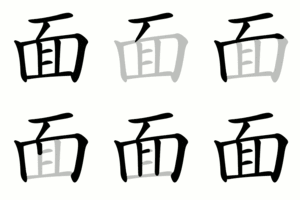 | |||
Han character
面 (Kangxi radical 176, 面+0, 9 strokes, cangjie input 一田尸中 (MWSL) or 一田卜中 (MWYL), four-corner 10600, composition ⿱丆囬)
- Kangxi radical #176, ⾯.
Derived characters
References
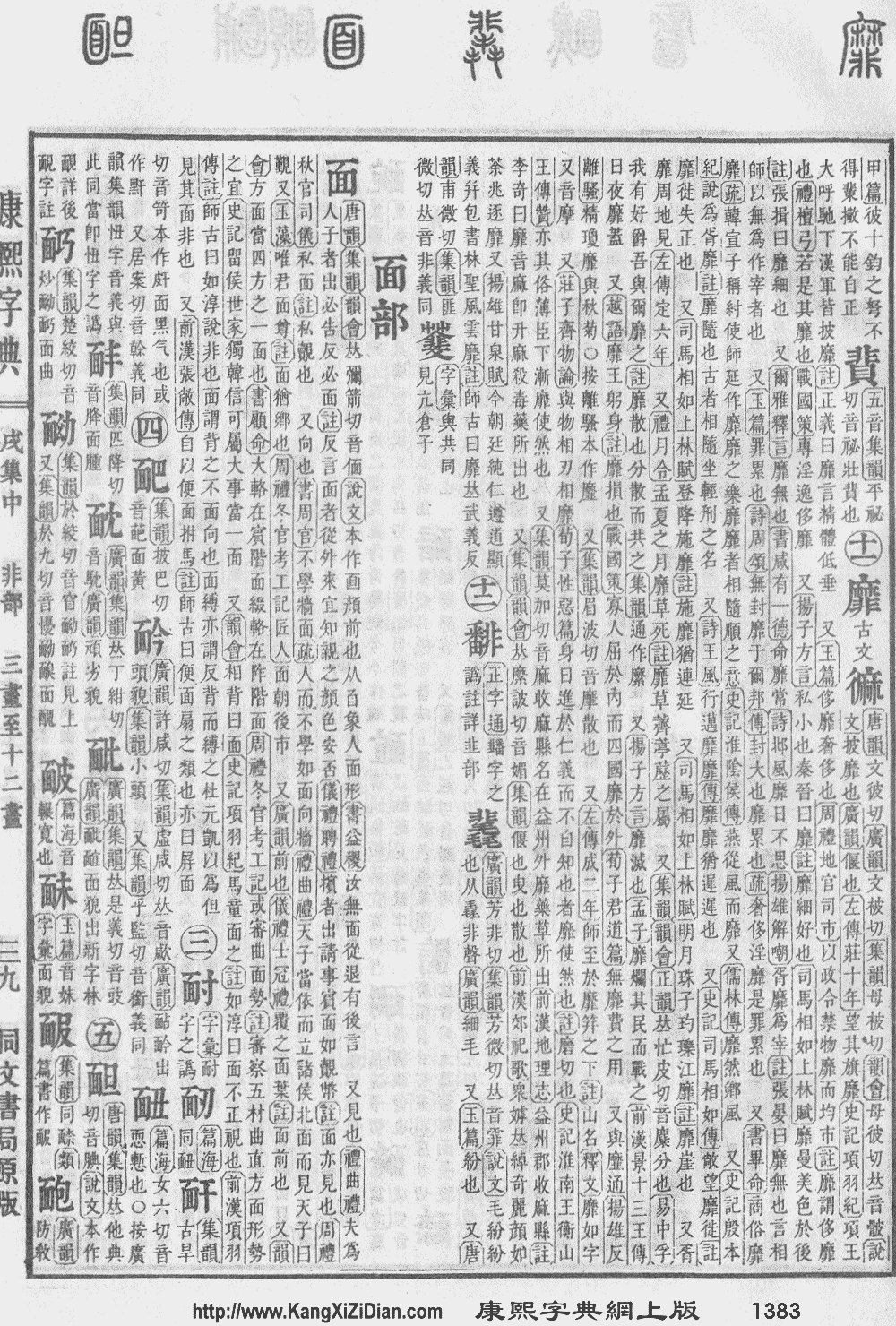
- KangXi: page 1383, character 7
- Dai Kanwa Jiten: character 42618
- Dae Jaweon: page 1896, character 18
- Hanyu Da Zidian (first edition): volume 7, page 4398, character 1
- Unihan data for U+9762
Chinese
| simp. and trad. |
面 | |
|---|---|---|
| 2nd round simp. | 𫩑 | |
Glyph origin
| Historical forms of the character 面 | |
|---|---|
| Shang | Shuowen Jiezi (compiled in Han) |
| Oracle bone script | Small seal script |
 |
 |
Characters in the same phonetic series (面) (Zhengzhang, 2003)
Pictogram (象形) , A man’s face, with an eye exaggerated, derived from 𦣻.
Etymology 1
From Proto-Sino-Tibetan *s-mjal (“face”); cognate with Mizo hmêl (“face”), Jingpho man (“face”). 偭 (OC *menʔ, “to turn; to violate”) is probably cognate (Wang, 1982), perhaps its endoactive (Schuessler, 2007).
Pronunciation
Definitions
面
- (literary or dialectal) face (Classifier: 塊/块 c)
- 人心之不同,如其面焉。 [Classical Chinese, trad. and simp.]
- From: Commentary of Zuo, c. 4th century BCE
- Rénxīn zhī bùtóng, rú qí miàn yān. [Pinyin]
- (please add an English translation of this example)
- surface; top; face
- aspect; side; respect
- 全面 ― quánmiàn ― overall
- right side; cover; outside
- (geometry) face
- (Cantonese, Singapore and Penang Hokkien) dignity; reputation; face
- 冇面 [Cantonese] ― mou5 min6-2 [Jyutping] ― to lose face; to be embarrassed
- to meet
- 面世 ― miànshì ― to come out (literally, “to meet the world”)
- 夫為人子者,出必告,反必面。 [Classical Chinese, trad.]
- From: The Book of Rites, c. 4th – 2nd century BCE
- Fū wéi rénzǐ zhě, chū bì gào, fǎn bì miàn. [Pinyin]
- A son, when he is going abroad, must inform (his parents where he is going); when he returns, he must present himself before them.
夫为人子者,出必告,反必面。 [Classical Chinese, simp.]
- face-to-face
- to face
- suffix used to form a noun of locality
- Short for 面試/面试 (miànshì, “interview”).
- HR面 ― HRmiàn ― (please add an English translation of this example)
- Classifier for objects with a flat surface.
- Classifier for numbers of times people meet each other.
Synonyms
- (face):
Synonyms of 面
Dialectal synonyms of 臉 (“face”) [map]
- (dignity):
Dialectal synonyms of 面目 (“dignity; reputation; face”) [map]
| Variety | Location | Words |
|---|---|---|
| Formal (Written Standard Chinese) | 面目, 面子, 體面, 顏面, 臉面 | |
| Mandarin | Taiwan | 面子 |
| Wanrong | 面子 | |
| Malaysia | 臉, 面子 | |
| Singapore | 面子 | |
| Cantonese | Guangzhou | 面 |
| Hong Kong | 面, 面子 | |
| Singapore (Guangfu) | 面 | |
| Min Nan | Xiamen | 面子, 面皮 |
| Quanzhou | 面皮 | |
| Zhangzhou | 面皮 | |
| Penang (Hokkien) | 面, 面皮 | |
| Singapore (Hokkien) | 面, 面皮 | |
| Manila (Hokkien) | 面皮 | |
| Singapore (Teochew) | 面皮 | |
| Wu | Shanghai | 面子 |
- (classifier):
Dialectal synonyms of 面 (“(classifier for flags)”) [map]
Dialectal synonyms of 面 (“(classifier for mirrors)”) [map]
Dialectal synonyms of 堵 (“(classifier for walls)”) [map]
| Variety | Location | Words |
|---|---|---|
| Formal (Written Standard Chinese) | 堵, 面, 道 | |
| Mandarin | Taiwan | 堵, 面, 道 |
| Yantai (Muping) | 堵 | |
| Jinan | 堵 | |
| Luoyang | 堵 | |
| Xi'an | 堵 | |
| Xining | 堵 | |
| Ürümqi | 堵 | |
| Chengdu | 堵 | |
| Guiyang | 堵 | |
| Liuzhou | 堵 | |
| Cantonese | Guangzhou | 埲, 幅 |
| Hong Kong | 埲, 幅 | |
| Dongguan | 條 | |
| Hakka | Meixian | 皮 |
| Huizhou | Jixi | 堵, 面 |
| Jin | Taiyuan | 堵 |
| Xinzhou | 堵 | |
| Min Bei | Jian'ou | 板, 堵 |
| Min Dong | Fuzhou | 堵 |
| Min Nan | Xiamen | 堵 |
| Quanzhou | 堵 | |
| Zhangzhou | 堵 | |
| Taipei (Wanhua) | 片 | |
| Kaohsiung | 面 | |
| Yilan | 堵 | |
| Changhua (Lukang) | 面 | |
| Taichung | 片 | |
| Taichung (Wuqi) | 片 | |
| Tainan | 堵, 面 | |
| Taitung | 片 | |
| Hsinchu | 片 | |
| Penghu (Magong) | 片 | |
| Jieyang | 爿, 埤, 片 | |
| Haikou | 幅 | |
| Southern Pinghua | Nanning (Tingzi) | 幅 |
| Wu | Shanghai | 堵 |
| Shanghai (Chongming) | 堵 | |
| Suzhou | 堵 | |
| Danyang | 堵 | |
| Hangzhou | 堵 | |
| Jinhua | 堵 | |
| Xiang | Changsha | 堵 |
Compounds
- 一方面 (yīfāngmiàn)
- 一面 (yīmiàn)
- 一面倒 (yīmiàndǎo)
- 下三面
- 上面 (shàngmiàn)
- 下面 (xiàmiàn)
- 三面網/三面网
- 三面角
- 不見面/不见面
- 世面 (shìmiàn)
- 丟面子/丢面子 (diū miànzi)
- 丟體面/丢体面
- 二面角 (èrmiànjiǎo)
- 交面
- 人面 (rénmiàn)
- 人面上
- 什面
- 介面卡
- 介面板
- 代面
- 仰面 (yǎngmiàn)
- 便面 (biànmiàn)
- 修面 (xiūmiàn)
- 側面/侧面 (cèmiàn)
- 假面 (jiǎmiàn)
- 假面具 (jiǎmiànjù)
- 假面劇/假面剧 (jiǎmiànjù)
- 側面圖/侧面图
- 做面子
- 做面皮
- 充場面/充场面
- 充門面/充门面
- 光面
- 光面子
- 內面/内面 (nèimiàn)
- 全面 (quánmiàn)
- 兩面/两面 (liǎngmiàn)
- 兩面光/两面光
- 兩面刀/两面刀
- 兩面派/两面派 (liǎngmiànpài)
- 兩面鋸/两面锯
- 八面光 (bāmiànguāng)
- 八面鋒/八面锋
- 公切面
- 六面體/六面体 (liùmiàntǐ)
- 冷面 (lěngmiàn)
- 出面 (chūmiàn)
- 凸面鏡/凸面镜 (tūmiànjìng)
- 凹面鏡/凹面镜 (āomiànjìng)
- 切面 (qiēmiàn)
- 前面 (qiánmiàn)
- 剖面 (pōumiàn)
- 剖面圖/剖面图
- 剝面皮/剥面皮
- 創面/创面
- 剺面
- 劈面
- 勻面/匀面
- 北面 (běimiàn)
- 匹面
- 千面人
- 半面 (bànmiàn)
- 南面 (nánmiàn)
- 反面 (fǎnmiàn)
- 吃地面
- 合面
- 唾面
- 單方面/单方面 (dānfāngmiàn)
- 單面山/单面山
- 四面 (sìmiàn)
- 四面體/四面体 (sìmiàntǐ)
- 回票面
- 地面 (dìmiàn)
- 垂直面
- 垂面
- 垢面
- 基準面/基准面
- 場面/场面 (chǎngmiàn)
- 外面
- 外面情
- 多面手 (duōmiànshǒu)
- 夠面子/够面子
- 大場面/大场面
- 大花面
- 大面
- 大面神
- 好體面/好体面
- 字面 (zìmiàn)
- 孤拐面
- 孩兒面/孩儿面
- 官面
- 官面兒/官面儿
- 封面 (fēngmiàn)
- 對面/对面 (duìmiàn)
- 小場面/小场面
- 局面 (júmiàn)
- 層面/层面 (céngmiàn)
- 市面 (shìmiàn)
- 席面 (xímiàn)
- 幅面
- 平面 (píngmiàn)
- 平面圖/平面图 (píngmiàntú)
- 平面子
- 平面鏡/平面镜 (píngmiànjìng)
- 店面 (diànmiàn)
- 底面 (dǐmiàn)
- 弦面板
- 後面/后面 (hòumiàn)
- 情面 (qíngmiàn)
- 惹口面
- 愆面 (qiānmiàn)
- 愛面子/爱面子 (ài miànzi)
- 截面 (jiémiàn)
- 扇面
- 扇面對/扇面对
- 手面 (shǒumiàn)
- 打照面
- 找面子
- 抹面 (mòmiàn)
- 拂面
- 挽面 (wǎnmiàn)
- 掩面 (yǎnmiàn)
- 搭面
- 撐場面/撑场面 (chēng chǎngmiàn)
- 撐市面/撑市面
- 撐門面/撑门面 (chēng ménmiàn)
- 撲面/扑面 (pūmiàn)
- 擦面子
- 擺門面/摆门面 (bǎi ménmiàn)
- 文面 (wénmiàn)
- 斜面 (xiémiàn)
- 新局面 (xīnjúmiàn)
- 斷面/断面 (duànmiàn)
- 方面 (fāngmiàn)
- 方面官
- 春天後母面,欲變一時間/春天后母面,欲变一时间
- 春風面/春风面
- 晤面 (wùmiàn)
- 晶面
- 暴面
- 曲面 (qūmiàn)
- 書面/书面 (shūmiàn)
- 書面紙/书面纸
- 書面語/书面语 (shūmiànyǔ)
- 會面/会面 (huìmiàn)
- 月面 (yuèmiàn)
- 有臉面/有脸面
- 有面兒/有面儿
- 東面/东面 (dōngmiàn)
- 桃花面
- 桌面 (zhuōmiàn)
- 橫剖面/横剖面 (héngpōumiàn)
- 橫斷面/横断面 (héngduànmiàn)
- 檯面/台面 (táimiàn)
- 檯面上/台面上
- 櫃面兒/柜面儿
- 正面 (zhèngmiàn)
- 歸面/归面
- 死面
- 水平面
- 水面 (shuǐmiàn)
- 沒臉面/没脸面
- 沒面皮/没面皮
- 沒面目/没面目
- 沒體面/没体面
- 河面 (hémiàn)
- 洗面 (xǐmiàn)
- 洗面皂
- 海水面
- 海面 (hǎimiàn)
- 涅面
- 浮面 (fúmiàn)
- 淨面/净面
- 滑動面/滑动面
- 滿面/满面 (mǎnmiàn)
- 滌面/涤面
- 漏面賊/漏面贼
- 炕面磚/炕面砖
- 無面目/无面目
- 照面
- 熟面人
- 爭面子/争面子 (zhēng miànzi)
- 牆面/墙面
- 片面 (piànmiàn)
- 版面 (bǎnmiàn)
- 牌面
- 獠面
- 玉面貍/玉面狸
- 球面 (qiúmiàn)
- 生面
- 生面孔
- 田字面 (tiánzìmiàn)
- 界面 (jièmiàn)
- 留臉面/留脸面
- 留面子
- 畫面/画面 (huàmiàn)
- 當面/当面 (dāngmiàn)
- 白面 (báimiàn)
- 白面皮
- 百面雷
- 皙面
- 皮面
- 盤面/盘面
- 眉面
- 相面 (xiàngmiàn)
- 真面目 (zhēnmiànmù)
- 破面
- 碑面
- 碰面 (pèngmiàn)
- 票面
- 笑面虎
- 粉面 (fěnmiàn)
- 粗面岩
- 紙面/纸面
- 素面 (sùmiàn)
- 絞面/绞面
- 縱切面/纵切面 (zōngqiēmiàn)
- 縱剖面/纵剖面 (zòngpōumiàn)
- 繃場面/绷场面 (bēng chǎngmiàn)
- 縱斷面/纵断面 (zòngduànmiàn)
- 繡面/绣面
- 缸面酒
- 翻面
- 翻面皮
- 老面子
- 老面孔
- 老面皮
- 背面 (bèimiàn)
- 背風面/背风面
- 腳面/脚面 (jiǎomiàn)
- 腹面
- 臉面/脸面 (liǎnmiàn)
- 舌面音
- 花面
- 花面狸
- 蒙面 (méngmiàn)
- 蓬頭垢面/蓬头垢面 (péngtóugòumiàn)
- 蔽面
- 薄面 (bómiàn)
- 街面兒/街面儿
- 表面 (biǎomiàn)
- 表面上 (biǎomiànshang)
- 表面化 (biǎomiànhuà)
- 表面流
- 表面積/表面积 (biǎomiànjī)
- 裝門面/装门面 (zhuāng ménmiàn)
- 裡面/里面 (lǐmiàn)
- 要面子
- 見世面/见世面
- 見面/见面 (jiànmiàn)
- 見面禮/见面礼 (jiànmiànlǐ)
- 覿面/觌面 (dímiàn)
- 討面皮/讨面皮
- 謀面/谋面 (móumiàn)
- 謎面/谜面 (mímiàn)
- 講面子/讲面子
- 識面/识面 (shímiàn)
- 變面/变面
- 負面/负面 (fùmiàn)
- 賞面/赏面
- 賣面子/卖面子
- 賞面子/赏面子
- 赤道面
- 赤面 (chìmiàn)
- 赭面
- 跗面 (fūmiàn)
- 路面 (lùmiàn)
- 軌道面/轨道面
- 軟面筋/软面筋
- 迎面 (yíngmiàn)
- 遮場面/遮场面
- 鄉面/乡面
- 酒面
- 釁面/衅面
- 金面
- 鋪面/铺面
- 鋒面/锋面
- 鋪面房/铺面房 (pùmiànfáng)
- 鏡面呢/镜面呢
- 鐵面/铁面 (tiěmiàn)
- 門面/门面 (ménmiàn)
- 門面杯/门面杯
- 門面話/门面话
- 閉面/闭面
- 開面/开面
- 陣面上/阵面上
- 陽面/阳面
- 雙面/双面 (shuāngmiàn)
- 露面
- 面上
- 面不改色 (miànbùgǎisè)
- 面世 (miànshì)
- 面交 (miànjiāo)
- 面值 (miànzhí)
- 面允
- 面光
- 面具 (miànjù)
- 面分
- 面刺
- 面前 (miànqián)
- 面向 (miànxiàng)
- 面呈
- 面告 (miàngào)
- 面君
- 面善 (miànshàn)
- 面嘴
- 面團團/面团团
- 面垢
- 面塵/面尘
- 面壁 (miànbì)
- 面奏
- 面如土色 (miàn rú tǔ sè)
- 面嫩
- 面子 (miànzi)
- 面子上
- 面子話/面子话
- 面孔 (miànkǒng)
- 面容 (miànróng)
- 面寬/面宽
- 面對/面对 (miànduì)
- 面對面/面对面 (miànduìmiàn)
- 面巾 (miànjīn)
- 面巾紙/面巾纸 (miànjīnzhǐ)
- 面市 (miànshì)
- 面龐/面庞 (miànpáng)
- 面弱
- 面形
- 面影 (miànyǐng)
- 面從/面从
- 面情
- 面折
- 面授
- 面授機宜/面授机宜
- 面敘/面叙
- 面數/面数
- 面料 (miànliào)
- 面斥
- 面旋
- 面晤
- 面書/面书 (Miànshū)
- 面會/面会 (miànhuì)
- 面朋
- 面板 (miànbǎn)
- 面染
- 面桌
- 面模
- 面模兒/面模儿
- 面水
- 面沒羅/面没罗
- 面波羅/面波罗
- 面洽
- 面湯/面汤
- 面無人色/面无人色
- 面熟 (miànshú)
- 面牆/面墙
- 面珠
- 面甜
- 面生 (miànshēng)
- 面疔
- 面癱/面瘫 (miàntān)
- 面皮 (miànpí)
- 面皮厚
- 面皮薄
- 面皰/面疱 (miànpào)
- 面盆 (miànpén)
- 面目 (miànmù)
- 面目一新
- 面目全非 (miànmùquánfēi)
- 面相 (miànxiàng)
- 面稟/面禀
- 面積/面积 (miànjī)
- 面糊盆
- 面紅/面红 (miànhóng)
- 面紅耳赤/面红耳赤 (miànhóng'ěrchì)
- 面紙/面纸
- 面紗/面纱 (miànshā)
- 面縛/面缚
- 面罄
- 面罩 (miànzhào)
- 面聖/面圣
- 面聽/面听
- 面膜 (miànmó)
- 面臨/面临 (miànlín)
- 面致
- 面般
- 面色 (miànsè)
- 面衣
- 面見/面见
- 面訴/面诉
- 面試/面试 (miànshì)
- 面談/面谈 (miàntán)
- 面諛/面谀
- 面諭/面谕
- 面謝/面谢
- 面議/面议
- 面譽/面誉
- 面譽背毀/面誉背毁
- 面貌 (miànmào)
- 面質/面质
- 面軟/面软
- 面辭/面辞
- 面邀
- 面部 (miànbù)
- 面重
- 面門/面门 (miànmén)
- 面陳/面陈
- 面霜 (miànshuāng)
- 面面 (miànmiàn)
- 面面俱到 (miànmiànjùdào)
- 面面相覷/面面相觑 (miànmiànxiāngqù)
- 面面觀/面面观
- 面靨/面靥
- 面頰/面颊 (miànjiá)
- 面額/面额 (miàn'é)
- 面飾/面饰
- 面首 (miànshǒu)
- 面駕/面驾
- 面魔羅/面魔罗
- 面黃肌瘦/面黄肌瘦 (miànhuángjīshòu)
- 靦面/䩄面
- 革面
- 鞋面 (xiémiàn)
- 𩏠小七面
- 頁面/页面 (yèmiàn)
- 頭面/头面 (tóumiàn)
- 顏面/颜面 (yánmiàn)
- 顏面角/颜面角
- 顏面骨/颜面骨
- 顧面子/顾面子
- 食面
- 馬面/马面 (mǎmiàn)
- 體面/体面 (tǐmiàn)
- 鵠面/鹄面
- 黥面 (qíngmiàn)
Descendants
Others:
Etymology 2
| For pronunciation and definitions of 面 – see 麵 (“flour; wheat noodles; etc.”). (This character, 面, is the simplified form of 麵.) |
Notes:
|
References
- “面”, in 漢語多功能字庫 (Multi-function Chinese Character Database), 香港中文大學 (the Chinese University of Hong Kong), 2014–
Japanese
Readings
Compounds
Pronunciation
Noun
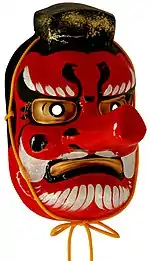
面 • (men)
Etymology 2
| Kanji in this term |
|---|
| 面 |
| おもて Grade: 3 |
| kun’yomi |
Etymology 3
| Kanji in this term |
|---|
| 面 |
| つら Grade: 3 |
| kun’yomi |
Derived terms
Derived terms
- 面魂 (tsuradamashii)
- 面の皮が厚い (tsura no kawa ga atsui)
- 面汚し (tsurayogoshi)
Korean
Etymology
From Middle Chinese 面 (MC miᴇnH).
| Historical Readings | ||
|---|---|---|
| Dongguk Jeongun Reading | ||
| Dongguk Jeongun, 1448 | 면〮 (Yale: myén) | |
| Middle Korean | ||
| Text | Eumhun | |
| Gloss (hun) | Reading | |
| Hunmong Jahoe, 1527 | ᄂᆞᆺ (Yale: nòs) | 면〯 (Yale: myěn) |
Pronunciation
- (SK Standard/Seoul) IPA(key): [mjɘ(ː)n]
- Phonetic hangul: [면(ː)]
- Though still prescribed in Standard Korean, most speakers in both Koreas no longer distinguish vowel length.
Compounds
Compounds
- 가면 (假面, gamyeon)
- 구면 (舊面, gumyeon)
- 단면 (斷面, danmyeon)
- 면적 (面積, myeonjeok)
- 반면 (反面, banmyeon)
- 장면 (場面, jangmyeon)
- 정면 (正面, jeongmyeon)
- 측면 (側面, cheungmyeon)
- 평면 (平面, pyeongmyeon)
- 화면 (畫面, hwamyeon)
- 국면 (局面, gungmyeon)
- 외면 (外面, oemyeon)
- 표면 (表面, pyomyeon)
- 이면 (裏面, imyeon)
- 방면 (方面, bangmyeon)
- 면모 (面貌, myeonmo)
- 안면 (顔面, anmyeon)
- 면상 (面相, myeonsang)
- 체면 (體面, chemyeon)
- 직면 (直面, jingmyeon)
- 면담 (面談, myeondam)
- 액면 (額面, aengmyeon)
- 수면 (水面, sumyeon)
- 진면목 (眞面目, jinmyeonmok)
Vietnamese
Han character
References
- Trần (2004).
This article is issued from Wiktionary. The text is licensed under Creative Commons - Attribution - Sharealike. Additional terms may apply for the media files.