你
| ||||||||
 | ||||||||
Translingual
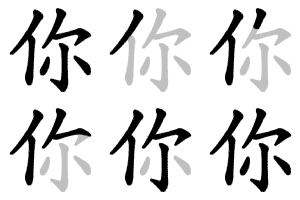
| Stroke order | |||
|---|---|---|---|
 | |||
| Stroke order | |||
|---|---|---|---|
 | |||
Han character
你 (Kangxi radical 9, 人+5, 7 strokes, cangjie input 人弓火 (ONF), four-corner 27290 or 27292, composition ⿰亻尔)
References
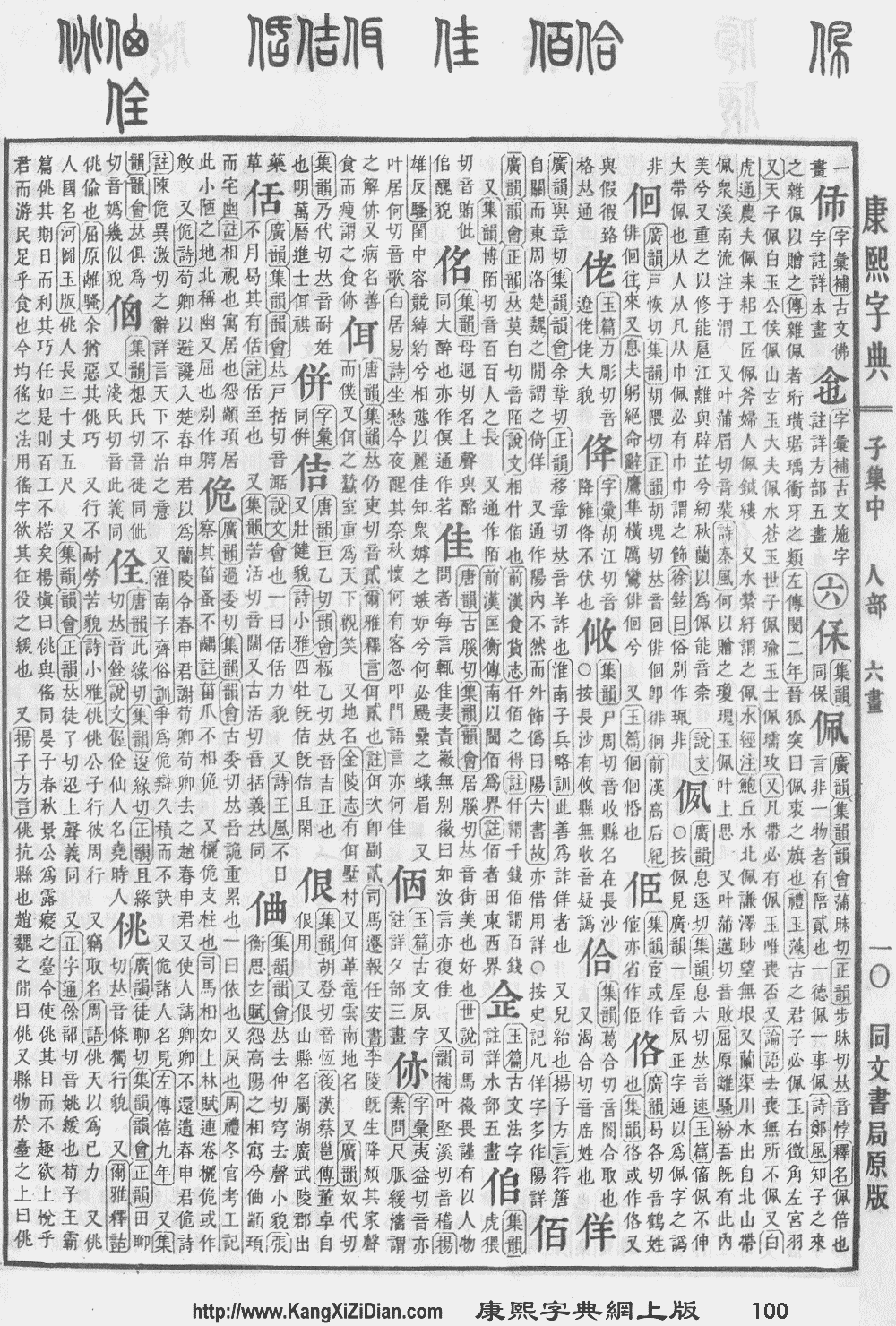
- KangXi: not present, would follow page 100, character 2
- Dai Kanwa Jiten: character 471
- Dae Jaweon: page 205, character 4
- Hanyu Da Zidian (first edition): volume 1, page 137, character 5
- Unihan data for U+4F60
- Unihan data for U+2F804
Chinese
| simp. and trad. |
你 | |
|---|---|---|
| alternative forms | ||
Glyph origin
| Historical forms of the character 你 | ||||
|---|---|---|---|---|
| ||||
|
References: Mostly from Richard Sears' Chinese Etymology site (authorisation),
|


Phono-semantic compound (形聲, OC *nɯʔ) : semantic 亻 (“person”) + phonetic 尔 (OC *njelʔ). Alternatively, Ideogrammic compound (會意) : 人 (“person”) + 尔 (“you”)
Etymology
Colloquial form of 爾 (OC *njelʔ, “you”) attested since the Tang dynasty. Ultimately from Proto-Sino-Tibetan *na-ŋ (“you”).
Pronunciation
Definitions
你
Usage notes
In traditional Chinese, 你 may be used to specifically refer to a male person, while 妳 can be used for a female person. In simplified Chinese, only 你 is standard.
Synonyms
Compounds
|
See also
| Standard Mandarin Chinese personal pronouns | |||
|---|---|---|---|
| Person | Singular | Plural | |
| 1st | — | 我 (wǒ) | 我們/我们 (wǒmen) |
| inclusive | 咱們/咱们 (zánmen) | ||
| 2nd | male/indefinite | 你 (nǐ) | 你們/你们 (nǐmen) |
| female | 妳/你 (nǐ) | 妳們/你们 (nǐmen) | |
| deity | 祢 (nǐ) | 祢們/祢们 (nǐmen) | |
| polite | 您 (nín) | 你們/你们 (nǐmen) 您們/您们 (nínmen) | |
| 3rd | male/indefinite | 他 (tā) | 他們/他们 (tāmen) |
| female | 她 (tā) | 她們/她们 (tāmen) | |
| deity | 祂 (tā) | 祂們/祂们 (tāmen) | |
| animal | 牠/它 (tā) | 牠們/它们 (tāmen) | |
| inanimate | 它 (tā) | 它們/它们 (tāmen) | |
References
- “Entry #2881”, in 臺灣閩南語常用詞辭典 [Dictionary of Frequently-Used Taiwan Minnan] (in Chinese and Min Nan), Ministry of Education, R.O.C., 2011.
Japanese
Readings
Korean
Hanja
你 (eum 니 (ni))
- This term needs a translation to English. Please help out and add a translation, then remove the text
{{rfdef}}.
Vietnamese
Han character
你: Hán Nôm readings: nể, né, nẻ, nệ, nễ, nhĩ
- This term needs a translation to English. Please help out and add a translation, then remove the text
{{rfdef}}.