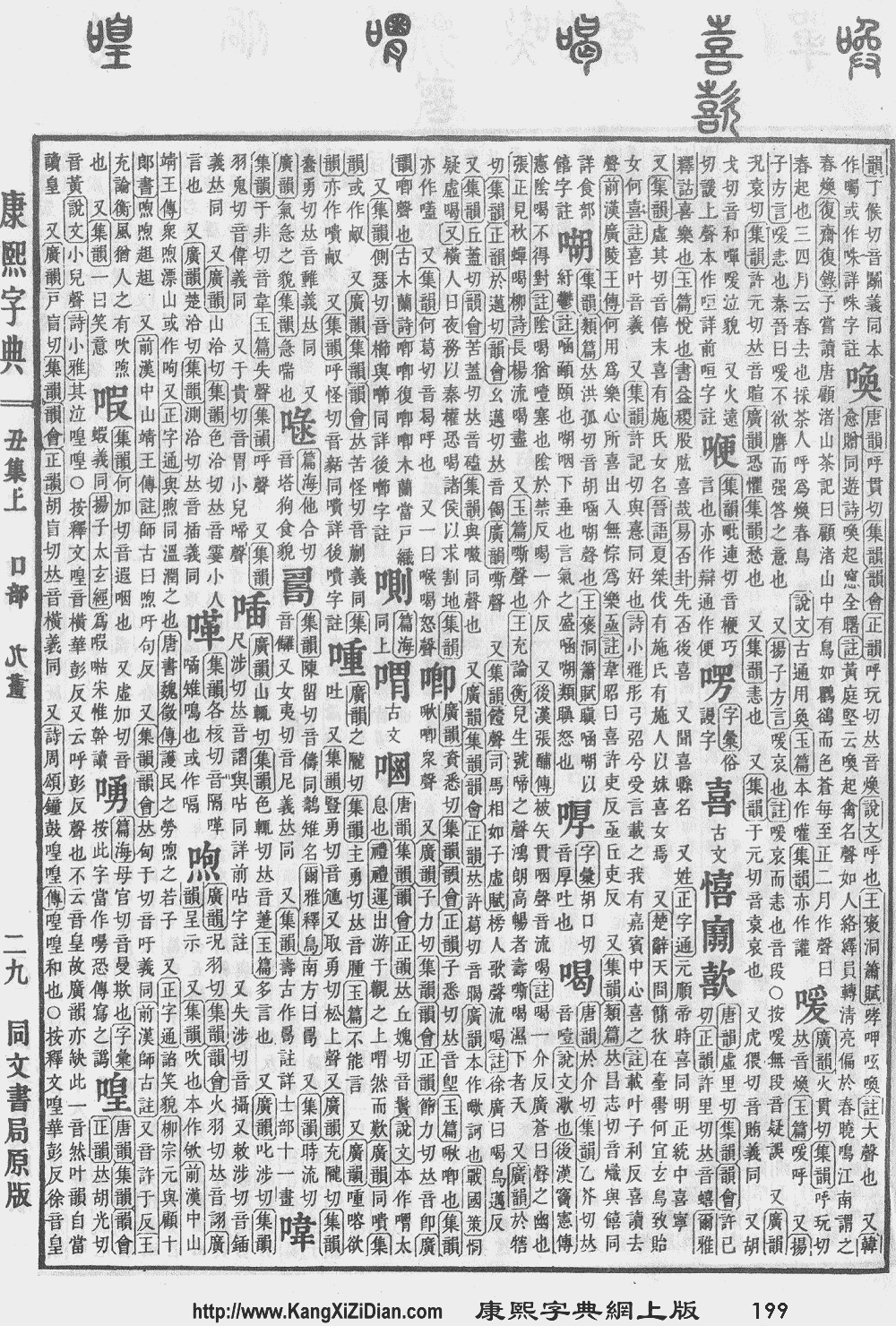
喟

喟 U+559F, 喟
CJK UNIFIED IDEOGRAPH-559F
← 喞
[U+559E]
CJK Unified Ideographs 喠 →
[U+55A0]

Translingual

Han character

喟 (Kangxi radical 30, 口+9, 12 strokes, cangjie input 口田月 (RWB), four-corner 66027, composition ⿰口胃)

References

  • KangXi: page 199, character 14
  • Dai Kanwa Jiten: character 3963
  • Dae Jaweon: page 421, character 6
  • Hanyu Da Zidian (first edition): volume 1, page 654, character 3
  • Unihan data for U+559F

Chinese

trad. 喟
simp. # 喟
alternative forms 𠷝

Glyph origin

Pronunciation


Rime
Character 喟 喟
Reading # 1/2 2/2
Initial (聲) 溪 (29) 溪 (29)
Final (韻) 脂 (18) 皆 (34)
Tone (調) Departing (H) Departing (H)
Openness (開合) Closed Closed
Division (等) III II
Fanqie 丘愧切 苦怪切
Reconstructions
Zhengzhang
Shangfang
/kʰˠiuɪH/ /kʰˠuɛiH/
Pan
Wuyun
/kʰʷᵚiH/ /kʰʷᵚæiH/
Shao
Rongfen
/kʰiuɪH/ /kʰuɐiH/
Edwin
Pulleyblank
/kʰjwiH/ /kʰwəɨjH/
Li
Rong
/kʰjuiH/ /kʰuɛiH/
Wang
Li
/kʰwiH/ /kʰwɐiH/
Bernard
Karlgren
/kʰwiH/ /kʰwăiH/
Expected
Mandarin
Reflex
kuì kuài
Expected
Cantonese
Reflex
kwai3 kwaai3
Baxter–Sagart system 1.1 (2014)
Character 喟 喟
Reading # 1/2 2/2
Modern
Beijing
(Pinyin)
kuì kuì
Middle
Chinese
‹ khwɛjH › ‹ khwijH ›
Old
Chinese
/*[k]ʷʰˁrə[t]-s/ /*[k]ʷʰrə[t]-s/
English sigh sigh

Notes for Old Chinese notations in the Baxter–Sagart system:

* Parentheses "()" indicate uncertain presence;
* Square brackets "[]" indicate uncertain identity, e.g. *[t] as coda may in fact be *-t or *-p;
* Angle brackets "<>" indicate infix;
* Hyphen "-" indicates morpheme boundary;

* Period "." indicates syllable boundary.
Zhengzhang system (2003)
Character 喟 喟
Reading # 1/2 2/2
No. 12940 12941
Phonetic
component
胃 胃
Rime
group
隊 隊
Rime
subdivision
2 2
Corresponding
MC rime
蒯 喟
Old
Chinese
/*kʰruːds/ /*kʰruds/

Definitions

喟

  1. (literary) to heave a sigh; to sigh

Compounds

  • 喟然 (kuìrán)
  • 感喟
  • 慷喟
  • 不勝感喟/不胜感喟
  • 喟嘆/喟叹
  • 喟然而嘆/喟然而叹
  • 歎喟/叹喟

Japanese

Kanji

喟

(uncommon “Hyōgai” kanji)

  1. sigh

Readings

Korean

Hanja

喟 • (wi, goe) (hangeul 위, 괴, revised wi, goe, McCune–Reischauer wi, koe, Yale wi, koy)

  1. This term needs a translation to English. Please help out and add a translation, then remove the text {{rfdef}}.

Vietnamese

Han character

喟: Hán Nôm readings: vị

  1. This term needs a translation to English. Please help out and add a translation, then remove the text {{rfdef}}.
This article is issued from Wiktionary. The text is licensed under Creative Commons - Attribution - Sharealike. Additional terms may apply for the media files.