嬰
See also: 婴
| ||||||||
Translingual
| Traditional | 嬰 |
|---|---|
| Shinjitai (extended) |
𰋷 |
| Simplified | 婴 |
Han character
嬰 (Kangxi radical 38, 女+14, 17 strokes, cangjie input 月金女 (BCV), four-corner 66404, composition ⿱賏女)
References
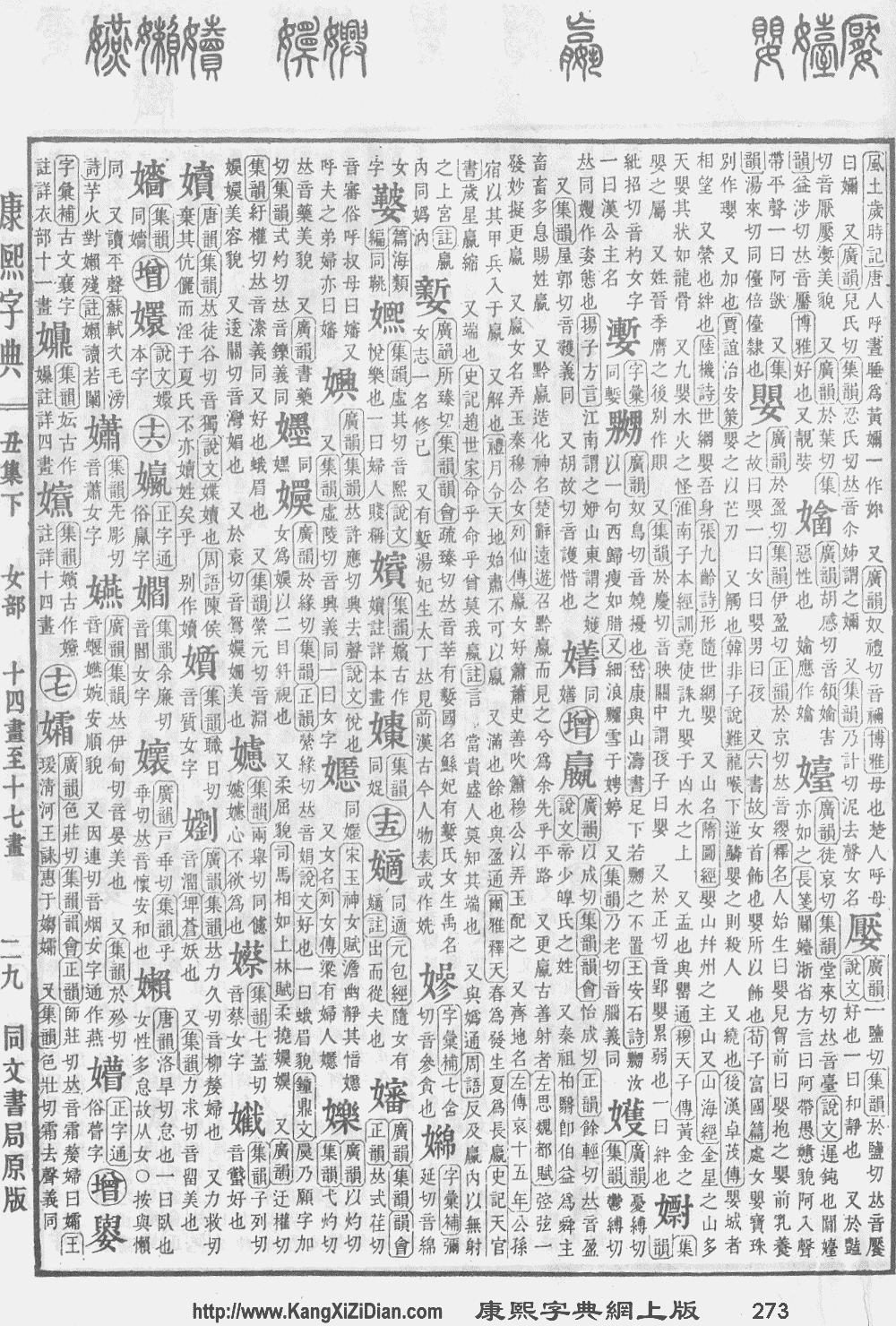
- KangXi: page 273, character 4
- Dai Kanwa Jiten: character 6828
- Dae Jaweon: page 541, character 10
- Hanyu Da Zidian (first edition): volume 2, page 1086, character 8
- Unihan data for U+5B30
Chinese
| trad. | 嬰 | |
|---|---|---|
| simp. | 婴 | |
| 2nd round simp. | 𰋷 | |
| alternative forms | 孆/𫝭 ancient 孾/𪧀 ancient | |
Glyph origin
Characters in the same phonetic series (賏) (Zhengzhang, 2003)
Ideogrammic compound (會意) : 賏 (“a string of shells”) + 女 (“woman”).
Etymology
Probably related to 縈 (OC *qʷeŋ, “to entwine”) (Schuessler, 2007).
Pronunciation
Definitions
嬰
Synonyms
Dialectal synonyms of 嬰兒 (“baby; infant”) [map]
Compounds
Derived terms from 嬰
|
Japanese
| 𰋷 | |
| 嬰 |
Kanji
嬰
(uncommon “Hyōgai” kanji, kyūjitai kanji, shinjitai form 𰋷)
- young child, newborn child
- used as western symbol ♯ sharp to mark the accidentals of musical notes
- necklace
- put around one's neck
Readings
Compounds
Etymology
| Kanji in this term |
|---|
| 嬰 |
| えい Hyōgaiji |
| kan’on |
From Middle Chinese 嬰 (MC ʔiᴇŋ).
The kan'on pronunciation, so likely a later borrowing.
Antonyms
- 変 (hen)
Korean
Hanja
嬰 • (yeong) (hangeul 영, revised yeong, McCune–Reischauer yŏng)
- This term needs a translation to English. Please help out and add a translation, then remove the text
{{rfdef}}.
Vietnamese
This article is issued from Wiktionary. The text is licensed under Creative Commons - Attribution - Sharealike. Additional terms may apply for the media files.