盈
| ||||||||
Translingual
Han character
盈 (Kangxi radical 108, 皿+4, 9 strokes, cangjie input 弓尸月廿 (NSBT), four-corner 17107, composition ⿱夃皿)
- fill
- full, overflowing
- surplus
- (of the Moon) to wax
Descendants
References
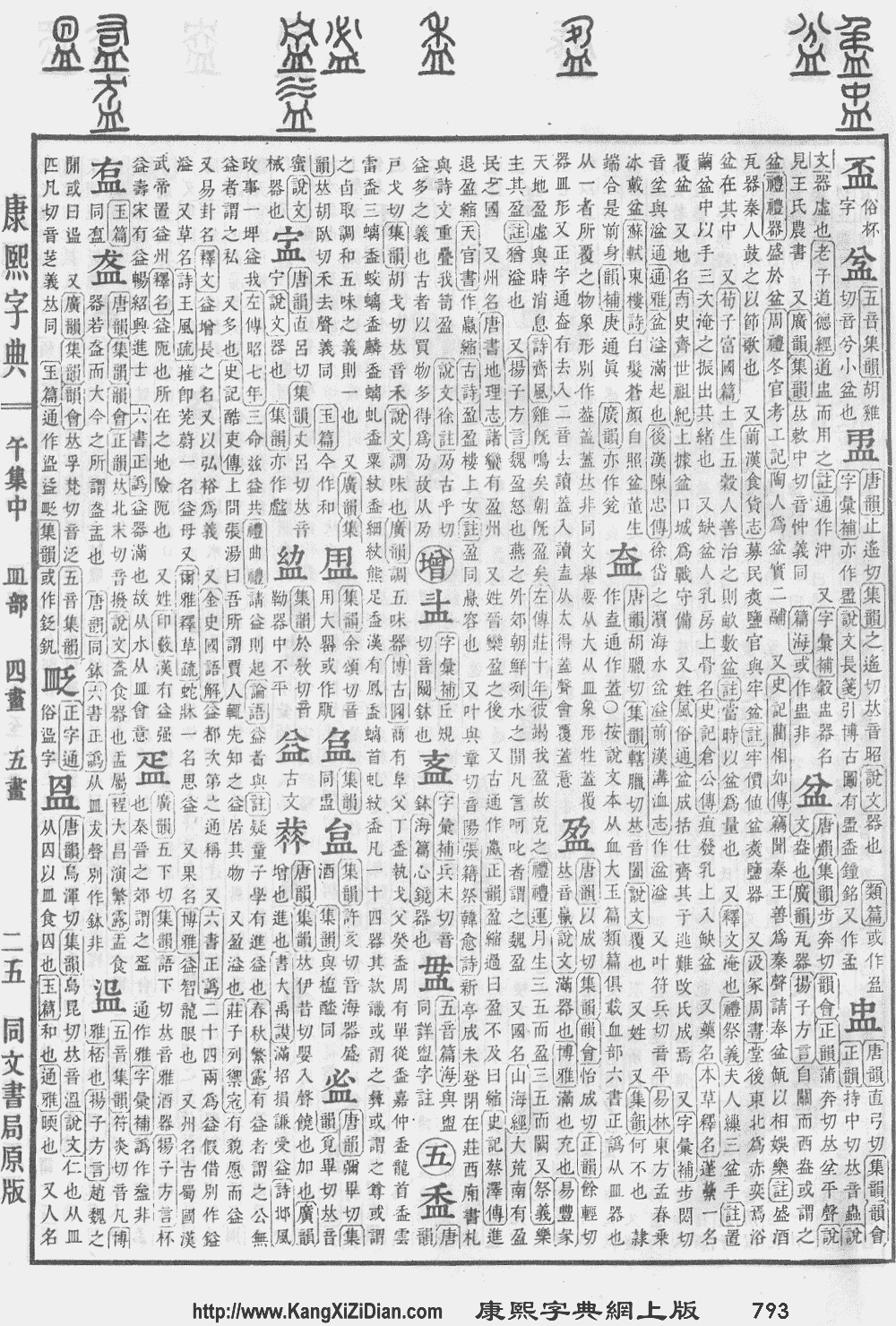
- KangXi: page 793, character 7
- Dai Kanwa Jiten: character 22961
- Dae Jaweon: page 1208, character 9
- Hanyu Da Zidian (first edition): volume 4, page 2558, character 12
- Unihan data for U+76C8
Chinese
| simp. and trad. |
盈 | |
|---|---|---|
| 2nd round simp. | ⿱夃𠀃 | |
| alternative forms | 盁 | |
Glyph origin
Ideogrammic compound (會意) : 夃 (“exceed/augment”) + 皿 (“vessel”) – to add too much (liquid) to a vessel.
Etymology
Compare Proto-Tibeto-Burman *(p/b)liŋ (“full; fill”), whence Chepang ब्लीङ्सा (bliŋ‑, “to be full; fill”), Burmese ပြည့် (prany., “to be full”), Burmese ဖြည့် (hprany., “to add”) (Schuessler, 2007, STEDT). An allofam is perhaps 孕 (OC *lɯŋs, “pregnant”), as well as 填 (OC *diːn, *diːns, *tin, *tins, “to fill up”) (Schuessler, 2007).
Pronunciation
Definitions
盈
- to fill; to be full of; to be filled with
- 車馬盈門/车马盈门 ― chēmǎyíngmén ― to have many guests (literally, “vehicles and horses fill the door”)
- 我倉既盈,我庾維憶。 [Pre-Classical Chinese, trad.]
- From: The Classic of Poetry, c. 11th – 7th centuries BCE, translated based on James Legge's version
- Wǒ cāng jì yíng, wǒ yǔ wéi yì. [Pinyin]
- When our barns are full,
And our stacks can be counted by tens of myriads.
我仓既盈,我庾维忆。 [Pre-Classical Chinese, simp.]
- to have a surplus; to have excess
- (of a person's body, or handwriting) well-developed; full-grown; shapely; curvaceous; plump
- (obsolete) vigorous; exuberant
- 彼竭我盈,故克之。 [Classical Chinese, trad. and simp.]
- From: Commentary of Zuo, c. 4th century BCE, translated based on James Legge's version
- Bǐ jié wǒ yíng, gù kè zhī. [Pinyin]
- With our spirit at the highest pitch we fell on them with their spirit exhausted; and so we conquered them.
- (literary) to reach
- 且年未盈五十,而諄諄焉如八九十者,弗能久矣。 [Classical Chinese, trad.]
- From: Commentary of Zuo, c. 4th century BCE, translated based on James Legge's version
- Qiě nián wèi yíng wǔshí, ér zhūnzhūn yān rú bā jiǔshí zhě, fú néng jiǔ yǐ. [Pinyin]
- And moreover, though his years are not yet fifty, he keeps repeating the same thing like a man of eighty or ninety—he cannot endure long.
且年未盈五十,而谆谆焉如八九十者,弗能久矣。 [Classical Chinese, simp.]
- (literary) to increase
- (obsolete) proud; arrogant
- 天道虧盈而益謙,地道變盈而流謙,鬼神害盈而福謙,人道惡盈而好謙。 [Pre-Classical Chinese, trad.]
- From: I Ching, 11th – 8th century BCE
- Tiāndào kuī yíng ér yì qiān, dìdào biàn yíng ér liú qiān, guǐshén hài yíng ér fú qiān, réndào wù yíng ér hào qiān. [Pinyin]
- It is the way of heaven to diminish the full and augment the humble. It is the way of earth to overthrow the full and replenish the humble. Spiritual Beings inflict calamity on the full and bless the humble. It is the way of men to hate the full and love the humble.
天道亏盈而益谦,地道变盈而流谦,鬼神害盈而福谦,人道恶盈而好谦。 [Pre-Classical Chinese, simp.]
- a surname
Synonyms
Compounds
Derived terms from 盈
Japanese
Readings
Compounds
Compounds with 盈
- 潮盈珠 (shiomitsutama)
Etymology
| Kanji in this term |
|---|
| 盈 |
| えい Hyōgaiji |
| kan’on |
From Middle Chinese 盈 (MC jiᴇŋ).
The kan'on pronunciation, so likely a later borrowing.
Pronunciation
- IPA(key): [e̞ː]
Korean
Hanja
盈 • (yeong) (hangeul 영, revised yeong, McCune–Reischauer yŏng, Yale yeng)
- This term needs a translation to English. Please help out and add a translation, then remove the text
{{rfdef}}.
Vietnamese
This article is issued from Wiktionary. The text is licensed under Creative Commons - Attribution - Sharealike. Additional terms may apply for the media files.