孡
| ||||||||
Translingual
Han character
孡 (Kangxi radical 39, 子+5, 8 strokes, cangjie input 弓木戈口 (NDIR), composition ⿰子台)
References
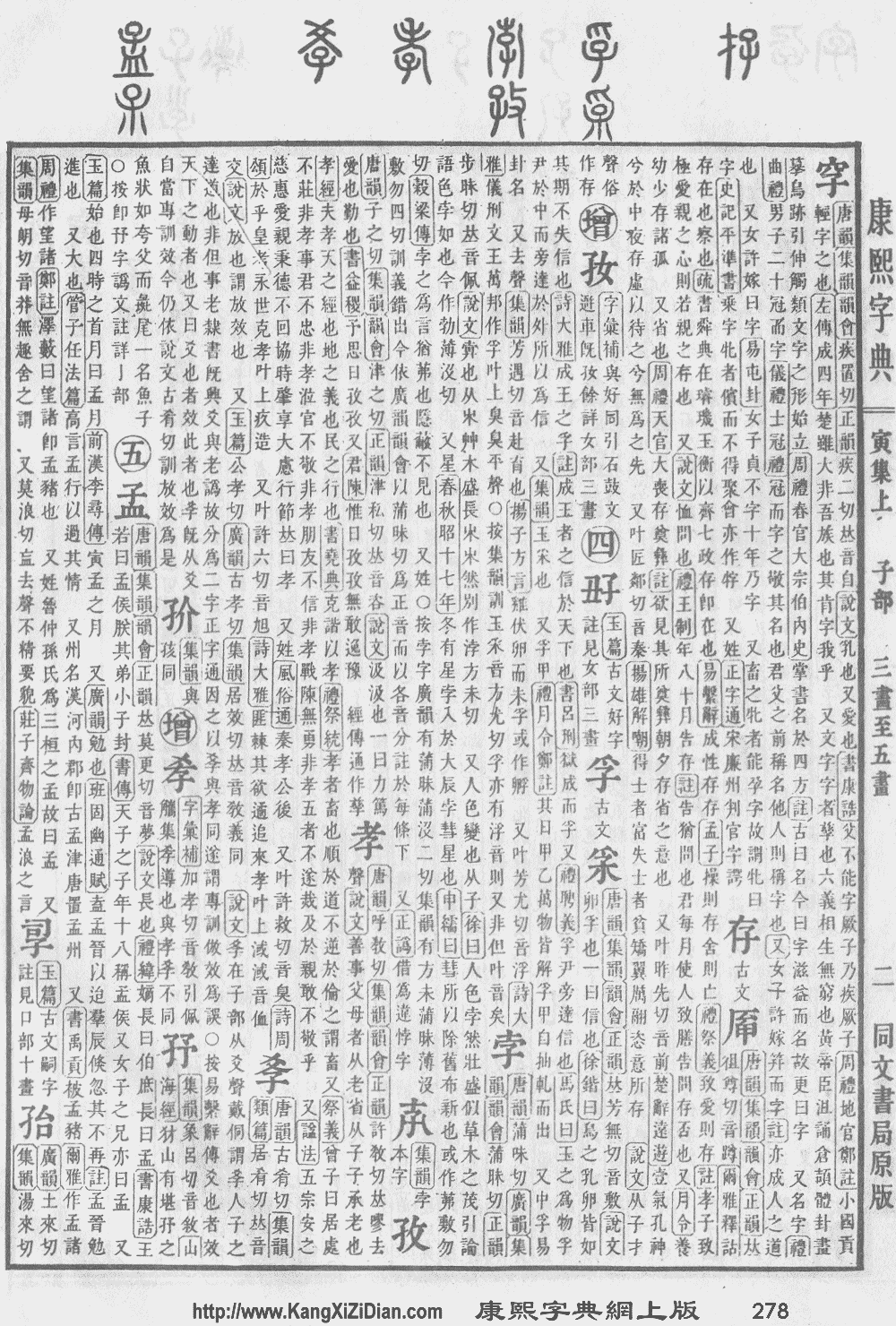
- KangXi: page 278, character 18
- Dai Kanwa Jiten: character 6962
- Dae Jaweon: page 547, character 2
- Hanyu Da Zidian (first edition): volume 2, page 1015, character 3
- Unihan data for U+5B61
Chinese
| simp. and trad. |
孡 | |
|---|---|---|
Glyph origin
Characters in the same phonetic series (台) (Zhengzhang, 2003)
| Old Chinese | |
|---|---|
| 胎 | *l̥ʰɯː |
| 台 | *l̥ʰɯː, *l'ɯː, *l'ɯː, *lɯ |
| 邰 | *l̥ʰɯː |
| 鮐 | *l̥ʰɯː, *lɯ |
| 孡 | *l̥ʰɯː |
| 苔 | *l'ɯː |
| 抬 | *l'ɯː |
| 駘 | *l'ɯː, *l'ɯːʔ |
| 炱 | *l'ɯː |
| 菭 | *l'ɯː, *l'i |
| 跆 | *l'ɯː |
| 殆 | *l'ɯːʔ |
| 怠 | *l'ɯːʔ |
| 迨 | *l'ɯːʔ |
| 紿 | *l'ɯːʔ |
| 詒 | *l'ɯːʔ, *lɯ |
| 軩 | *l'ɯːʔ |
| 咍 | *hlɯː |
| 佁 | *lɯːʔ, *l̥ʰɯs, *lɯʔ |
| 枲 | *slɯʔ |
| 辝 | *ljɯ |
| 鈶 | *ljɯʔ |
| 笞 | *l̥ʰɯ |
| 齝 | *l̥ʰɯ, *hljɯ |
| 眙 | *l̥ʰɯs, *lɯ |
| 治 | *l'ɯ, *l'ɯs, *l'is |
| 始 | *hljɯʔ |
| 怡 | *lɯ |
| 貽 | *lɯ |
| 飴 | *lɯ |
| 瓵 | *lɯ |
| 珆 | *li |
Pronunciation
Korean
Hanja
孡 • (tae) (hangeul 태, revised tae, McCune–Reischauer t'ae)
- This term needs a translation to English. Please help out and add a translation, then remove the text
{{rfdef}}.
This article is issued from Wiktionary. The text is licensed under Creative Commons - Attribution - Sharealike. Additional terms may apply for the media files.