寞

寞 U+5BDE, 寞
CJK UNIFIED IDEOGRAPH-5BDE
← 寝
[U+5BDD]
CJK Unified Ideographs 察 →
[U+5BDF]

Translingual

Han character

寞 (Kangxi radical 40, 宀+11, 14 strokes, cangjie input 十廿日大 (JTAK), four-corner 30430, composition ⿱宀莫)

References

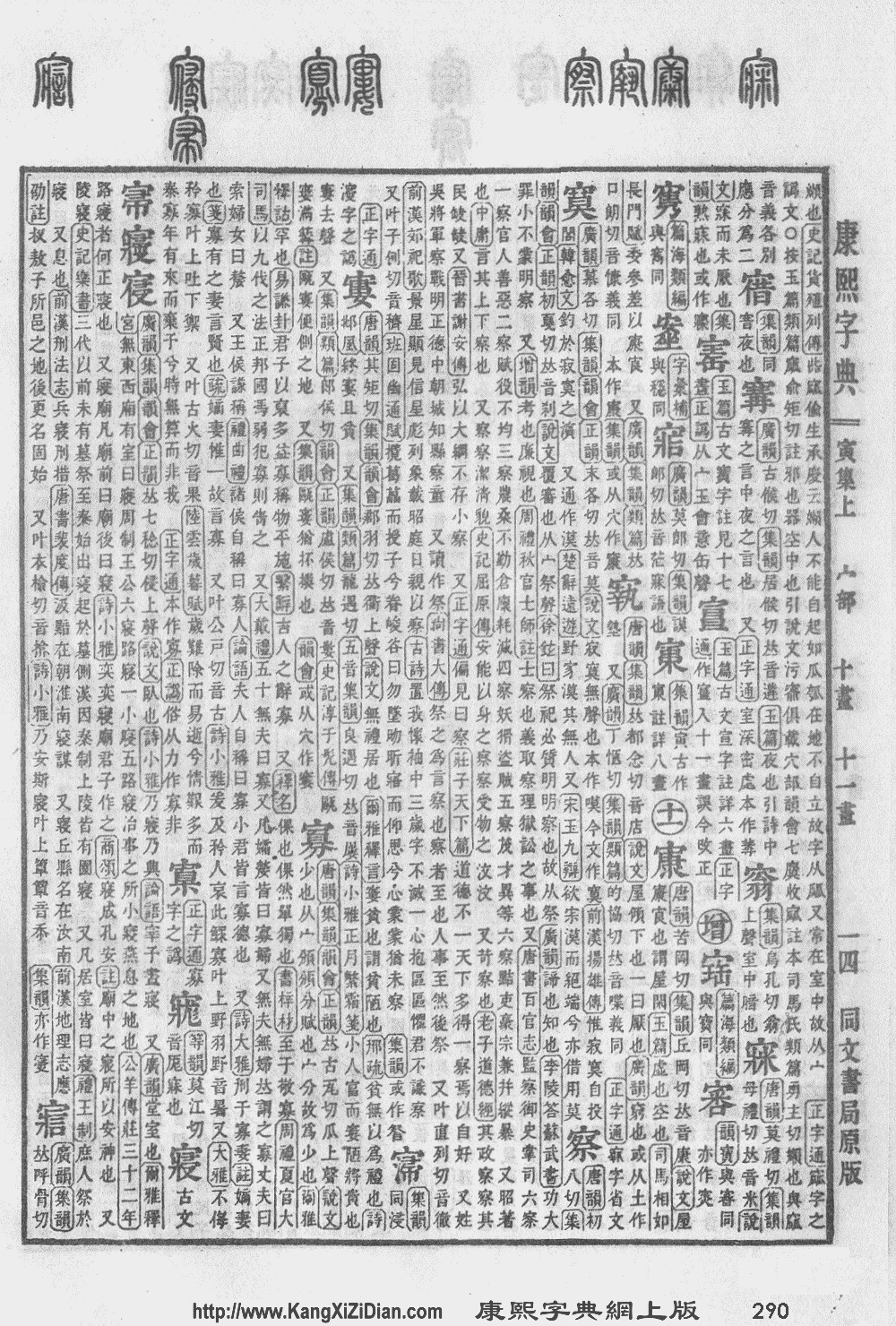
  • KangXi: page 290, character 15
  • Dai Kanwa Jiten: character 7282
  • Dae Jaweon: page 574, character 22
  • Hanyu Da Zidian (first edition): volume 2, page 945, character 7
  • Unihan data for U+5BDE

Chinese

trad. 寞
simp. # 寞

Glyph origin

Pronunciation


Rime
Character 寞
Reading # 1/1
Initial (聲) 明 (4)
Final (韻) 唐 (103)
Tone (調) Checked (Ø)
Openness (開合) Open
Division (等) I
Fanqie 慕各切
Baxter mak
Reconstructions
Zhengzhang
Shangfang
/mɑk̚/
Pan
Wuyun
/mɑk̚/
Shao
Rongfen
/mɑk̚/
Edwin
Pulleyblank
/mak̚/
Li
Rong
/mɑk̚/
Wang
Li
/mɑk̚/
Bernard
Karlgren
/mɑk̚/
Expected
Mandarin
Reflex
mò
Expected
Cantonese
Reflex
mok6
Zhengzhang system (2003)
Character 寞
Reading # 1/1
No. 9255
Phonetic
component
莫
Rime
group
鐸
Rime
subdivision
0
Corresponding
MC rime
莫
Old
Chinese
/*maːɡ/

Definitions

寞

  1. lonely; desolate

Compounds

  • 篤篤寞寞/笃笃寞寞
  • 落寞寡歡/落寞寡欢

Japanese

Kanji

寞

(uncommon “Hyōgai” kanji)

  1. This term needs a translation to English. Please help out and add a translation, then remove the text {{rfdef}}.

Readings

  • Go-on: まく (maku)
  • Kan-on: ばく (baku)
  • Kun: さびしい (sabishii, 寞しい)

Korean

Hanja

寞 (eumhun 쓸쓸할 막 (sseulsseulhal mak))

  1. Hanja form? of 막 (“lonely; desolate”).

Compounds

Vietnamese

Han character

寞: Hán Nôm readings: mịch

  1. This term needs a translation to English. Please help out and add a translation, then remove the text {{rfdef}}.
This article is issued from Wiktionary. The text is licensed under Creative Commons - Attribution - Sharealike. Additional terms may apply for the media files.