屨
See also: 屦
| ||||||||
Translingual
Han character
屨 (Kangxi radical 44, 尸+14, 17 strokes, cangjie input 尸竹人女 (SHOV), four-corner 77247, composition ⿸尸⿰彳婁)
References
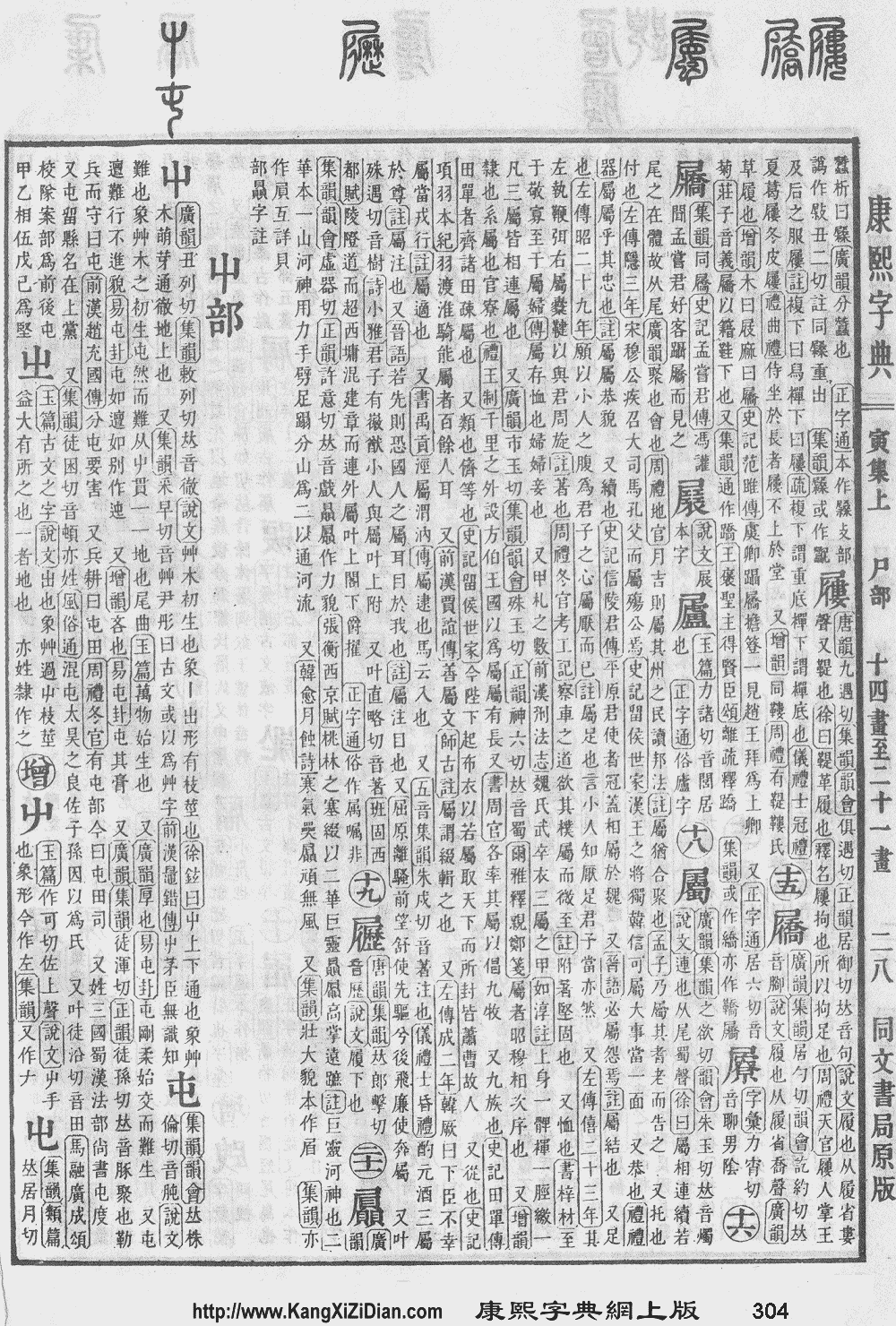
- KangXi: page 304, character 1
- Dai Kanwa Jiten: character 7811
- Dae Jaweon: page 602, character 9
- Hanyu Da Zidian (first edition): volume 2, page 981, character 9
- Unihan data for U+5C68
Chinese
| trad. | 屨 | |
|---|---|---|
| simp. | 屦 | |
Glyph origin
Characters in the same phonetic series (婁) (Zhengzhang, 2003)
| Old Chinese | |
|---|---|
| 樓 | *ɡ·roː |
| 摟 | *roː, *ro |
| 耬 | *roː |
| 僂 | *ɡ·roː, *ɡ·roːs, *ɡ·roʔ |
| 婁 | *ɡ·roː, *ɡ·ro |
| 螻 | *roː |
| 髏 | *roː |
| 蔞 | *roː, *ro, *roʔ |
| 鞻 | *roː |
| 艛 | *ɡ·roː |
| 膢 | *roː, *ro |
| 廔 | *roː |
| 嘍 | *roː, *roːʔ |
| 瞜 | *roː, *ro |
| 簍 | *roː, *roːʔ, *roʔ |
| 慺 | *roː, *ro, *roʔ |
| 鷜 | *roː, *ro |
| 褸 | *roː, *roʔ |
| 遱 | *roː |
| 謱 | *roː, *roːʔ, *roʔ |
| 嶁 | *roːʔ, *roʔ |
| 甊 | *roːʔ |
| 塿 | *roːʔ |
| 漊 | *roːʔ, *roʔ |
| 鏤 | *roːs, *ro |
| 瘻 | *roːs, *ro |
| 擻 | *sloːʔ |
| 藪 | *sloːʔ |
| 籔 | *sloːʔ, *sroʔ |
| 氀 | *ro |
| 縷 | *roʔ |
| 屢 | *ros |
| 數 | *sroʔ, *sros, *sroːɡ |
| 屨 | *klos |
| 窶 | *ɡloʔ |
| 貗 | *ɡloʔ |
Pronunciation
Compounds
|
|
|
Japanese
Readings
(Can we verify(+) this pronunciation?)
Usage notes
Used in one poem of the Nihon Shoki as 借音 (shakuon) kana for ⟨ku⟩:
- 720, Nihon Shoki (poem 99/102)
- 柯羅屨儞嗚以柯儞輔居等所梅豆羅古枳駄樓武哿左屨樓以祇能和駄唎嗚梅豆羅古枳駄樓 [Man'yōgana]
- 韓国をいかにふことそ目頰子来たるむかさくる壱岐の渡りを目頰子来たる [Modern spelling]
- Karakuni o ika ni fukoto so Mezurako kitaru mukasakuru Iki no watari o Mezurako kitaru
- What has Mezurako come to say about Korea? Why has Mezurako come across the straits of distant Iki?[1]
References
- Jin'ichi Konishi; Aileen Gatten and Nicholas Teele, translators (2017), Earl Roy Miner, editor, A History of Japanese Literature, Volume 1: The Archaic and Ancient Ages (Volume 4935 of Princeton Legacy Library), Princeton University Press, →ISBN, page 136
This article is issued from Wiktionary. The text is licensed under Creative Commons - Attribution - Sharealike. Additional terms may apply for the media files.