峰
See also: 峯
| ||||||||
Translingual
Han character
峰 (Kangxi radical 46, 山+7, 10 strokes, cangjie input 山竹水十 (UHEJ), four-corner 27754, composition ⿰山夆)
Derived characters
- 𫌛
References
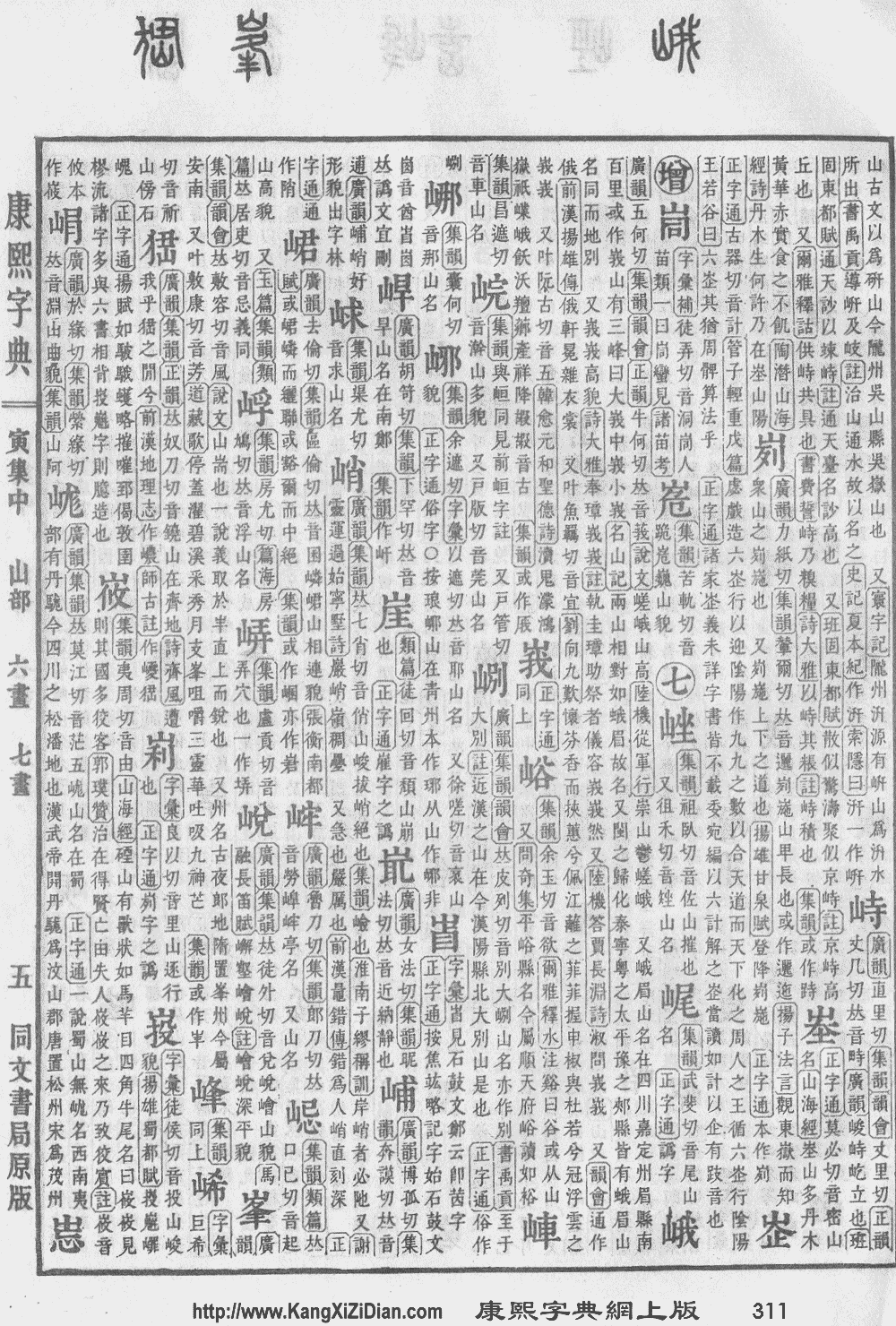
- KangXi: page 311, character 31
- Dai Kanwa Jiten: character 8094
- Dae Jaweon: page 612, character 1
- Hanyu Da Zidian (first edition): volume 1, page 775, character 18
- Unihan data for U+5CF0
Chinese
| trad. | 峰/峯 | |
|---|---|---|
| simp. | 峰 | |
| 2nd round simp. | 夆 | |
Glyph origin
Characters in the same phonetic series (丰) (Zhengzhang, 2003)
| Old Chinese | |
|---|---|
| 邦 | *proːŋ |
| 梆 | *proːŋ |
| 垹 | *proːŋ |
| 肨 | *pʰroːŋs, *pʰroːŋs |
| 蚌 | *broːŋʔ, *breːŋʔ |
| 玤 | *broːŋʔ |
| 棒 | *broːŋʔ |
| 蜯 | *broːŋʔ |
| 琫 | *poːŋʔ |
| 菶 | *poːŋʔ, *boːŋʔ |
| 俸 | *poːŋʔ, *boŋs |
| 髼 | *boːŋ |
| 蜂 | *boːŋ, *pʰoŋ |
| 韸 | *boːŋ |
| 蓬 | *boːŋ |
| 篷 | *boːŋ |
| 唪 | *boːŋʔ, *boŋʔ |
| 埲 | *boːŋʔ |
| 丰 | *pʰoŋ |
| 妦 | *pʰoŋ |
| 仹 | *pʰoŋ |
| 峯 | *pʰoŋ |
| 峰 | *pʰoŋ |
| 鋒 | *pʰoŋ |
| 烽 | *pʰoŋ |
| 蠭 | *pʰoŋ |
| 桻 | *pʰoŋ |
| 莑 | *pʰoŋ |
| 夆 | *pʰoŋ, *boŋ, *ɡaːds |
| 捧 | *pʰoŋʔ |
| 逢 | *boŋ |
| 縫 | *boŋ, *boŋs |
| 漨 | *boŋ |
| 捀 | *boŋ, *boŋs |
| 奉 | *boŋʔ |
Phono-semantic compound (形聲, OC *pʰoŋ) : semantic 山 (“mountain”) + phonetic 夆 (OC *pʰoŋ, *boŋ, *ɡaːds).
Pronunciation
Compounds
Derived terms from 峰
|
|
|
Japanese
Readings
Etymology 1
| Kanji in this term |
|---|
| 峰 |
| お Grade: S |
| kun’yomi |
| Alternative spelling |
|---|
| 丘 |
/wo/ → /o/
From Old Japanese. Attested in the Man'yōshū.
Pronunciation
- IPA(key): [o̞]
Noun
- (obsolete) a small place in the mountain
- (obsolete) hill, hilltop
- c. 759, Man'yōshū (book 19, poem 4151), text here
- 今日之為等思標之足引乃峯上之櫻如此開尓家里 [Man'yōgana]
- 今日のためと思ひて標しあしひきの峰の上の桜かく咲きにけり [Modern spelling]
- kyō no tame to omoite shimeshi ashihiki no onoe no sakura kaku saki ni keri
- For the sake of today's feast I thought and put up a sign. The cherry of the foot-dragging hill-tops has come to blossom thus.[1]
- (obsolete) peak, ridge
Etymology 2
| Kanji in this term |
|---|
| 峰 |
| ね Grade: S |
| kun’yomi |
| Alternative spellings |
|---|
| 峯 嶺 |
From Old Japanese. Used mainly in compounds.
Noun
峰 • (ne)
- summit of a mountain, peak
- c. 759, Man'yōshū (book 14, poem 3515), text here
- 阿我於毛乃和須礼牟之太波久尓波布利祢尓多都久毛乎見都追之努波西 [Man'yōgana]
- 我が面の忘れむしだは国はふり嶺に立つ雲を見つつ偲はせ [Modern spelling]
- aga omo no wasuremu shida wa kuni wa furi ne ni tatsukumo o mitsutsu shinowase
- The moment you might forget my face, seeing the clouds overflowing the country and rising on the peaks, think of me![3]
Etymology 3
| Kanji in this term |
|---|
| 峰 |
| みね Grade: S |
| kun’yomi |
| Alternative spellings |
|---|
| 峯 嶺 |
From 御 (mi, honorific prefix) + 峰 (ne, “peak”)[2], in reference to the 神 (kami, “god or spirit”) at the top of a mountain. Now the standard spelling for a peak.
Noun
峰 • (mine)
- peak, ridge
- 912, Kokin Wakashū, poem 365 (also Hyakunin Isshu, poem 16)
- 立ち別れいなばの山の峰に生ふるまつとし聞かば今帰り来む
- tachi-wakare Inaba-no-yama no mine ni ouru matsu to shi kikaba ima kaeri-kon
- Even if I depart and go to Inaba Mountain, on whose peak grow pines, if I hear you pine for me, I will return straightway to you.[4]
- 912, Kokin Wakashū, poem 776 (also Hyakunin Isshu, poem 13)
- 筑波嶺の峰より落つるみなの川恋ぞ積もりて淵となりぬる
- Tsukuba-ne no mine yori otsuru Minano-gawa koi zo tsumorite fuchi to nari nuru
- Falling from the ridge of high Tsukuba, the Minano River at last gathers itself, like my love, into a deep, still pool.[5]
- (by extension) top or summit of something
- back of a blade
References
- Jan Lodewijk Pierson, Jr. (1963) The Manyôśû Translated and Annotated Book XIX, Brill Archive, page 14
- 2006, 大辞林 (Daijirin), Third Edition (in Japanese), Tōkyō: Sanseidō, →ISBN
- Jan Lodewijk Pierson, Jr. (1958) The Manyôśû Translated and Annotated Book XX, Brill Archive, page 74
- Joshua S. Mostow (1996) Pictures of the Heart: The Hyakunin Isshu in Word and Image, University of Hawaii Press, →ISBN, page 190
- Kenneth Rexroth (1964) One Hundred Poems from the Japanese, New Directions Publishing, →ISBN, page 103
Korean
Hanja
峰 • (bong) (hangeul 봉, revised bong, McCune–Reischauer pong)
- This term needs a translation to English. Please help out and add a translation, then remove the text
{{rfdef}}.
Compounds
- 最高峰 (최고봉)
Vietnamese
This article is issued from Wiktionary. The text is licensed under Creative Commons - Attribution - Sharealike. Additional terms may apply for the media files.