篷
| ||||||||
Translingual
Han character
篷 (Kangxi radical 118, 竹+11, 16 strokes, cangjie input 竹卜竹十 (HYHJ), four-corner 88304, composition ⿱𥫗逢)
Derived characters
- 𣠑
References
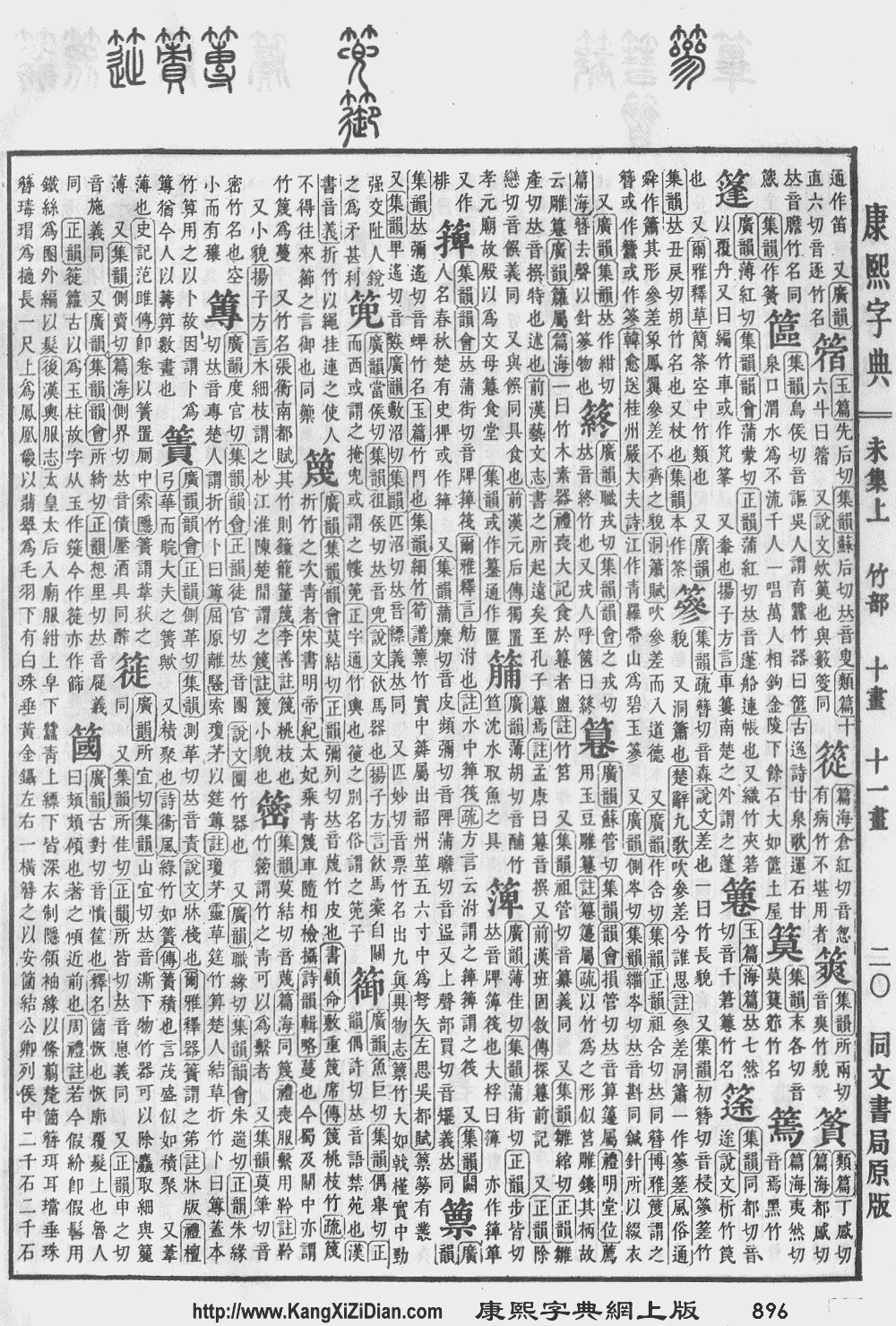
- KangXi: page 896, character 8
- Dai Kanwa Jiten: character 26404
- Dae Jaweon: page 1323, character 3
- Hanyu Da Zidian (first edition): volume 5, page 3003, character 11
- Unihan data for U+7BF7
Chinese
| trad. | 篷 | |
|---|---|---|
| simp. # | 篷 | |
| alternative forms | 帆 Min “sail” | |
Glyph origin
Characters in the same phonetic series (丰) (Zhengzhang, 2003)
| Old Chinese | |
|---|---|
| 邦 | *proːŋ |
| 梆 | *proːŋ |
| 垹 | *proːŋ |
| 肨 | *pʰroːŋs, *pʰroːŋs |
| 蚌 | *broːŋʔ, *breːŋʔ |
| 玤 | *broːŋʔ |
| 棒 | *broːŋʔ |
| 蜯 | *broːŋʔ |
| 琫 | *poːŋʔ |
| 菶 | *poːŋʔ, *boːŋʔ |
| 俸 | *poːŋʔ, *boŋs |
| 髼 | *boːŋ |
| 蜂 | *boːŋ, *pʰoŋ |
| 韸 | *boːŋ |
| 蓬 | *boːŋ |
| 篷 | *boːŋ |
| 唪 | *boːŋʔ, *boŋʔ |
| 埲 | *boːŋʔ |
| 丰 | *pʰoŋ |
| 妦 | *pʰoŋ |
| 仹 | *pʰoŋ |
| 峯 | *pʰoŋ |
| 峰 | *pʰoŋ |
| 鋒 | *pʰoŋ |
| 烽 | *pʰoŋ |
| 蠭 | *pʰoŋ |
| 桻 | *pʰoŋ |
| 莑 | *pʰoŋ |
| 夆 | *pʰoŋ, *boŋ, *ɡaːds |
| 捧 | *pʰoŋʔ |
| 逢 | *boŋ |
| 縫 | *boŋ, *boŋs |
| 漨 | *boŋ |
| 捀 | *boŋ, *boŋs |
| 奉 | *boŋʔ |
Phono-semantic compound (形聲, OC *boːŋ) : semantic 竹 (“bamboo”) + phonetic 逢 (OC *boŋ).
Etymology
Variant of 帆 (OC *bom), which has been related to 風 (OC *plum, “wind”) (Karlgren, 1957); if so, it may be from Proto-Sino-Tibetan *buŋ (“wind”) (STEDT).
Pronunciation
Synonyms
Dialectal synonyms of 帆 (“sail”) [map]
Compounds
Japanese
Kanji
篷
- This term needs a translation to English. Please help out and add a translation, then remove the text
{{rfdef}}.
Korean
Hanja
篷 • (bong) (hangeul 봉, revised bong, McCune–Reischauer pong, Yale pong)
- This term needs a translation to English. Please help out and add a translation, then remove the text
{{rfdef}}.
This article is issued from Wiktionary. The text is licensed under Creative Commons - Attribution - Sharealike. Additional terms may apply for the media files.