悤
| ||||||||
Translingual
Han character
悤 (Kangxi radical 61, 心+7, 11 strokes, cangjie input 竹田心 (HWP) or X竹田心 (XHWP), composition ⿱囱心)
Usage notes
The component 悤 in some of the derived characters may be simplified to either 总 in simplified Chinese or 忩 in Japanese shinjitai. For example, 聰 is simplified to 聪 in simplified Chinese and 總 is simplified to 総 in Japanese shinjitai. Note that 總 is simplified to 总 in simplified Chinese.
References
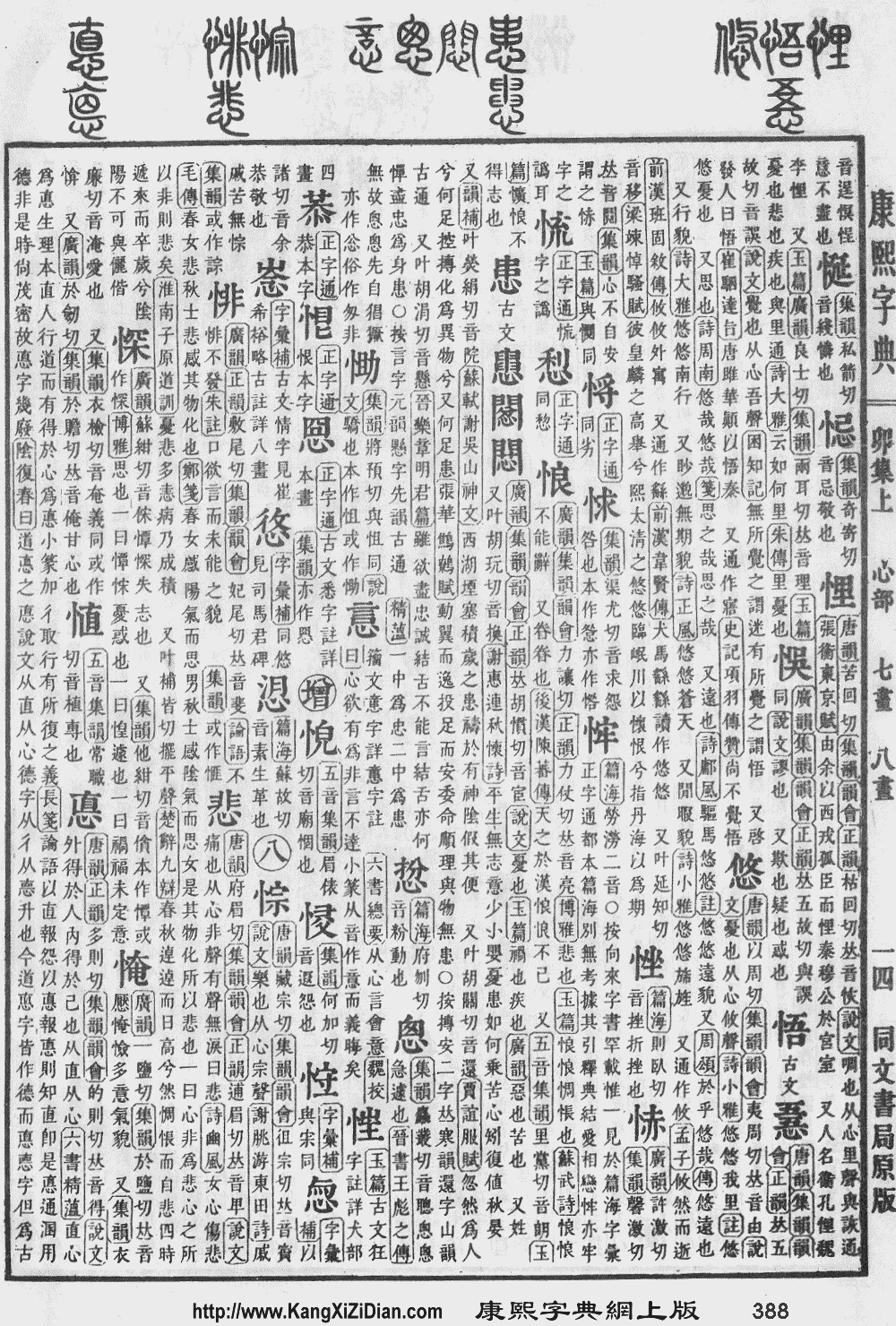
- KangXi: page 388, character 21
- Dai Kanwa Jiten: character 10693
- Dae Jaweon: page 721, character 10
- Hanyu Da Zidian (first edition): volume 4, page 2301, character 3
- Unihan data for U+60A4
Chinese
Glyph origin
| Historical forms of the character 悤 | ||||
|---|---|---|---|---|
| Shang | Western Zhou | Spring and Autumn | Warring States | Shuowen Jiezi (compiled in Han) |
| Oracle bone script | Bronze inscriptions | Bronze inscriptions | Qin slip script | Small seal script |
 |
 |
 |
 |
 |
Characters in the same phonetic series (囱) (Zhengzhang, 2003)
| Old Chinese | |
|---|---|
| 牎 | *sʰroːŋ |
| 窗 | *sʰroːŋ |
| 窓 | *sʰroːŋ |
| 囱 | *sʰroːŋ, *sʰloːŋ |
| 總 | *ʔsloːŋʔ |
| 熜 | *ʔsloːŋʔ |
| 傯 | *ʔsloːŋʔ |
| 緫 | *ʔsloːŋʔ |
| 揔 | *ʔsloːŋʔ |
| 偬 | *ʔsloːŋʔ, *ʔsloːŋs |
| 囪 | *sʰloːŋ |
| 璁 | *sʰloːŋ |
| 驄 | *sʰloːŋ |
| 蔥 | *sʰloːŋ |
| 匆 | *sʰloːŋ |
| 怱 | *sʰloːŋ |
| 葱 | *sʰloːŋ |
| 楤 | *sʰloːŋ |
| 聦 | *sʰloːŋ |
| 繱 | *sʰloːŋ |
| 騘 | *sʰloːŋ |
| 鍯 | *sʰloːŋ |
| 聰 | *sʰloːŋ |
| 愡 | *sʰloːŋs |
| 檧 | *sloːŋ, *sloːŋʔ |
| 憽 | *sloːŋ |
| 幒 | *sʰloŋʔ, *kjoŋ |
Phono-semantic compound (形聲) : phonetic 囪 (OC *sʰloːŋ) + semantic 心 (“heart”).
Japanese
Readings
- Go-on: す (su)←す (su, historical); すう (sū)←すう (sū, historical)
- Kan-on: そう (sō)←そう (sou, historical)
- Kun: にわか (niwaka); あわてる (awateru)
Korean
Alternative forms
Etymology
From Middle Chinese 悤 (MC t͡sʰuŋ).
Pronunciation
- (SK Standard/Seoul) IPA(key): [t͡ɕʰo̞ŋ]
- Phonetic hangul: [총]
Compounds
References
This article is issued from Wiktionary. The text is licensed under Creative Commons - Attribution - Sharealike. Additional terms may apply for the media files.