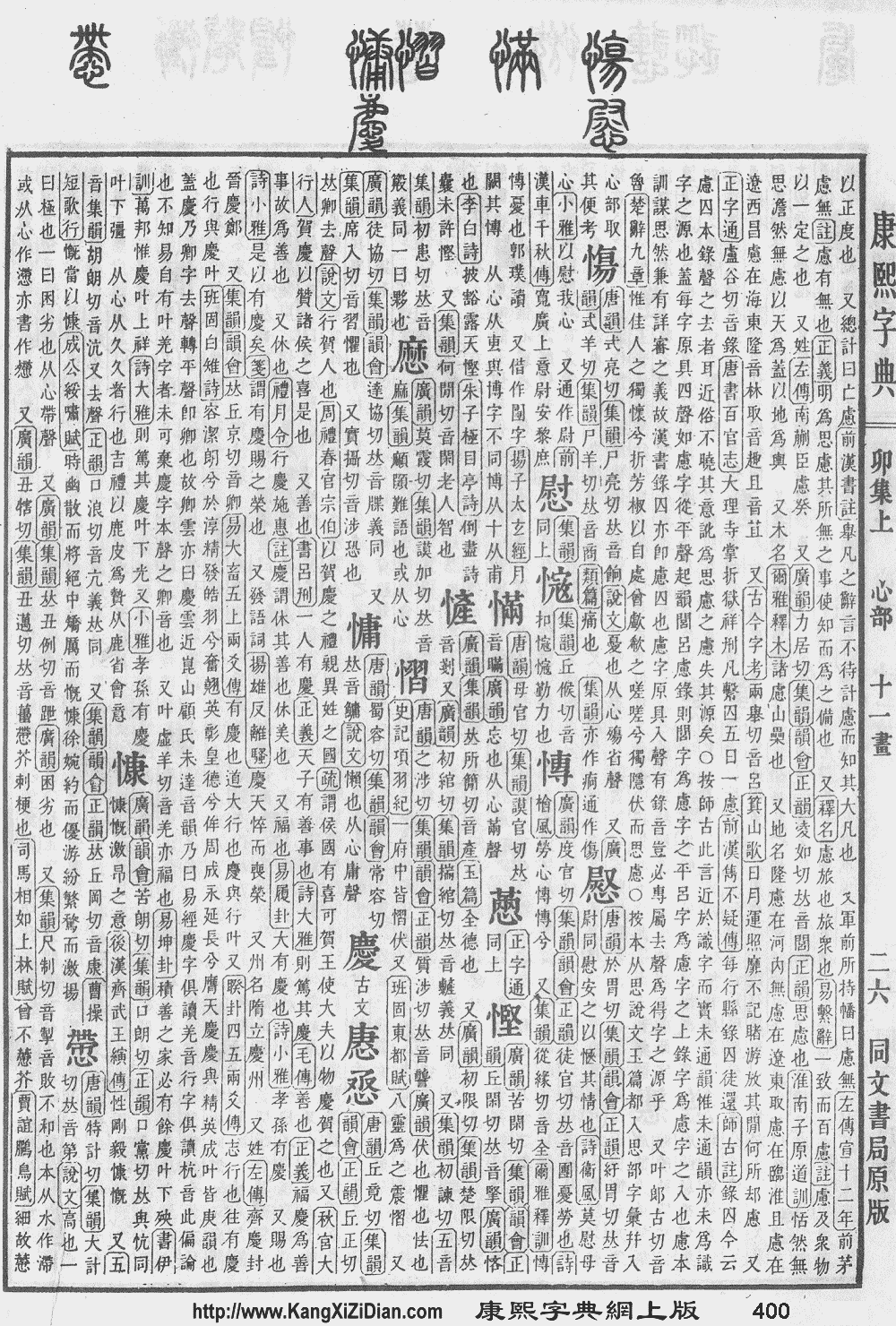
慰

慰 U+6170, 慰
CJK UNIFIED IDEOGRAPH-6170
← 慯
[U+616F]
CJK Unified Ideographs 慱 →
[U+6171]

Translingual

Han character

慰 (Kangxi radical 61, 心+11, 15 strokes, cangjie input 尸戈心 (SIP) or X尸戈心 (XSIP), four-corner 74330, composition ⿱尉心)

References

  • KangXi: page 400, character 3
  • Dai Kanwa Jiten: character 11135
  • Dae Jaweon: page 739, character 23
  • Hanyu Da Zidian (first edition): volume 4, page 2343, character 15
  • Unihan data for U+6170

Chinese

trad. 慰
simp. # 慰
2nd round simp. 尉

Glyph origin

Phono-semantic compound (形聲, OC *quds) : phonetic 尉 (OC *quds, *qud) + semantic 心.

Pronunciation


Rime
Character 慰
Reading # 1/1
Initial (聲) 影 (34)
Final (韻) 微 (21)
Tone (調) Departing (H)
Openness (開合) Closed
Division (等) III
Fanqie 於胃切
Reconstructions
Zhengzhang
Shangfang
/ʔʉiH/
Pan
Wuyun
/ʔʷɨiH/
Shao
Rongfen
/ʔiuəiH/
Edwin
Pulleyblank
/ʔujH/
Li
Rong
/ʔiuəiH/
Wang
Li
/ĭwəiH/
Bernard
Karlgren
/ʔwe̯iH/
Expected
Mandarin
Reflex
wèi
Expected
Cantonese
Reflex
wai3
Baxter–Sagart system 1.1 (2014)
Character 慰
Reading # 1/1
Modern
Beijing
(Pinyin)
wèi
Middle
Chinese
‹ ʔjwɨjH ›
Old
Chinese
/*ʔut-s/
English comfort, soothe (v.)

Notes for Old Chinese notations in the Baxter–Sagart system:

* Parentheses "()" indicate uncertain presence;
* Square brackets "[]" indicate uncertain identity, e.g. *[t] as coda may in fact be *-t or *-p;
* Angle brackets "<>" indicate infix;
* Hyphen "-" indicates morpheme boundary;

* Period "." indicates syllable boundary.
Zhengzhang system (2003)
Character 慰
Reading # 1/1
No. 12953
Phonetic
component
尉
Rime
group
隊
Rime
subdivision
2
Corresponding
MC rime
尉
Old
Chinese
/*quds/

Definitions

慰

  1. to comfort; to console; to calm
  2. relieved; glad

Compounds

Japanese

Kanji

慰

(common “Jōyō” kanji)

  1. consolation

Readings

Etymology 1

Kanji in this term
慰
い
Grade: S
on’yomi

/wi/ → /i/

From Middle Chinese 慰 (MC ʔʉiH).

Pronunciation

  • IPA(key): [i]

Affix

慰(い) • (i) ←ゐ (wi)?

  1. comfort; console
Derived terms

Etymology 2

Kanji in this term
慰
なぐさ
Grade: S
kun’yomi
For pronunciation and definitions of 慰 – see なぐさ.
(This term, 慰, is an alternative spelling of the above terms.)

(The following entry is uncreated: なぐさ.)

Korean

Hanja

慰 (eumhun 위로할 위 (wirohal wi))

  1. Hanja form? of 위 (“consolation”).

Compounds

Vietnamese

Han character

慰: Hán Nôm readings: ủy/uỷ, úy/uý, ủi, ụy/uỵ, ùy/uỳ, ũy/uỹ, vụy/vuỵ, vũy/vuỹ, vùy/vuỳ

  1. This term needs a translation to English. Please help out and add a translation, then remove the text {{rfdef}}.
This article is issued from Wiktionary. The text is licensed under Creative Commons - Attribution - Sharealike. Additional terms may apply for the media files.