掻
See also: 搔
 | ||||||||
Translingual
| Japanese | 掻 |
|---|---|
| Simplified | 搔 |
| Traditional | 搔 |
Han character
掻 (Kangxi radical 64, 手+8, 11 strokes, cangjie input 手水中戈 (QELI), composition ⿰扌𧈡)
References
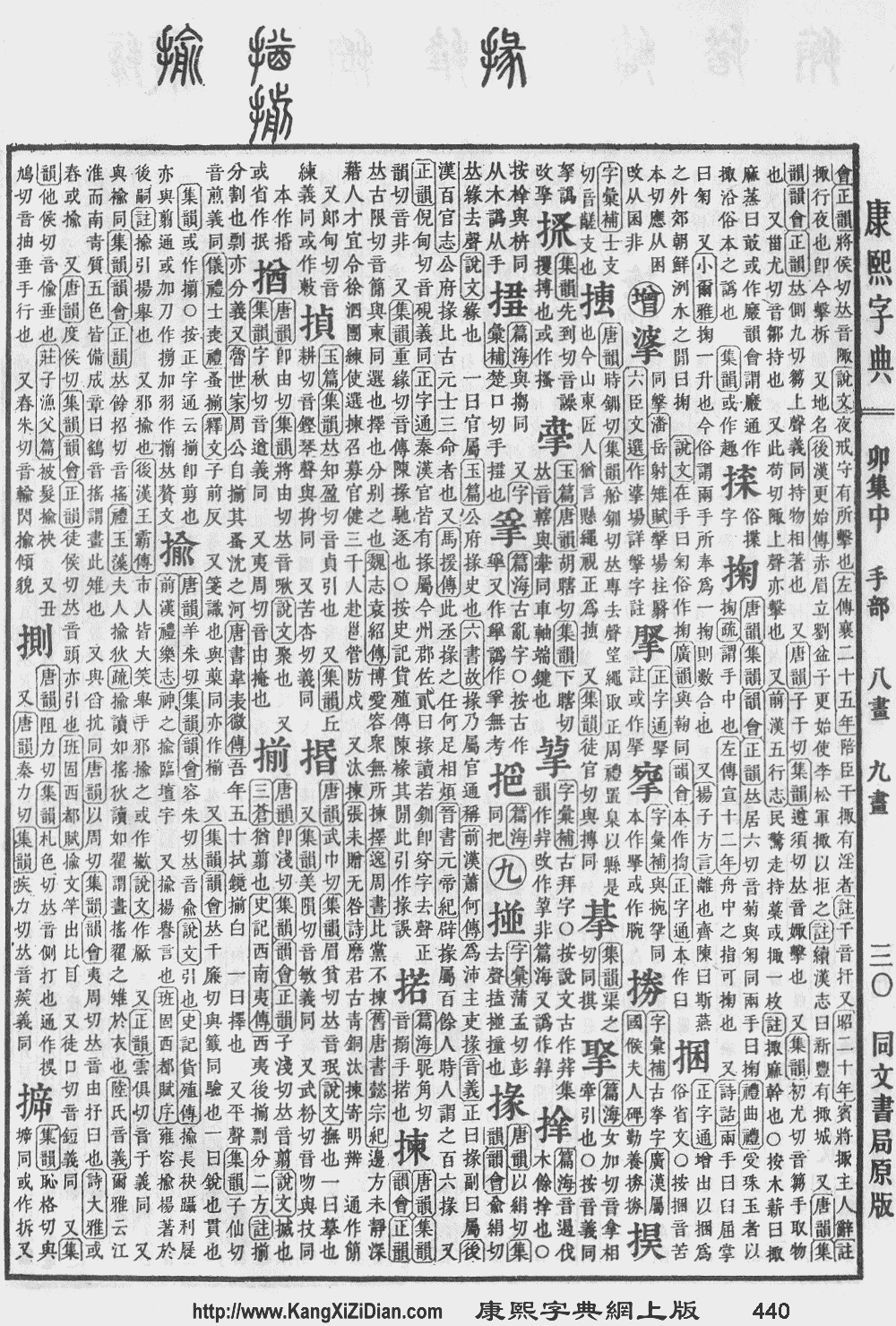
- KangXi: not present, would follow page 440, character 18
- Hanyu Da Zidian (first edition): not present, would follow volume 3, page 1909, character 6
- Unihan data for U+63BB
Chinese
| For pronunciation and definitions of 掻 – see 搔 (“to scratch”). (This character, 掻, is a variant form of 搔.) |
Japanese
| 掻 | |
| 搔 |
Kanji
掻
(uncommon “Hyōgai” kanji, shinjitai kanji, kyūjitai form 搔)
- Extended shinjitai form of 搔: to scratch; to make noise
Readings
Usage notes
This is one of the 22 widely used extended shinjitai (簡易慣用字体 (kan'i kan'yō jitai)).
Compounds
Korean
Hanja
掻 • (so) (hangeul 소, revised so, McCune–Reischauer so, Yale so)
- This term needs a translation to English. Please help out and add a translation, then remove the text
{{rfdef}}.
This article is issued from Wiktionary. The text is licensed under Creative Commons - Attribution - Sharealike. Additional terms may apply for the media files.