朦
| ||||||||
Translingual
Han character
朦 (Kangxi radical 74, 月+14 in traditional Chinese and Korean, 月+13 in simplified Chinese and Japanese, 18 strokes in traditional Chinese and Korean, 17 strokes in simplified Chinese and Japanese, cangjie input 月廿月人 (BTBO), four-corner 74232, composition ⿰月蒙)
References
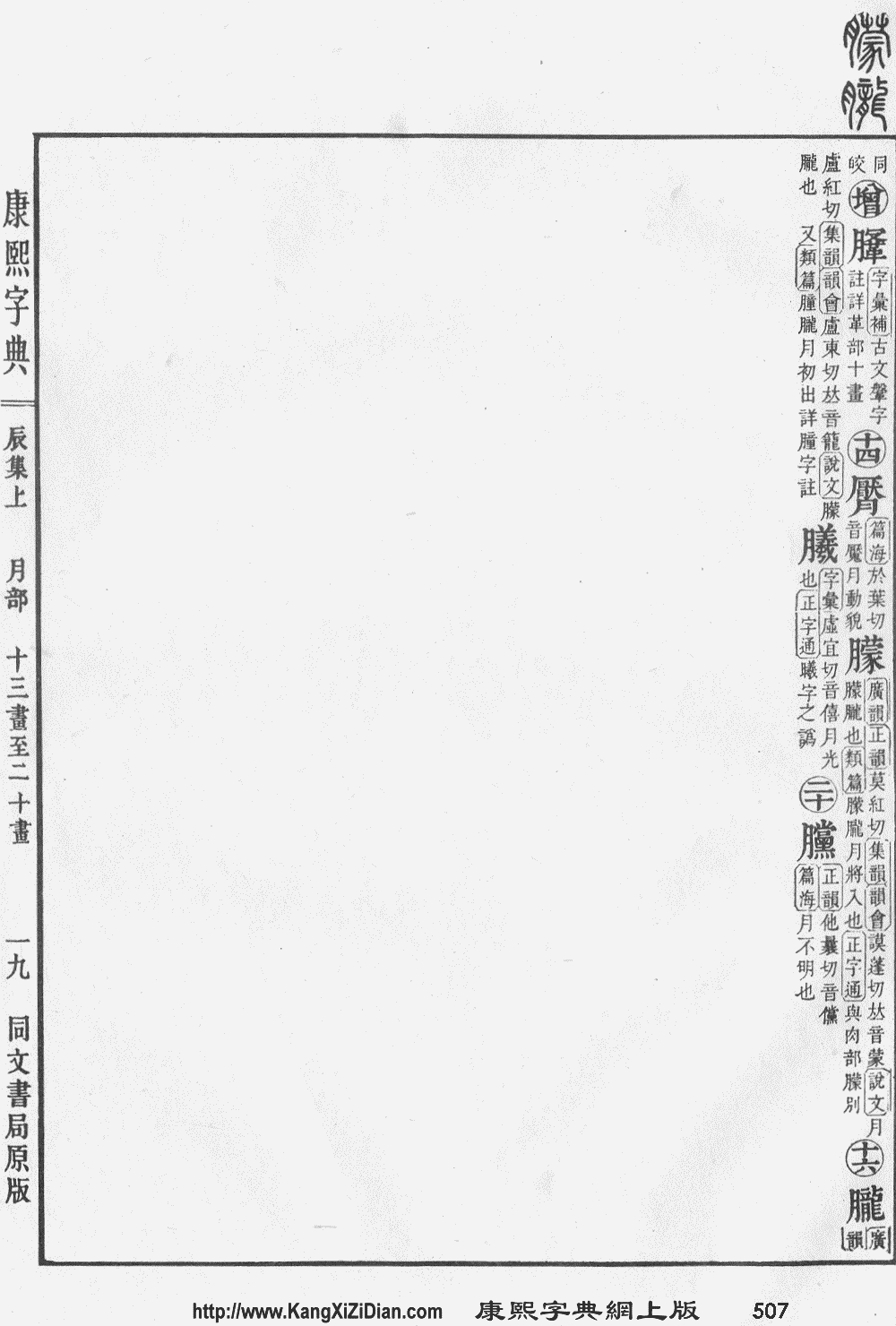
- KangXi: page 507, character 3
- Dai Kanwa Jiten: character 14409
- Dae Jaweon: page 888, character 6
- Hanyu Da Zidian (first edition): volume 3, page 2115, character 8
- Unihan data for U+6726
Chinese
| trad. | 朦 | |
|---|---|---|
| simp. # | 朦 | |
| alternative forms | 䑃 | |
Glyph origin
| Historical forms of the character 朦 |
|---|
| Shuowen Jiezi (compiled in Han) |
| Small seal script |
 |
Characters in the same phonetic series (冡) (Zhengzhang, 2003)
Phono-semantic compound (形聲, OC *moːŋ, *moːŋʔ) : semantic 月 (“moon”) + phonetic 蒙 (OC *moːŋ).
Unlike most other characters with a 月 (yuè)-like component on the left, this character's 月 (yuè) is not a simplification of 肉; 朦朧/朦胧 (ménglóng) was originally used in reference to the moon.
Pronunciation
Japanese
Compounds
Compounds
- 朦朦, 朦々 (mōmō)
- 朦気 (mōki)
- 朦沢 (Mōsawa)
- 朦霧 (mōmu)
- 朦朧 (mōrō)
- 昏朦 (konmō)
Korean
Etymology
From Middle Chinese 朦 (MC muŋ, muŋX).
Vietnamese
This article is issued from Wiktionary. The text is licensed under Creative Commons - Attribution - Sharealike. Additional terms may apply for the media files.