朧
| ||||||||
Translingual
Han character
朧 (Kangxi radical 74, 月+16, 20 strokes, cangjie input 月卜月心 (BYBP), four-corner 71211, composition ⿰月龍)
References
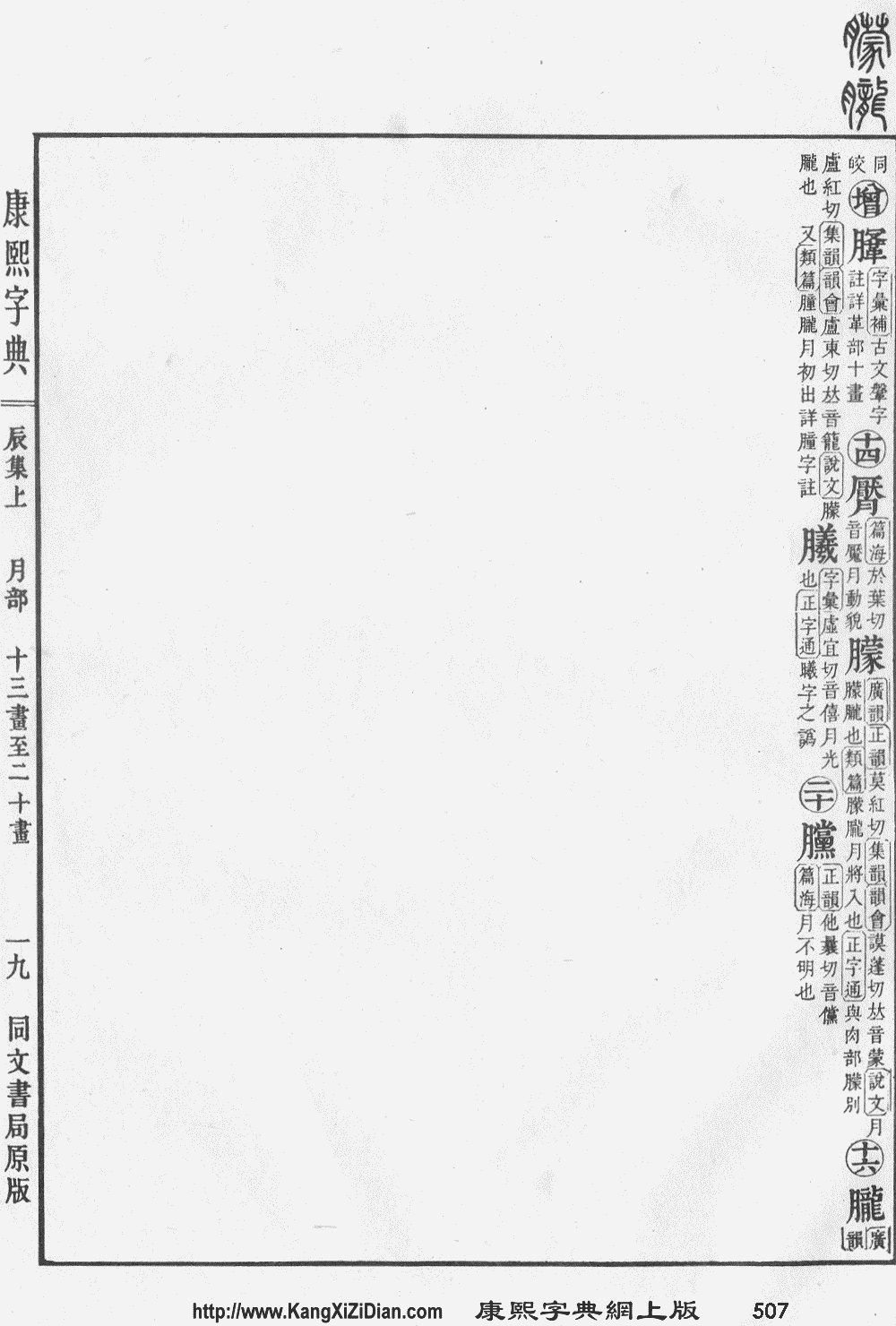
- KangXi: page 507, character 4
- Dai Kanwa Jiten: character 14411
- Dae Jaweon: page 888, character 9
- Hanyu Da Zidian (first edition): volume 3, page 2124, character 13
- Unihan data for U+6727
Chinese
| trad. | 朧 | |
|---|---|---|
| simp. | 胧 | |
Glyph origin
| Old Chinese | |
|---|---|
| 驡 | *ʔslaːŋʔ, *roŋ |
| 龐 | *broːŋ |
| 瀧 | *rroːŋ, *sroːŋ, *roːŋ |
| 籠 | *roːŋ, *roːŋʔ, *roŋ |
| 豅 | *roːŋ |
| 朧 | *roːŋ, *roŋs |
| 龓 | *roːŋ, *roːŋʔ |
| 聾 | *roːŋ |
| 礱 | *roːŋ, *roːŋs |
| 嚨 | *roːŋ |
| 蘢 | *roːŋ, *roŋ |
| 櫳 | *roːŋ |
| 襱 | *roːŋ, *roːŋʔ, *r'oŋʔ |
| 瓏 | *roːŋ |
| 曨 | *roːŋ, *roːŋʔ |
| 鸗 | *roːŋ, *roŋ |
| 蠪 | *roːŋ |
| 巃 | *roːŋʔ |
| 竉 | *roːŋʔ |
| 攏 | *roːŋʔ |
| 儱 | *roːŋʔ, *roŋs |
| 龍 | *b·roŋ, *mroːŋ |
| 躘 | *roŋ, *roŋs |
| 隴 | *roŋʔ |
| 壠 | *roŋʔ |
| 壟 | *roŋʔ |
| 寵 | *r̥ʰoŋʔ |
| 龏 | *kloŋ, *kloŋs, *qroːɡ |
Phono-semantic compound (形聲, OC *roːŋ, *roŋs) : semantic 月 (“moon”) + phonetic 龍 (OC *b·roŋ, *mroːŋ).
Unlike most other characters with a 月 (yuè)-like component on the left, this character's 月 (yuè) is not the cursive form of 肉; 朦朧/朦胧 (ménglóng) was originally used in reference to the moon.
Pronunciation
Japanese
| 𪱨 | |
| 朧 |
Etymology
| Kanji in this term |
|---|
| 朧 |
| おぼろ Hyōgaiji |
| kun’yomi |
Appears to be 凡 (obo, “dim, faint; hazy, indistinct”) + ろ (-ro, suffix apparently indicating general location or time, as in 所 (tokoro, “place”), 頃 (koro, “around (a specific time)”); compare ら (ra)).[1][2]
The food-related senses may come from the way these dishes involve breaking up the main ingredients into smaller indistinct pieces.
First attested in The Tales of Ise from the early 900s.[1]
Adjective
朧 • (oboro) -na (adnominal 朧な (oboro na), adverbial 朧に (oboro ni))
- [from early 900s] hazy, cloudy
- uncertain, unreliable
Inflection
| Stem forms | |||
|---|---|---|---|
| Imperfective (未然形) | 朧だろ | おぼろだろ | oboro daro |
| Continuative (連用形) | 朧で | おぼろで | oboro de |
| Terminal (終止形) | 朧だ | おぼろだ | oboro da |
| Attributive (連体形) | 朧な | おぼろな | oboro na |
| Hypothetical (仮定形) | 朧なら | おぼろなら | oboro nara |
| Imperative (命令形) | 朧であれ | おぼろであれ | oboro de are |
| Key constructions | |||
| Informal negative | 朧ではない 朧じゃない |
おぼろではない おぼろじゃない |
oboro de wa nai oboro ja nai |
| Informal past | 朧だった | おぼろだった | oboro datta |
| Informal negative past | 朧ではなかった 朧じゃなかった |
おぼろではなかった おぼろじゃなかった |
oboro de wa nakatta oboro ja nakatta |
| Formal | 朧です | おぼろです | oboro desu |
| Formal negative | 朧ではありません 朧じゃありません |
おぼろではありません おぼろじゃありません |
oboro de wa arimasen oboro ja arimasen |
| Formal past | 朧でした | おぼろでした | oboro deshita |
| Formal negative past | 朧ではありませんでした 朧じゃありませんでした |
おぼろではありませんでした おぼろじゃありませんでした |
oboro de wa arimasen deshita oboro ja arimasen deshita |
| Conjunctive | 朧で | おぼろで | oboro de |
| Conditional | 朧なら(ば) | おぼろなら(ば) | oboro nara (ba) |
| Provisional | 朧だったら | おぼろだったら | oboro dattara |
| Volitional | 朧だろう | おぼろだろう | oboro darō |
| Adverbial | 朧に | おぼろに | oboro ni |
| Degree | 朧さ | おぼろさ | oborosa |
Derived terms
- 朧朧, 朧々 (oboro-oboro)
- 朧影 (oborokage)
- 朧絣 (oborogasuri)
- 朧銀 (oborogin)
- 朧雲 (oborogumo)
- 朧九曜 (oboro-kuyō)
- 朧げ, 朧気 (oboroge)
- 朧昆布 (oboro-konbu)
- 朧染, 朧染め (oborozome)
- 朧月 (oborozuki)
- 朧月夜 (oborozukiyo), 朧月夜 (oborozukuyo)
- 朧蔦 (oborozuta)
- 朧豆腐 (oboro-dōfu)
- 朧の清水 (Oboro no Shimizu)
- 朧花色 (oboro-hanairo)
- 朧富士 (oborofuji)
- 朧船 (oborobune)
- 朧饅頭 (oboro-manjū)
- 朧木綿 (oboro-momen)
- 朧闇 (oboroyami)
- 朧夜 (oboroyo)
- 朧輪 (oborowa)
- 月も朧に白魚の篝もかすむ春の空 (tsuki mo oboro ni shirauo no kagari mo kasumu haru no sora)
Noun
朧 • (oboro)
- minced meat or seafood
- [probably from 1600s] Short for 朧昆布 (oboro-konbu): shredded kelp
- [probably from 1600s] Short for 朧豆腐 (oboro-dōfu): This term needs a translation to English. Please help out and add a translation, then remove the text
{{rfdef}}. - [probably from 1600s] Short for 朧饅頭 (oboro-manjū): steamed bun with the outer covering removed after steaming
References
- 1988, 国語大辞典(新装版) (Kokugo Dai Jiten, Revised Edition) (in Japanese), Tōkyō: Shogakukan
- 1995, 大辞泉 (Daijisen) (in Japanese), Tōkyō: Shogakukan, →ISBN
- 2006, 大辞林 (Daijirin), Third Edition (in Japanese), Tōkyō: Sanseidō, →ISBN
- 1998, NHK日本語発音アクセント辞典 (NHK Japanese Pronunciation Accent Dictionary) (in Japanese), Tōkyō: NHK, →ISBN
- 1997, 新明解国語辞典 (Shin Meikai Kokugo Jiten), Fifth Edition (in Japanese), Tōkyō: Sanseidō, →ISBN
Korean
Etymology
From Middle Chinese 朧 (MC luŋ).