桓

桓 U+6853, 桓
CJK UNIFIED IDEOGRAPH-6853
← 桒
[U+6852]
CJK Unified Ideographs 桔 →
[U+6854]

Translingual

Han character

桓 (Kangxi radical 75, 木+6, 10 strokes, cangjie input 木一日一 (DMAM), four-corner 41916, composition ⿰木亘)

Derived characters

  • 𦶙, 𭗁, 𨕹

References

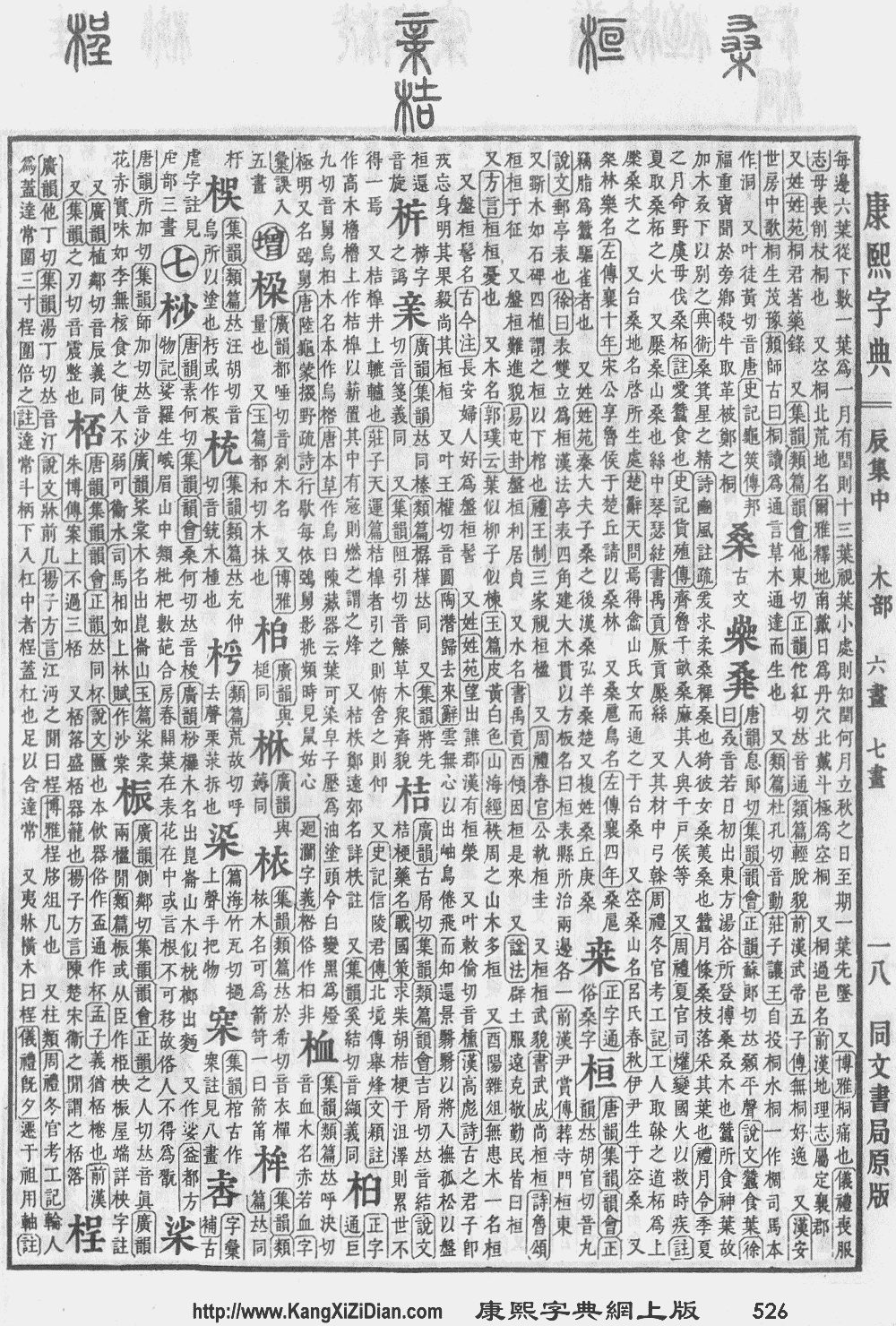
  • KangXi: page 526, character 5
  • Dai Kanwa Jiten: character 14774
  • Dae Jaweon: page 915, character 2
  • Hanyu Da Zidian (first edition): volume 2, page 1195, character 6
  • Unihan data for U+6853

Chinese

simp. and trad.
桓

Glyph origin

Historical forms of the character 桓
Western Zhou Shuowen Jiezi (compiled in Han) Liushutong (compiled in Ming)
Bronze inscriptions Small seal script Transcribed ancient scripts

Phono-semantic compound (形聲, OC *ɡʷaːn) : semantic 木 (“tree”) + phonetic 亘 ()

Etymology

Compare with Burmese ခွန် (hkwan, “strength, might”).

Pronunciation


Note:
  • huang5 - Shantou;
  • huêng5 - Chaozhou.

Rime
Character 桓
Reading # 1/1
Initial (聲) 匣 (33)
Final (韻) 桓 (62)
Tone (調) Level (Ø)
Openness (開合) Closed
Division (等) I
Fanqie 胡官切
Baxter hwan
Reconstructions
Zhengzhang
Shangfang
/ɦuɑn/
Pan
Wuyun
/ɦʷɑn/
Shao
Rongfen
/ɣuɑn/
Edwin
Pulleyblank
/ɦwan/
Li
Rong
/ɣuɑn/
Wang
Li
/ɣuɑn/
Bernard
Karlgren
/ɣuɑn/
Expected
Mandarin
Reflex
huán
Expected
Cantonese
Reflex
wun4
Baxter–Sagart system 1.1 (2014)
Character 桓 桓
Reading # 1/2 2/2
Modern
Beijing
(Pinyin)
huán huán
Middle
Chinese
‹ hwan › ‹ hwan ›
Old
Chinese
/*[ɢ]ʷˁar/ /*ɦʷˁar/ (< *[ɢ]ʷˁar)
English pillar; martial-looking 烏桓 Wūhuán: Avars (W. Hàn)

Notes for Old Chinese notations in the Baxter–Sagart system:

* Parentheses "()" indicate uncertain presence;
* Square brackets "[]" indicate uncertain identity, e.g. *[t] as coda may in fact be *-t or *-p;
* Angle brackets "<>" indicate infix;
* Hyphen "-" indicates morpheme boundary;

* Period "." indicates syllable boundary.
Zhengzhang system (2003)
Character 桓
Reading # 1/1
No. 14004
Phonetic
component
亘
Rime
group
元
Rime
subdivision
1
Corresponding
MC rime
桓
Old
Chinese
/*ɡʷaːn/

Definitions

桓

  1. Chinese soapberry (Sapindus mukorossi)
  2. (obsolete) pillar used as a signpost
  3. mighty; martial; large
  4. Used in 盤桓/盘桓 (pánhuán).
  5. a surname

Compounds

  • 三桓
  • 桓文
  • 桓桓
  • 桓表
  • 槃桓
  • 磐桓
  • 般桓
  • 桓殷危語/桓殷危语
  • 漢桓帝/汉桓帝
  • 烏桓/乌桓 (Wūhuán)
  • 盤桓/盘桓 (pánhuán)
  • 盤桓髻/盘桓髻
  • 釋提桓因/释提桓因
  • 齊桓公/齐桓公

Japanese

Kanji

桓

(uncommon “Hyōgai” kanji)

  1. This term needs a translation to English. Please help out and add a translation, then remove the text {{rfdef}}.

Readings

  • Go-on: がん (gan)
  • Kan-on: かん (kan)

Korean

Hanja

桓 • (hwan) (hangeul 환, revised hwan, McCune–Reischauer hwan, Yale hwan)

  1. This term needs a translation to English. Please help out and add a translation, then remove the text {{rfdef}}.

Vietnamese

Han character

桓: Hán Nôm readings: hoàn

  1. This term needs a translation to English. Please help out and add a translation, then remove the text {{rfdef}}.
This article is issued from Wiktionary. The text is licensed under Creative Commons - Attribution - Sharealike. Additional terms may apply for the media files.