槵
| ||||||||
Translingual
Han character
槵 (Kangxi radical 75, 木+11, 15 strokes, cangjie input 木中中心 (DLLP), composition ⿰木患)
References
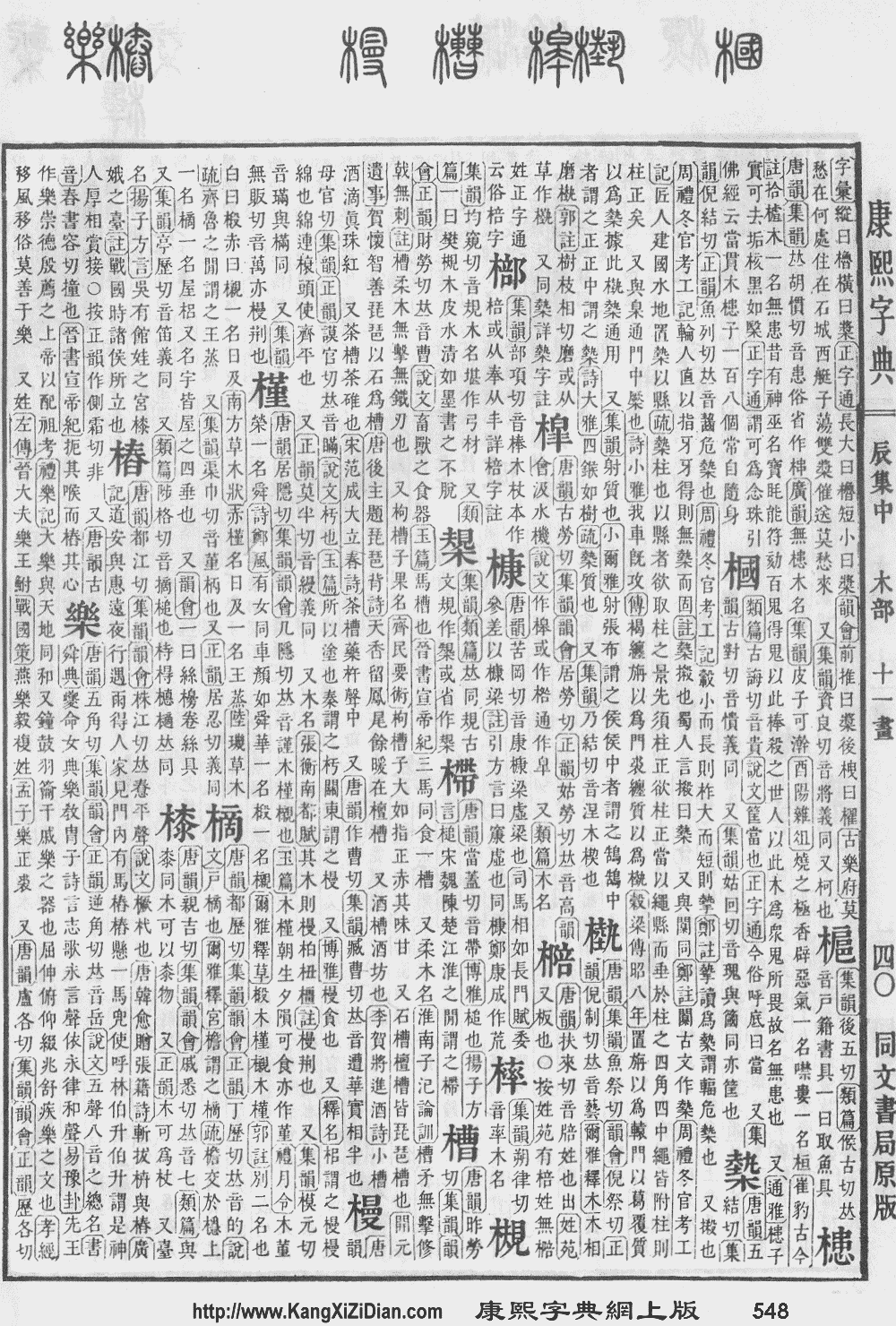
- KangXi: page 548, character 2
- Dai Kanwa Jiten: character 15381
- Dae Jaweon: page 935, character 21
- Hanyu Da Zidian (first edition): volume 2, page 1280, character 3
- Unihan data for U+69F5
Chinese
| simp. and trad. |
槵 | |
|---|---|---|
Glyph origin
Pronunciation
Definitions
槵
- Sapindus saponaria, a species of deciduous tree whose bark can be used in place of soap, and whose wood can be used to make rosary beads
Japanese
Kanji
槵
- This term needs a translation to English. Please help out and add a translation, then remove the text
{{rfdef}}.
Readings
- Go-on: がん (gan)←ぐわん (gwan, historical)
- Kan-on: かん (kan)←くわん (kwan, historical)
- Kun: むく (muku, 槵)
Korean
Etymology
From Middle Chinese 槵 (MC ɦˠuanH). Recorded as Middle Korean 환〯 (hwǎn) (Yale: hwan) in Hunmong Jahoe (訓蒙字會 / 훈몽자회), 1527.
This article is issued from Wiktionary. The text is licensed under Creative Commons - Attribution - Sharealike. Additional terms may apply for the media files.