決
See also: 决
| ||||||||
Translingual
Han character
決 (Kangxi radical 85, 水+4, 7 strokes, cangjie input 水木大 (EDK), four-corner 35130, composition ⿰氵夬)
Derived characters
- 𢭯
References
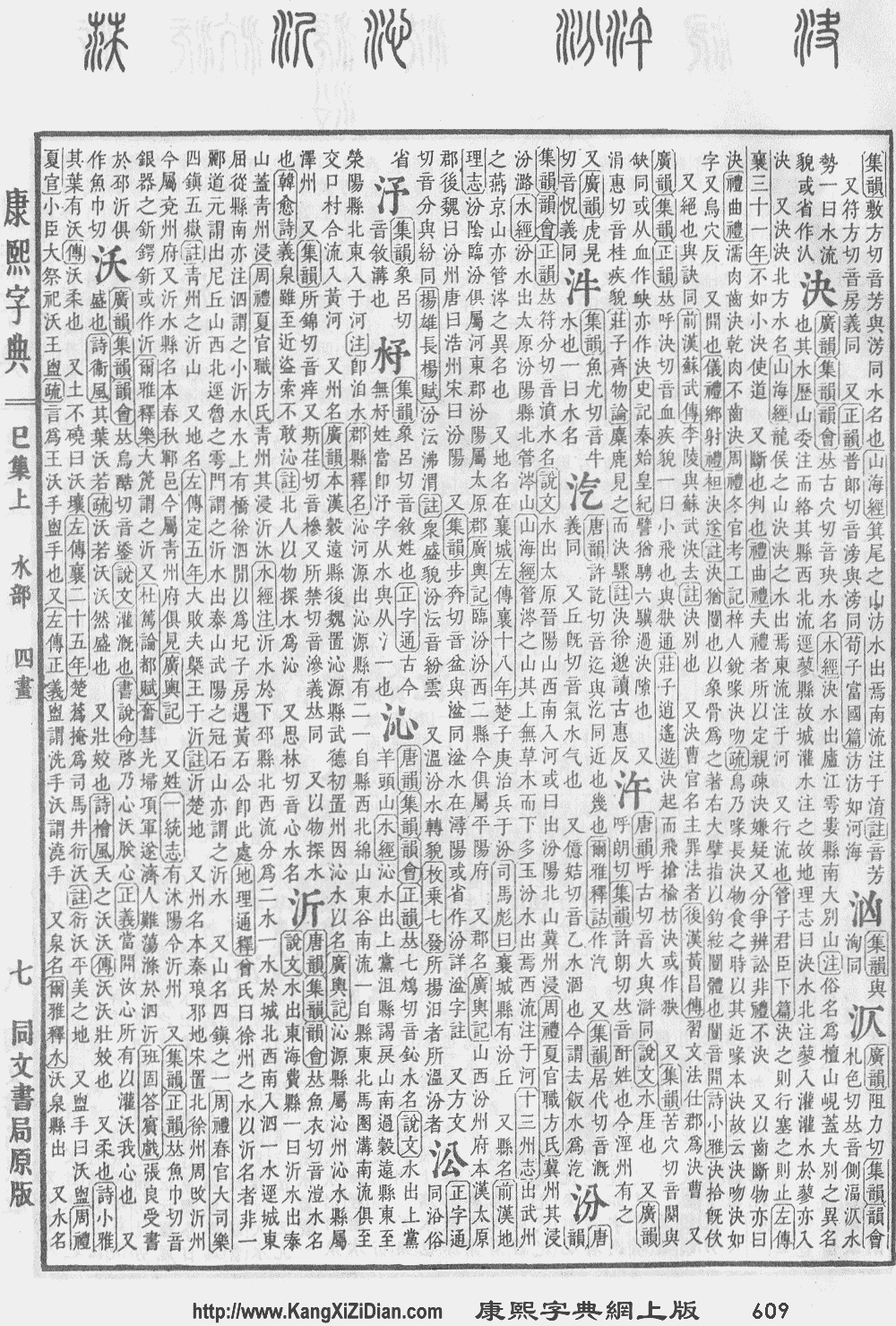
- KangXi: page 609, character 3
- Dai Kanwa Jiten: character 17174
- Dae Jaweon: page 1001, character 17
- Hanyu Da Zidian (first edition): volume 3, page 1574, character 3
- Unihan data for U+6C7A
Chinese
Glyph origin
| Historical forms of the character 決 | |||
|---|---|---|---|
| Warring States | Shuowen Jiezi (compiled in Han) | Liushutong (compiled in Ming) | |
| Chu slip and silk script | Qin slip script | Small seal script | Transcribed ancient scripts |
 |
 |
 |
 |
Characters in the same phonetic series (夬) (Zhengzhang, 2003)
Phono-semantic compound (形聲, OC *kʷeːd, *qʰʷeːd) : semantic 氵 + phonetic 夬 (OC *kʷraːds).
Definitions
決
- † to dredge; to dig
- to burst; to break; to breach
- to decide; to determine
- Synonym: 定 (dìng)
- to decide the outcome; to contest
- to judge; to pronounce the verdict
- to execute; to put to death
- definitely; certainly; absolutely (with a negative)
- Alternative form of 訣/诀 (jué, “to part; to bid farewell”).
- † Alternative form of 抉 (jué, “to gouge; to pick out”).
Compounds
Derived terms from 決
|
|
|
Compounds
|
|
|
References
- “決”, in 漢語多功能字庫 (Multi-function Chinese Character Database), 香港中文大學 (the Chinese University of Hong Kong), 2014–
Japanese
Readings
Derived terms
Derived terms
- 決する (kessuru): to make up one's mind, to determine (to do something)
- 決して (kesshite): (followed by a negative verb) never, not at all
Korean
Etymology
From Middle Chinese 決 (MC kwet̚).
| Historical Readings | ||
|---|---|---|
| Dongguk Jeongun Reading | ||
| Dongguk Jeongun, 1448 | ᄀᆑᇙ〮 (Yale: kyyélq) | |
| Middle Korean | ||
| Text | Eumhun | |
| Gloss (hun) | Reading | |
| Sinjeung Yuhap, 1576 | 결ᄒᆞᆯ (Yale: kyel-hol) | 결 (Yale: kyel) |
Pronunciation
- (SK Standard/Seoul) IPA(key): [kjʌ̹ɭ]
- Phonetic hangul: [결]
Compounds
Compounds
- 가결 (可決, gagyeol)
- 기결 (旣決, gigyeol)
- 결단 (決斷, gyeoldan)
- 결렬 (決裂, gyeollyeol)
- 결산 (決算, gyeolsan)
- 결선 (決選, gyeolseon)
- 결승 (決勝, gyeolseung)
- 결사 (決死, gyeolsa)
- 결심 (決心, gyeolsim)
- 결의 (決意, gyeorui)
- 결전 (決戰, gyeoljeon)
- 결정 (決定, gyeoljeong)
- 결제 (決濟, gyeolje)
- 결판 (決判, gyeolpan)
- 대결 (對決, daegyeol)
- 미결 (未決, migyeol)
- 선결 (先決, seon'gyeol)
- 부결 (否決, bugyeol)
- 의결 (議決, uigyeol)
- 자결 (自決, jagyeol)
- 판결 (判決, pan'gyeol)
- 평결 (評決, pyeonggyeol)
- 표결 (表決, pyogyeol)
- 해결 (解決, haegyeol)
Vietnamese
This article is issued from Wiktionary. The text is licensed under Creative Commons - Attribution - Sharealike. Additional terms may apply for the media files.