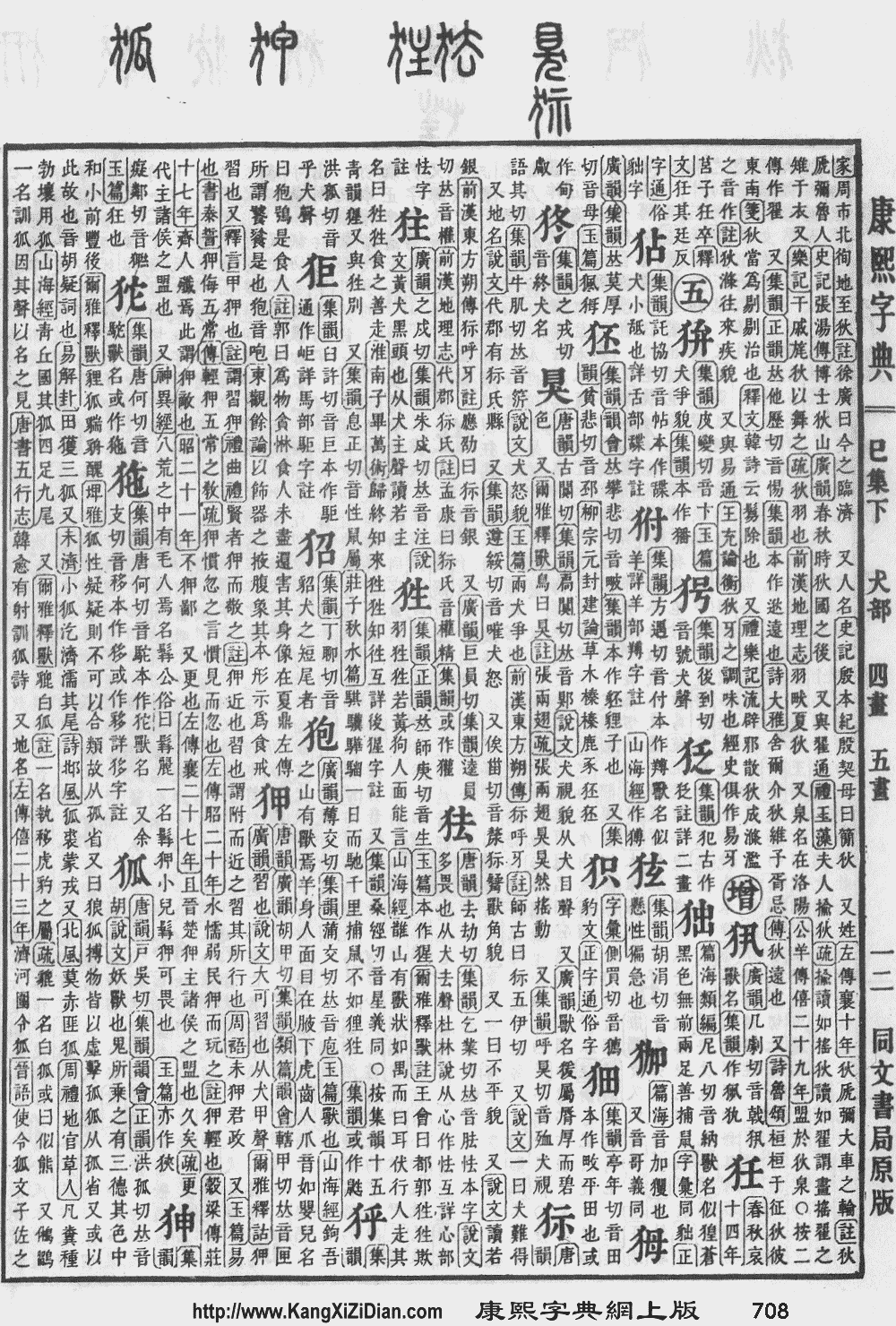
狊

狊 U+72CA, 狊
CJK UNIFIED IDEOGRAPH-72CA
← 狉
[U+72C9]
CJK Unified Ideographs 狋 →
[U+72CB]

Translingual

Han character

狊 (Kangxi radical 94, 犬+5, 9 strokes, cangjie input 月山戈大 (BUIK), four-corner 60433, composition ⿱目犬)

Derived characters

References

  • KangXi: page 708, character 16
  • Dai Kanwa Jiten: character 20320
  • Dae Jaweon: page 1121, character 1
  • Hanyu Da Zidian (first edition): volume 2, page 1338, character 5
  • Unihan data for U+72CA

Chinese

trad. 狊
simp. # 狊

Glyph origin

Pronunciation


Rime
Character 狊 狊
Reading # 1/2 2/2
Initial (聲) 見 (28) 曉 (32)
Final (韻) 青 (128) 青 (128)
Tone (調) Checked (Ø) Checked (Ø)
Openness (開合) Closed Closed
Division (等) IV IV
Fanqie 古闃切 呼狊切
Baxter kwek xwek
Reconstructions
Zhengzhang
Shangfang
/kwek̚/ /hwek̚/
Pan
Wuyun
/kʷek̚/ /hʷek̚/
Shao
Rongfen
/kuɛk̚/ /xuɛk̚/
Edwin
Pulleyblank
/kwɛjk̚/ /hwɛjk̚/
Li
Rong
/kuek̚/ /xuek̚/
Wang
Li
/kiwek̚/ /xiwek̚/
Bernard
Karlgren
/kiwek̚/ /xiwek̚/
Expected
Mandarin
Reflex
ju xu
Expected
Cantonese
Reflex
gwik1 hik1
Baxter–Sagart system 1.1 (2014)
Character 狊
Reading # 1/1
Modern
Beijing
(Pinyin)
jú
Middle
Chinese
‹ kwek ›
Old
Chinese
/*kʷˁek/
English [place name]

Notes for Old Chinese notations in the Baxter–Sagart system:

* Parentheses "()" indicate uncertain presence;
* Square brackets "[]" indicate uncertain identity, e.g. *[t] as coda may in fact be *-t or *-p;
* Angle brackets "<>" indicate infix;
* Hyphen "-" indicates morpheme boundary;

* Period "." indicates syllable boundary.
Zhengzhang system (2003)
Character 狊 狊
Reading # 1/2 2/2
No. 7034 7040
Phonetic
component
狊 狊
Rime
group
錫 錫
Rime
subdivision
0 0
Corresponding
MC rime
郹 𥍟
Old
Chinese
/*kʷeːɡ/ /*qʰʷeːɡ/

Definitions

狊

  1. † (of a dog) to stare
  2. † a bird spreading its wings
  3. † a kind of ape
This article is issued from Wiktionary. The text is licensed under Creative Commons - Attribution - Sharealike. Additional terms may apply for the media files.