竟
| ||||||||
Translingual
Han character
竟 (Kangxi radical 117, 立+6, 11 strokes, cangjie input 卜廿日竹山 (YTAHU), four-corner 00216, composition ⿱音儿)
References
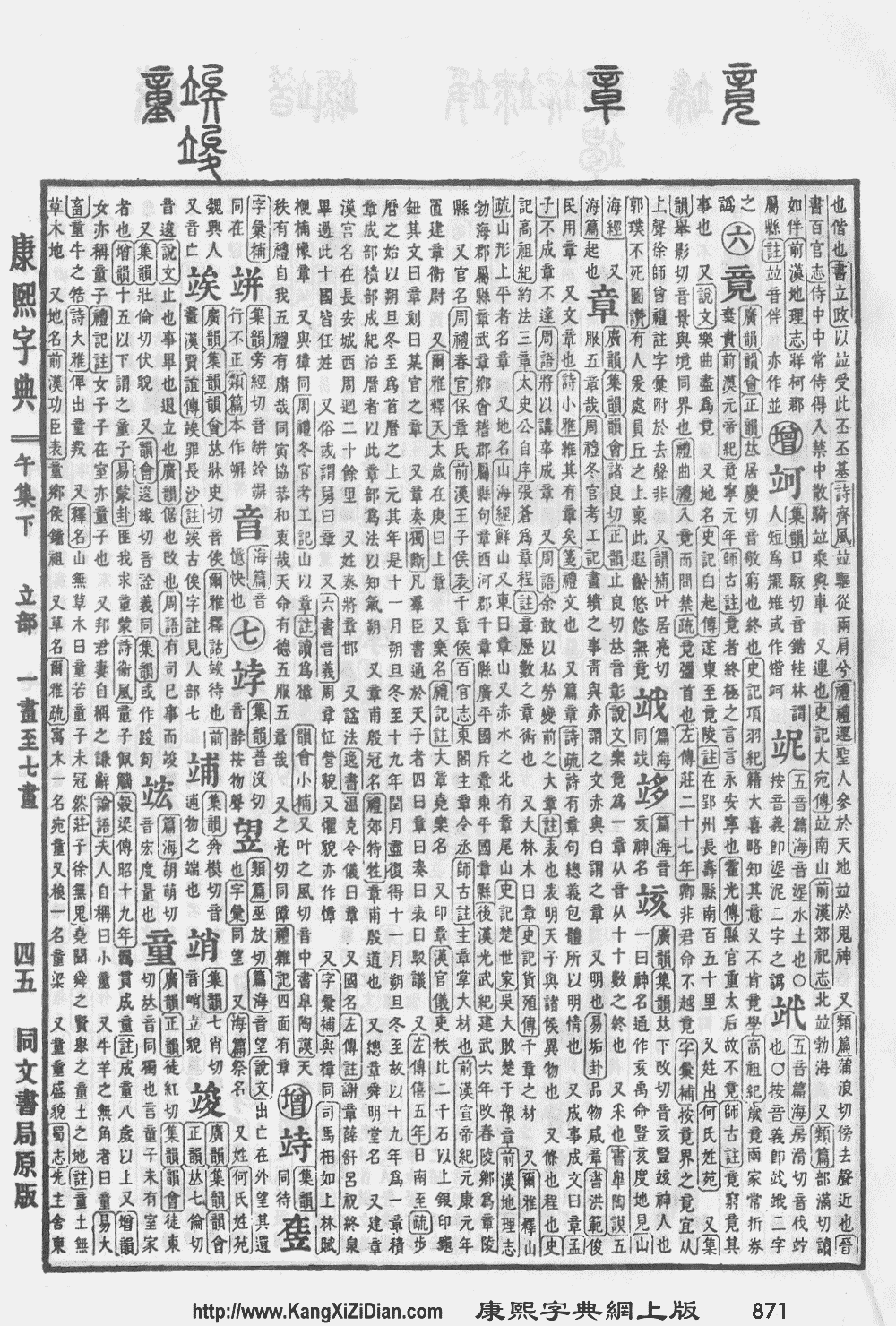
- KangXi: page 871, character 4
- Dai Kanwa Jiten: character 25757
- Dae Jaweon: page 1301, character 14
- Hanyu Da Zidian (first edition): volume 4, page 2710, character 1
- Unihan data for U+7ADF
Chinese
| simp. and trad. |
竟 | |
|---|---|---|
| alternative forms | 傹 ancient | |
Glyph origin
| Historical forms of the character 竟 | |||
|---|---|---|---|
| Shang | Western Zhou | Shuowen Jiezi (compiled in Han) | Liushutong (compiled in Ming) |
| Oracle bone script | Bronze inscriptions | Small seal script | Transcribed ancient scripts |
 |
 |
 |
 |
Characters in the same phonetic series (竟) (Zhengzhang, 2003)
According to Shuowen, an ideogrammic compound (會意) : 音 (“sound”) + 儿 (“man”) - a man has spoken.
Etymology
Cognate with 境 (OC *kraŋʔ, “boundary”) (Schuelsser, 2007).
Pronunciation
Definitions
竟
- to finish; to end
- finally; after all; at last
- unexpectedly; to one's surprise; surprisingly
- whole; entire
Japanese
Readings
Etymology
| Kanji in this term |
|---|
| 竟 |
| つい Hyōgaiji |
| kun’yomi |
| For pronunciation and definitions of 竟 – see the following entry. | ||
| ||
| (This term, 竟, is an alternative spelling of the above term.) |
Vietnamese
This article is issued from Wiktionary. The text is licensed under Creative Commons - Attribution - Sharealike. Additional terms may apply for the media files.