地
| ||||||||
Translingual
| Stroke order | |||
|---|---|---|---|
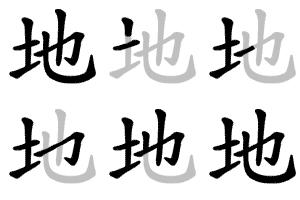 | |||
| Stroke order | |||
|---|---|---|---|
 | |||
Han character
地 (Kangxi radical 32, 土+3, 6 strokes, cangjie input 土心木 (GPD), four-corner 44112, composition ⿰土也)
References
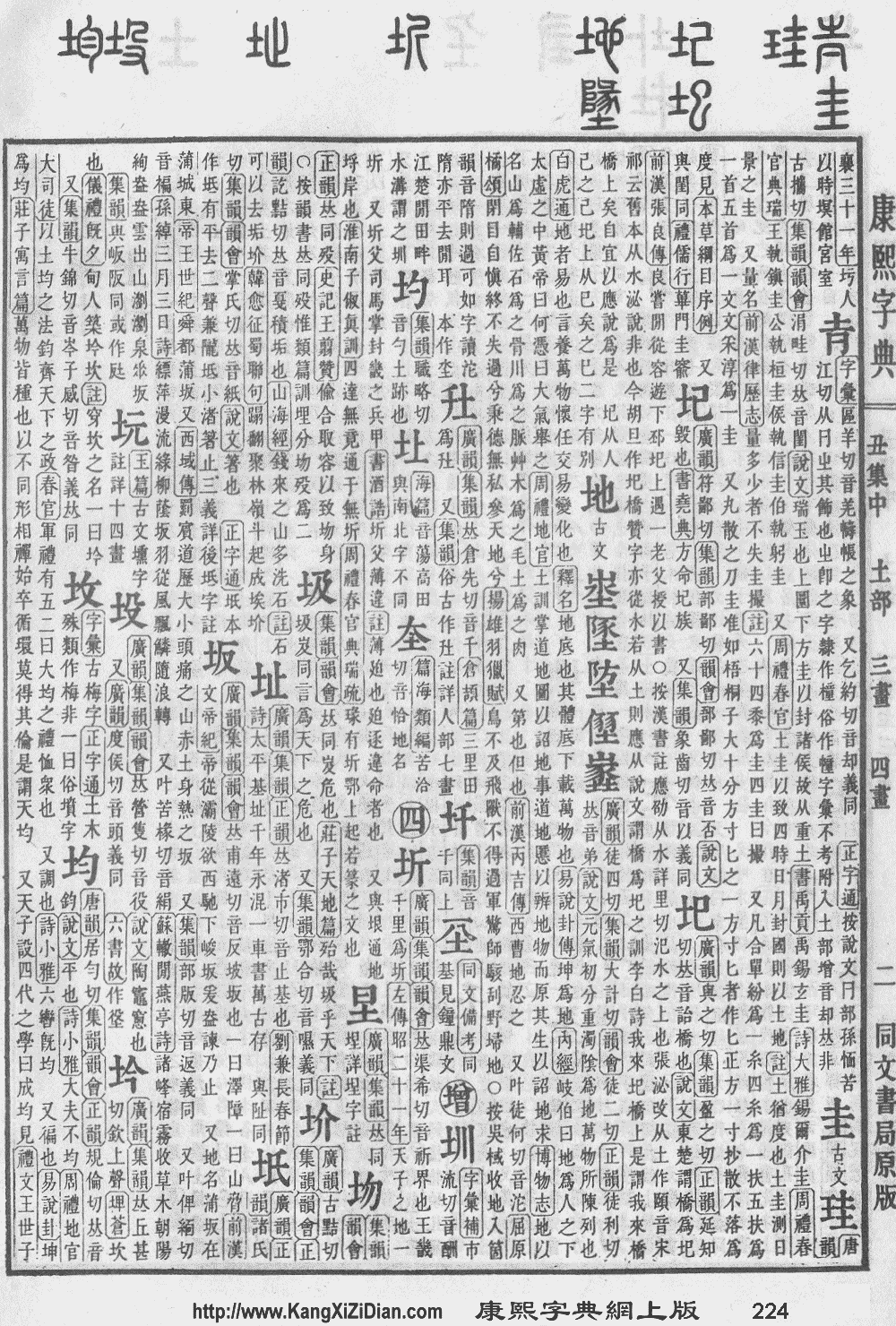
- KangXi: page 224, character 6
- Dai Kanwa Jiten: character 4890
- Dae Jaweon: page 456, character 8
- Hanyu Da Zidian (first edition): volume 1, page 420, character 12
- Unihan data for U+5730
Chinese
| trad. | 地 | |
|---|---|---|
| simp. # | 地 | |
| alternative forms | 墬 嶳 埊 坔 埅 | |
Glyph origin
| Historical forms of the character 地 | |||||
|---|---|---|---|---|---|
| Western Zhou | Warring States | Shuowen Jiezi (compiled in Han) | Liushutong (compiled in Ming) | ||
| Bronze inscriptions | Bronze inscriptions | Chu slip and silk script | Shizhoupian script | Small seal script | Transcribed ancient scripts |
 |
 |
 |
 |
 |
 |
| Old Chinese | |
|---|---|
| 他 | *l̥ʰaːl |
| 拖 | *l̥ʰaːl, *l̥ʰaːls |
| 駞 | *l'aːl |
| 池 | *l'aːl, *l'al |
| 灺 | *ljalʔ |
| 鍦 | *ɦljaːl, *hljal, *hljals |
| 虵 | *ɦljal, *laːlʔ, *lal |
| 也 | *laːlʔ |
| 忚 | *hleːl |
| 髢 | *l'eːls |
| 杝 | *l̥ʰalʔ, *l'alʔ, *lal |
| 肔 | *l̥ʰalʔ, *lalʔ |
| 馳 | *l'al |
| 阤 | *l'alʔ, *hljalʔ |
| 施 | *hljal, *hljals |
| 絁 | *hljal |
| 葹 | *hljal |
| 弛 | *hljalʔ |
| 箷 | *lal |
| 衪 | *lel, *lalʔ |
| 暆 | *lel |
| 迆 | *lal, *lalʔ |
| 酏 | *lal, *lalʔ |
| 匜 | *lal, *lalʔ |
| 迤 | *lalʔ |
| 扡 | *lalʔ |
| 崺 | *lalʔ |
| 貤 | *lals, *ɦljels, *lels |
| 地 | *l'els |
Phono-semantic compound (形聲, OC *l'els) : semantic 土 (“earth”) + phonetic 也 (OC *laːlʔ).
Etymology 1
Compare with Burmese လယ် (lai, “farmland, paddy field”) and Burmese တီ (ti, “clear land”).
Pronunciation
Definitions
地
- earth
- 天地 ― tiāndì ― heaven and earth
- ground; floor
- land; field (Classifier: 塊/块 m c; 笪 c; 幅 c)
- distance; separation
- farmland; field (Classifier: 塊/块 m c; 笪 c)
- (only in compounds) area; region
- place; locality
- status; situation; position
- (only in compounds) state of mind
- place; room; space
- background (behind a text or figure)
- 白地黑字 ― báidìhēizì ― black characters on a white background
- (only in compounds) Short for 地球 (Dìqiú, “Earth”).
- (Hakka) grave; tomb
- 蛤地站 ― Gédì zhàn ― Gedi station (蛤地 means "frog-shaped tomb")
- (Mainland China) prefecture
Synonyms
Compounds
|
|
|
Descendants
Others:
Etymology 2
Possibly the same word as 的, the possessive marker (Wang, 1958), but scholars like Lü (1943) and Yuan et al. (1996) are hesitant about this etymology.
Alternatively, Ōta (2003) proposes that it is a grammaticalization of etymology 1. The construction ADJ + 地 would have semantically developed as follows: "a ADJ place" → "in a ADJ place" → "in a ADJ manner".
Pronunciation
Definitions
地
Synonyms
- (Xiang) 里
Usage notes
- The use of this particle is always optional after polysyllabic adverbs.
- On the contrary, monosyllabic adverbs are compulsorily used with or without 地.
- However, there is an exception:
Etymology 3
(This etymology is missing or incomplete. Please add to it, or discuss it at the Etymology scriptorium. Particularly: “related to etymology 2?”)
| trad. | 地 | |
|---|---|---|
| simp. # | 地 | |
| alternative forms | 哋 | |
Pronunciation
Definitions
地
- (Cantonese) Placed after a reduplicated adjective or stative verb to lessen its intensity.
Usage notes
- This suffix is accompanied by a tone change in the reduplicated word, where the second occurrence is changed to the second tone (unless its original tone is the first or second tone), as seen in the examples above.
Pronunciation
Definitions
地
Japanese
Readings
Compounds
- 土地 (tochi): ground, land
- 意地悪 (ijiwaru)
- 地球 (chikyū)
- 地底 (chitei)
- 地理 (chiri)
- 地盤 (chiban)
- 地位 (chī)
- 地域 (chīki)
- 地下 (chika)
- 地学 (chigaku)
- 地球 (chikyū)
- 地区 (chiku)
- 地形 (chikei)
- 地上 (chijō)
- 地租 (chiso)
- 地点 (chiten)
- 地主 (jinushi)
- 地表 (chihyō)
- 地方 (chihō)
- 地震 (jishin)
- 天地 (tenchi): heaven and earth
- 天変地異 (tenpen chī): turmoil throughout heaven and earth
- 現在地 (genzaichi): current location, you are here
Etymology 1
| Kanji in this term |
|---|
| 地 |
| じ Grade: 2 |
| on’yomi |
From Middle Chinese 地 (dijH). The goon reading, so likely the initial borrowing. Compare modern Mandarin dì.
Noun
- earth, dirt
- fabric, cloth
- 1906, Natsume Sōseki, Botchan:
- いくらか薄い地には相違なくっても暑いには極ってる。
- Ikura ka usui ji ni wa sōi nakutte mo atsui ni wa kimatteru.
- However thin the cloth, flannel is flannel and must have been pretty warm at that time of the year.
- いくらか薄い地には相違なくっても暑いには極ってる。
-
- (game of Go) territory
Etymology 2
| Kanji in this term |
|---|
| 地 |
| ち Grade: 2 |
| on’yomi |
From Middle Chinese 地 (dijH). The kan'on reading, so likely a later borrowing. The devoicing of the initial consonant might indicate a dialectal source. Compare modern Hakka thi, Min Nan tī.
Noun
地 • (chi)
Alternative forms
- 土 (more common for this reading)
Noun
地 • (tsuchi)
References
- 2006, 大辞林 (Daijirin), Third Edition (in Japanese), Tōkyō: Sanseidō, →ISBN
- 1988, 国語大辞典(新装版) (Kokugo Dai Jiten, Revised Edition) (in Japanese), Tōkyō: Shogakukan
Korean
Etymology
From Middle Chinese 地 (MC diɪH).
| Historical Readings | ||
|---|---|---|
| Dongguk Jeongun Reading | ||
| Dongguk Jeongun, 1448 | 띵〮 (Yale: ttí) | |
| Middle Korean | ||
| Text | Eumhun | |
| Gloss (hun) | Reading | |
| Hunmong Jahoe, 1527 | ᄯᅡ〮 (Yale: stá) | 디〮 (Yale: tí) |
Pronunciation
- (SK Standard/Seoul) IPA(key): [t͡ɕi]
- Phonetic hangul: [지]
Compounds
- 지경 (地境, jigyeong)
- 지계 (地階, jigye)
- 지구 (地區, jigu)
- 지구 (地球, jigu)
- 지대 (地帶, jidae)
- 지도 (地圖, jido)
- 지뢰 (地雷, jiroe)
- 지리 (地理, jiri)
- 지면 (地面, jimyeon)
- 지명 (地名, jimyeong)
- 지반 (地盤, jiban)
- 지방 (地方, jibang)
- 지세 (地勢, jise)
- 지역 (地域, jiyeok)
- 지옥 (地獄, jiok)
- 지위 (地位, jiwi)
- 지점 (地點, jijeom)
- 지조 (地租, jijo)
- 지주 (地主, jiju)
- 지지 (地支, jiji)
- 지지 (地誌, jiji)
- 지진 (地震, jijin)
- 지층 (地層, jicheung)
- 지하 (地下, jiha)
- 지협 (地峽, jihyeop)
- 지형 (地形, jihyeong)
- 객지 (客地, gaekji, “foreign land”)
- 고지 (高地, goji)
- 궁지 (窮地, gungji)
- 기지 (基地, giji)
- 단지 (團地, danji)
- 대지 (大地, daeji)
- 대지 (臺地, daeji)
- 묘지 (墓地, myoji)
- 번지 (番地, beonji)
- 부지 (敷地, buji)
- 성지 (聖地, seongji)
- 양지 (陽地, yangji)
- 여지 (餘地, yeoji)
- 영지 (領地, yeongji)
- 오지 (奧地, oji)
- 용지 (用地, yongji)
- 육지 (陸地, yukji)
- 저지 (低地, jeoji)
- 적지 (赤地, jeokji)
- 진지 (陣地, jinji)
- 처지 (處地, cheoji)
- 천지 (天地, cheonji)
- 초지 (草地, choji)
- 토지 (土地, toji)
- 현지 (現地, hyeonji)
- 지구인 (地球人, jigu'in)
- 지도책 (地圖冊, jidochaek)
- 지리학 (地理學, jirihak)
- 지문학 (地文學, jimunhak)
- 지자기 (地磁氣, jijagi)
- 지정학 (地政學, jijeonghak)
- 지중해 (地中海, ^jijunghae)
- 지진학 (地震學, jijinhak)
- 지질학 (地質學, jijilhak)
- 지하도 (地下道, jihado)
- 지하실 (地下室, jihasil)
- 지하철 (地下鐵, jihacheol)
- 굴지성 (屈地性, guljiseong)
- 근지점 (近地點, geunjijeom)
- 관광지 (觀光地, gwan'gwangji)
- 목적지 (目的地, mokjeokji)
- 목초지 (牧草地, mokchoji)
- 발상지 (發祥地, balsangji)
- 식민지 (植民地, singminji)
- 유적지 (遺跡地, yujeokji)
- 조차지 (租借地, jochaji)
- 중심지 (中心地, jungsimji)
- 진원지 (震源地, jinwonji)
Vietnamese
Han character
地: Hán Việt readings: địa[1][2][3]
地: Nôm readings: địa[1][2][3][4], đĩa[1][2], gịa[1], đất[2], rịa[3]
Compounds
References
- Nguyễn (2014).
- Nguyễn et al. (2009).
- Trần (2004).
- Taberd & Pigneau de Béhaine (1838).