酔
See also: 醉
| ||||||||
Translingual
Han character
酔 (Kangxi radical 164, 酉+4, 11 strokes, cangjie input 一田大弓十 (MWKNJ), composition ⿰酉卆)
References
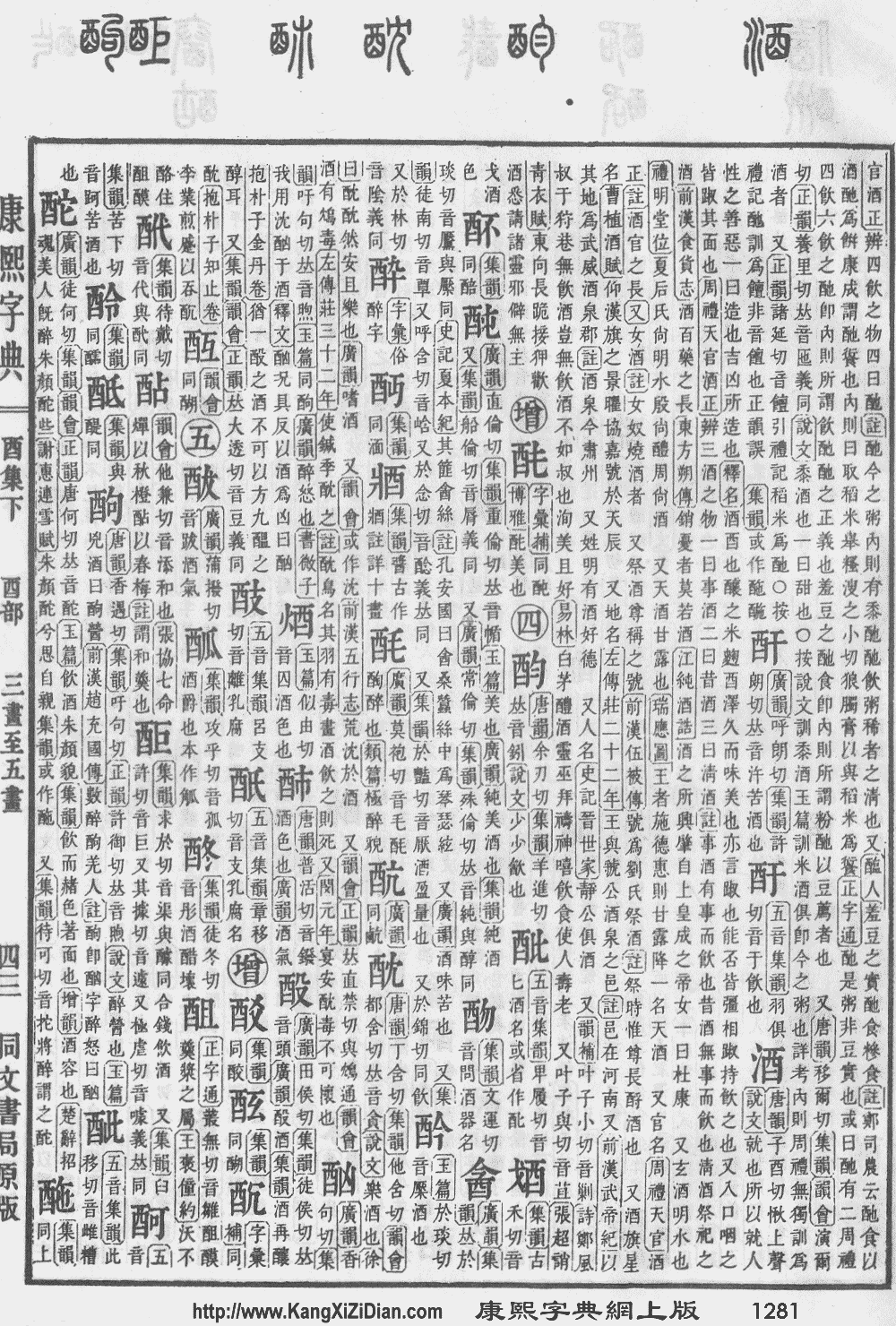
- KangXi: page 1281, character 13
- Dai Kanwa Jiten: character 39807
- Dae Jaweon: page 1781, character 29
- Hanyu Da Zidian (first edition): volume 6, page 3576, character 11
- Unihan data for U+9154
Chinese
| For pronunciation and definitions of 酔 – see 醉 (“to become drunk; to become intoxicated; to intoxicate; to make someone drunk; etc.”). (This character, 酔, is the second-round simplified and variant form of 醉.) |
Notes:
|
Japanese
| 酔 | |
| 醉 |
Readings
- Go-on: すい (sui, Jōyō)←すゐ (swi, historical)
- Kan-on: すい (sui, Jōyō)←すゐ (swi, historical)
- Kun: よい (yoi, 酔い)←よひ (yofi, 酔ひ, historical)←ゑひ (wefi, 酔ひ, ancient); よう (yō, 酔う, Jōyō)←よふ (yofu, 酔ふ, historical)←ゑふ (wefu, 酔ふ, ancient)
Usage notes
- As in historical readings "ずゐ", "つゐ", "ゆゐ", and "るゐ", most dictionaries do not have "すゐ" as a historical reading for 酔. According to historical data, its on-reading is the modern "すい". However, the Dai Kanwa Jiten, has the "すゐ" and related -wi historical on-readings.
Compounds
- 二日酔い (futsukayoi)
This article is issued from Wiktionary. The text is licensed under Creative Commons - Attribution - Sharealike. Additional terms may apply for the media files.