醉
See also: 酔
| ||||||||
Translingual
Han character
醉 (Kangxi radical 164, 酉+8, 15 strokes, cangjie input 一田卜人十 (MWYOJ), four-corner 10648, composition ⿰酉卒)
Derived characters
- 𤂭
References
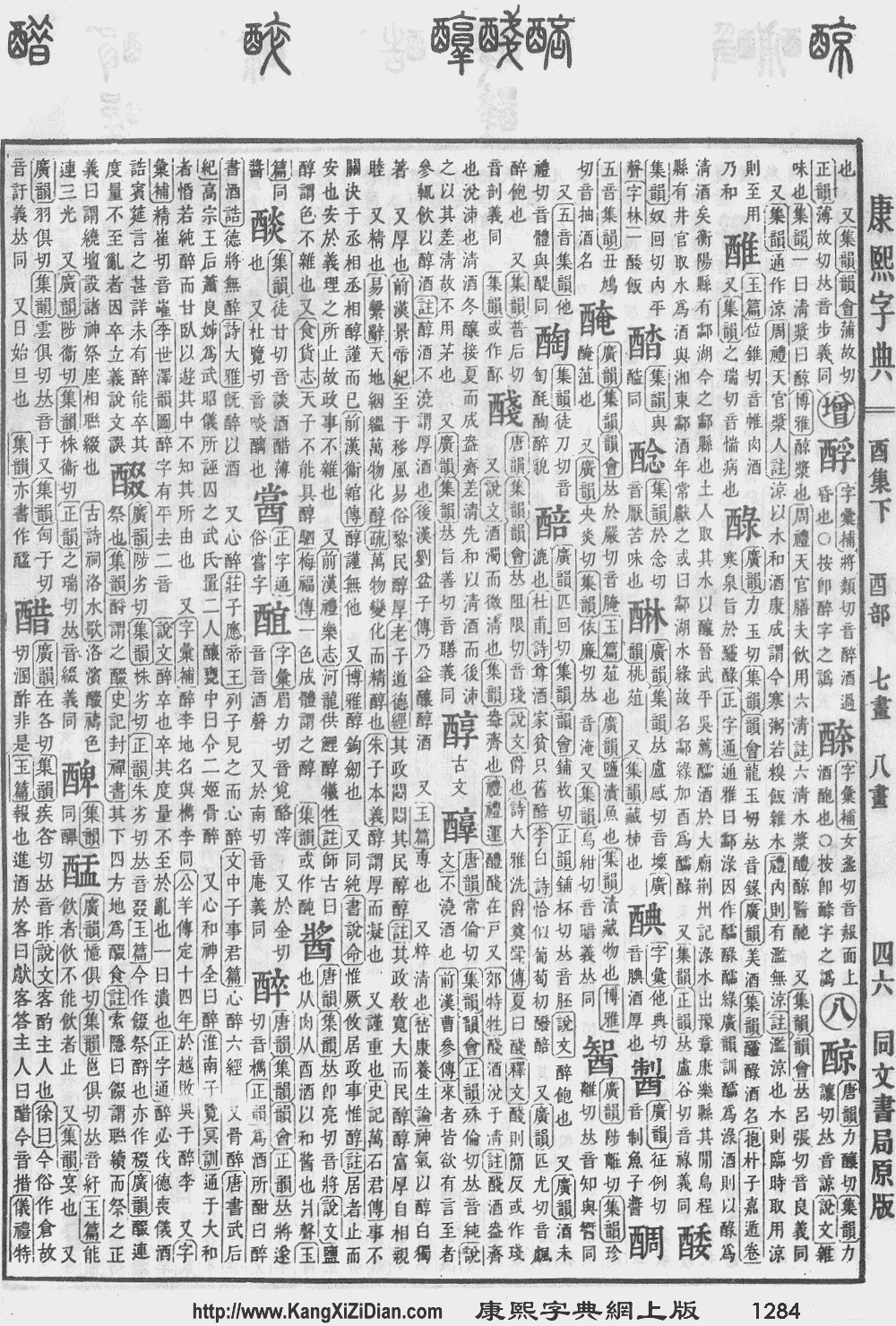
- KangXi: page 1284, character 24
- Dai Kanwa Jiten: character 39906
- Dae Jaweon: page 1784, character 17
- Hanyu Da Zidian (first edition): volume 6, page 3587, character 14
- Unihan data for U+9189
Chinese
| trad. | 醉 | |
|---|---|---|
| simp. # | 醉 | |
| 2nd round simp. | 酔 | |
| alternative forms | 酔 | |
Glyph origin
| Historical forms of the character 醉 |
|---|
| Shuowen Jiezi (compiled in Han) |
| Small seal script |
 |
Characters in the same phonetic series (卒) (Zhengzhang, 2003)
| Old Chinese | |
|---|---|
| 晬 | *ʔsuːds |
| 祽 | *ʔsuːds |
| 綷 | *ʔsuːds |
| 淬 | *sʰuːds |
| 啐 | *sʰuːds, *suːds, *sʰroːds, *ʔsud |
| 倅 | *sʰuːds, *ʔsuːd |
| 焠 | *sʰuːds |
| 碎 | *suːds |
| 誶 | *suːds, *suds, *zud |
| 濢 | *ʔslulʔ, *sʰluds |
| 噿 | *ʔslulʔ |
| 臎 | *ʔslulʔ, *sʰluds |
| 醉 | *ʔsuds |
| 翠 | *sʰuds |
| 悴 | *zuds |
| 萃 | *zuds |
| 瘁 | *zuds |
| 顇 | *zuds |
| 粹 | *suds |
| 睟 | *suds |
| 賥 | *suds |
| 卒 | *ʔsuːd, *sʰuːd, *ʔsud |
| 稡 | *ʔsuːd |
| 猝 | *sʰuːd |
| 椊 | *zuːd |
| 捽 | *zuːd, *zud |
| 崪 | *zuːd |
| 窣 | *suːd |
| 崒 | *zud |
| 踤 | *zud |
| 錊 | *ʔsuːɡ |
Phono-semantic compound (形聲, OC *ʔsuds) : semantic 酉 (“alcoholic drink”) + phonetic 卒 (OC *ʔsuːd, *sʰuːd, *ʔsud).
Pronunciation
Definitions
醉
- to become drunk; to become intoxicated
- 喝醉 ― hēzuì ― to become drunk
- 厭厭夜飲,不醉無歸。 [Pre-Classical Chinese, trad.]
- From: The Classic of Poetry, c. 11th – 7th centuries BCE, translated based on James Legge's version
- Yàn yàn yè yǐn, bù zuì wú guī. [Pinyin]
- Happily and long into the night we drink; till all are drunk, there is no retiring.
厌厌夜饮,不醉无归。 [Pre-Classical Chinese, simp.]- 漁父見而問之曰:「子非三閭大夫與?何故至於斯!」
- From: The Verses of Chu, 4th century BCE – 2nd century CE
- Yúfù jiàn ér wèn zhī yuē: “Zǐ fēi sānlǘdàfū yú? Hégù zhì yú sī!”
Qū Yuán yuē: “Jǔshì jiē zhuó wǒ dú qīng, zhòngrén jiē zuì wǒ dú xǐng, shìyǐ jiàn fàng!” [Pinyin] - The fisherman saw him and asked: "Were you not the sanlü dafu [a high position in the Chu court]? How have you ended up like this?"
Qu Yuan said: "The whole world was muddy and I was clean alone; all men were drunk and I was sober alone; and I was exiled for that!"
屈原曰:「舉世皆濁我獨清,眾人皆醉我獨醒,是以見放!」 [Classical Chinese, trad.]
渔父见而问之曰:“子非三闾大夫与?何故至于斯!”
屈原曰:“举世皆浊我独清,众人皆醉我独醒,是以见放!” [Classical Chinese, simp.]
- to intoxicate; to make someone drunk
- 許之,飲先從者酒,醉之,竊馬而獻之子常,子常歸唐侯。 [Classical Chinese, trad.]
- From: Commentary of Zuo, c. 4th century BCE
- Xǔ zhī, yǐn xiān cóng zhě jiǔ, zuì zhī, qiè mǎ ér xiàn zhī Zǐcháng, Zǐcháng guī Táng hóu. [Pinyin]
- When they were allowed this, they made the earlier attendants drink alcohol, making them drunk; stole their horses; and presented them to Zichang. Zichang then let the marquis return to Tang.
许之,饮先从者酒,醉之,窃马而献之子常,子常归唐侯。 [Classical Chinese, simp.]
- to be fascinated with; to be enchanted by; to be crazy about; to be addicted to
- 醉心 ― zuìxīn ― to be infatuated with
- to marinate in cooking wine
Synonyms
- (to become drunk):
- (to be fascinated with):
Descendants
Compounds
Derived terms from 醉
|
Japanese
| 酔 | |
| 醉 |
Kanji
醉
(“Jinmeiyō” kanji used for names, kyūjitai kanji, shinjitai form 酔)
- This term needs a translation to English. Please help out and add a translation, then remove the text
{{rfdef}}.
Readings
- Go-on: すい (sui)←すゐ (swi, historical)
- Kan-on: すい (sui)←すゐ (swi, historical)
- Kun: よい (yoi, 醉い)←ゑひ (wefi, 醉ひ, historical); よう (yō, 醉う)←ゑふ (wefu, 醉ふ, historical)
Korean
Hanja
醉 (eum 취 (chwi))
- This term needs a translation to English. Please help out and add a translation, then remove the text
{{rfdef}}.
Vietnamese
Han character
醉: Hán Nôm readings: túy/tuý, xúy/xuý
- This term needs a translation to English. Please help out and add a translation, then remove the text
{{rfdef}}.
This article is issued from Wiktionary. The text is licensed under Creative Commons - Attribution - Sharealike. Additional terms may apply for the media files.