鎖
| ||||||||
Translingual
Han character
鎖 (Kangxi radical 167, 金+10, 18 strokes, cangjie input 金火月金 (CFBC), four-corner 89186, composition ⿰釒𧴪)
References
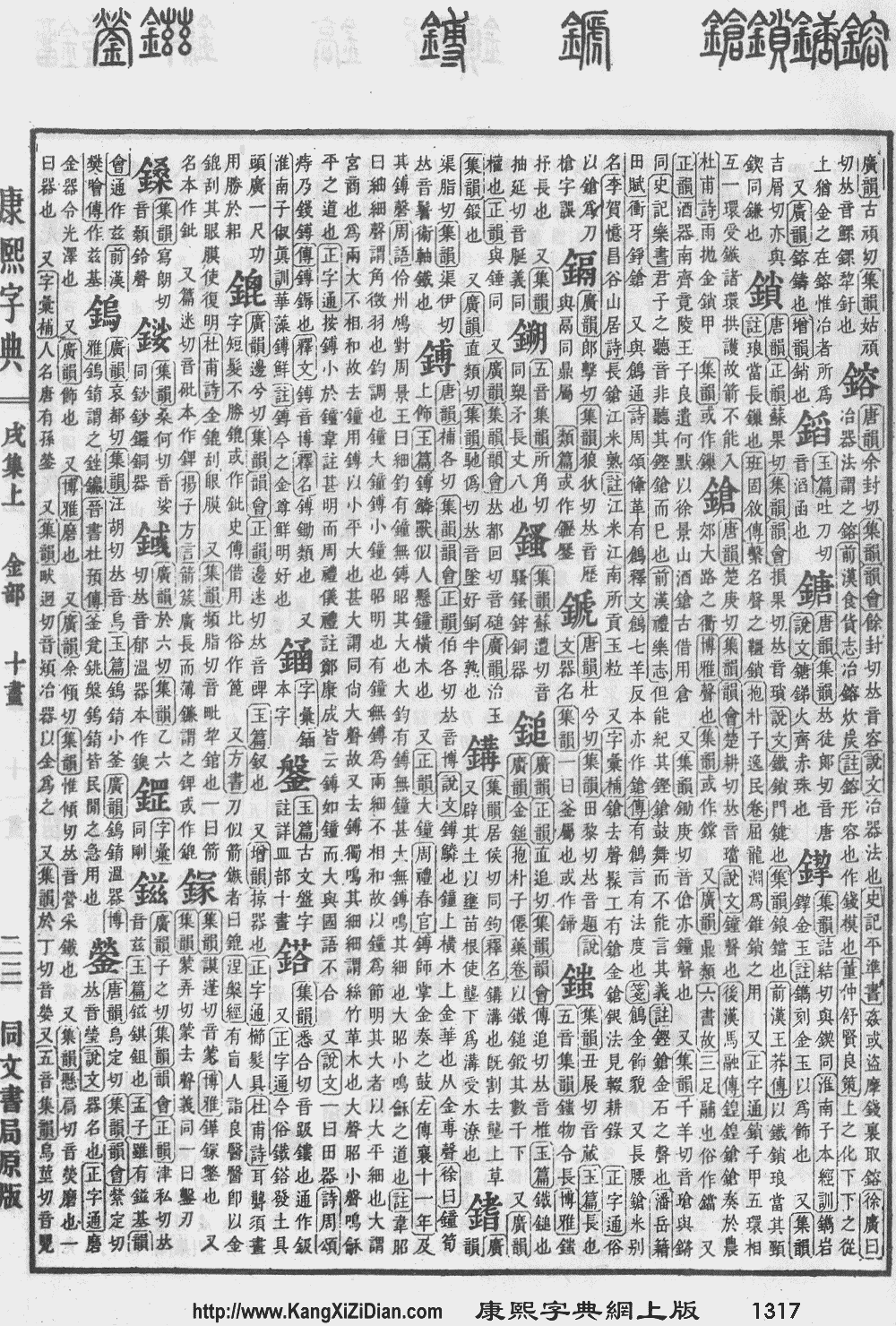
- KangXi: page 1317, character 5
- Dai Kanwa Jiten: character 40708
- Dae Jaweon: page 1817, character 1
- Hanyu Da Zidian (first edition): volume 6, page 4240, character 6
- Unihan data for U+9396
Chinese
| trad. | 鎖 | |
|---|---|---|
| simp. | 锁 | |
| alternative forms | 鎻/锁 | |
Glyph origin
Phono-semantic compound (形聲, OC *soːlʔ) : semantic 金 (“metal”) + phonetic 𧴪 ().
Etymology
(This etymology is missing or incomplete. Please add to it, or discuss it at the Etymology scriptorium.)
Pronunciation
Definitions
鎖
Synonyms
- (lock):
Compounds
|
|
|
Descendants
References
- “鎖”, in 漢語多功能字庫 (Multi-function Chinese Character Database), 香港中文大學 (the Chinese University of Hong Kong), 2014–
Japanese
| Shinjitai | 鎖 | |
| Kyūjitai [1] |
鎖󠄁 鎖+ 󠄁?(Adobe-Japan1) |
 |
| 鎖󠄃 鎖+ 󠄃?(Hanyo-Denshi) (Moji_Joho) | ||
| The displayed kanji may be different from the image due to your environment. See here for details. | ||
Readings
Etymology 1
| Kanji in this term |
|---|
| 鎖 |
| くさり Grade: S |
| kun’yomi |
Noun derived from the 連用形 (ren'yōkei, “stem form”) of verb 鏈る (kusaru, “to be linked together, to link together”).[2][3]
Pronunciation
Noun
鎖 • (kusari)
Derived terms
Related terms
- 鏈る (kusaru): to be linked together, to link together
Etymology 2
| Kanji in this term |
|---|
| 鎖 |
| とざし Grade: S |
| kun’yomi |
Noun derived from the 連用形 (ren'yōkei, “stem form”) of verb 鎖す (tozasu, “to shut and lock a door or gate”).[2][3]
Pronunciation
- IPA(key): [to̞za̠ɕi]
Noun
鎖 • (tozashi)
Related terms
- 鎖す, 閉ざす (tozasu): to close and lock a door or gate
Etymology 3
| Kanji in this term |
|---|
| 鎖 |
| つがり Grade: S |
| kun’yomi |
Noun derived from the 連用形 (ren'yōkei, “stem form”) of verb 連る (tsugaru, “to continue, to lead onto the next, to be connected; to connect or link together”).[2][3]
Pronunciation
- IPA(key): [t͡sɨᵝɡa̠ɾʲi]
Noun
鎖 • (tsugari)
- a connection, linkage, or continuation
- (rare) a chain
- a string of items tied together
- the part of the opening of a drawstring bag through which the string is passed
Related terms
Etymology 4
| Kanji in this term |
|---|
| 鎖 |
| さ Grade: S |
| on’yomi |
From Middle Chinese 鎻 or 鎖 (MC suɑX). Compare modern Mandarin 鎖/锁 (suǒ, “lock, padlock; shackles, chains”).
Only used in compounds in modern Japanese.
Pronunciation
- IPA(key): [sa̠]
Derived terms
Starting with 鎖:
- 鎖国 (sakoku): national isolationism; closed borders
Ending with 鎖:
- 連鎖 (rensa): (metaphorical) a chain, a connection, a linkage
Etymology 5
| Kanji in this term |
|---|
| 鎖 |
| じょう Grade: S |
| on’yomi |
Alteration from sau, itself an alternate reading of sa above, possibly influenced by an early variety of Mandarin reading suǒ or Cantonese reading so².[2] The shift from sau to jau (modern jō) was probably the influence of the reading of synonymous character 錠 (jō).
/sa/ → /sau/ → /d͡ʑau/ → /d͡ʑoː/
Alternative forms
Pronunciation
Noun
Usage notes
The senses have different pitch accents. A low starting pitch is used for the lock or key meanings, while a high starting pitch is used for the pill or tablet meanings.
The alternate spelling 錠 was originally an ateji, but in reference to openings, the meaning was limited to key, while the lock sense was spelled 鎖. In modern Japanese, these characters are largely interchangeable for both lock and key senses. However, the more common term for key is 鍵 (kagi).
Counter
Usage notes
More commonly spelled 錠.
References
- 1914, 漢和大辭書 (Kanwa Dai Jisho, “The Great Kanji-Japanese Dictionary”) (in Japanese), page 2195 (paper), page 1149 (digital), Tōkyō: 興文社 (Kōbunsha)
- 1988, 国語大辞典(新装版) (Kokugo Dai Jiten, Revised Edition) (in Japanese), Tōkyō: Shogakukan
- 2006, 大辞林 (Daijirin), Third Edition (in Japanese), Tōkyō: Sanseidō, →ISBN
- 1998, NHK日本語発音アクセント辞典 (NHK Japanese Pronunciation Accent Dictionary) (in Japanese), Tōkyō: NHK, →ISBN
Korean
Hanja
鎖 • (swae) (hangeul 쇄)
- This term needs a translation to English. Please help out and add a translation, then remove the text
{{rfdef}}.