閙
| ||||||||
Translingual
Alternative forms
- ⿵門巿 (with 巿 - 4 strokes instead of 市 - 5 strokes) - As found in 𩦔 (
U+29994), not to be confused with 𩦴 (U+299B4) which contains 市 instead. - Note that the Ming typeface used in Japan and Korea as well as the Kangxi dictionary uses a vertical dot for the upper component of 亠 which is slightly different from modern Chinese scripts which uses a slanting 丶 dot for the upper component of 亠 in 市.
Han character
閙 (Kangxi radical 169, 門+5, 13 strokes, cangjie input 日弓卜中月 (ANYLB), four-corner 77227, composition ⿵門市)
Derived characters
Related characters
- 鬧 (Orthodox traditional form)
- 闹 (Simplified Chinese)
References
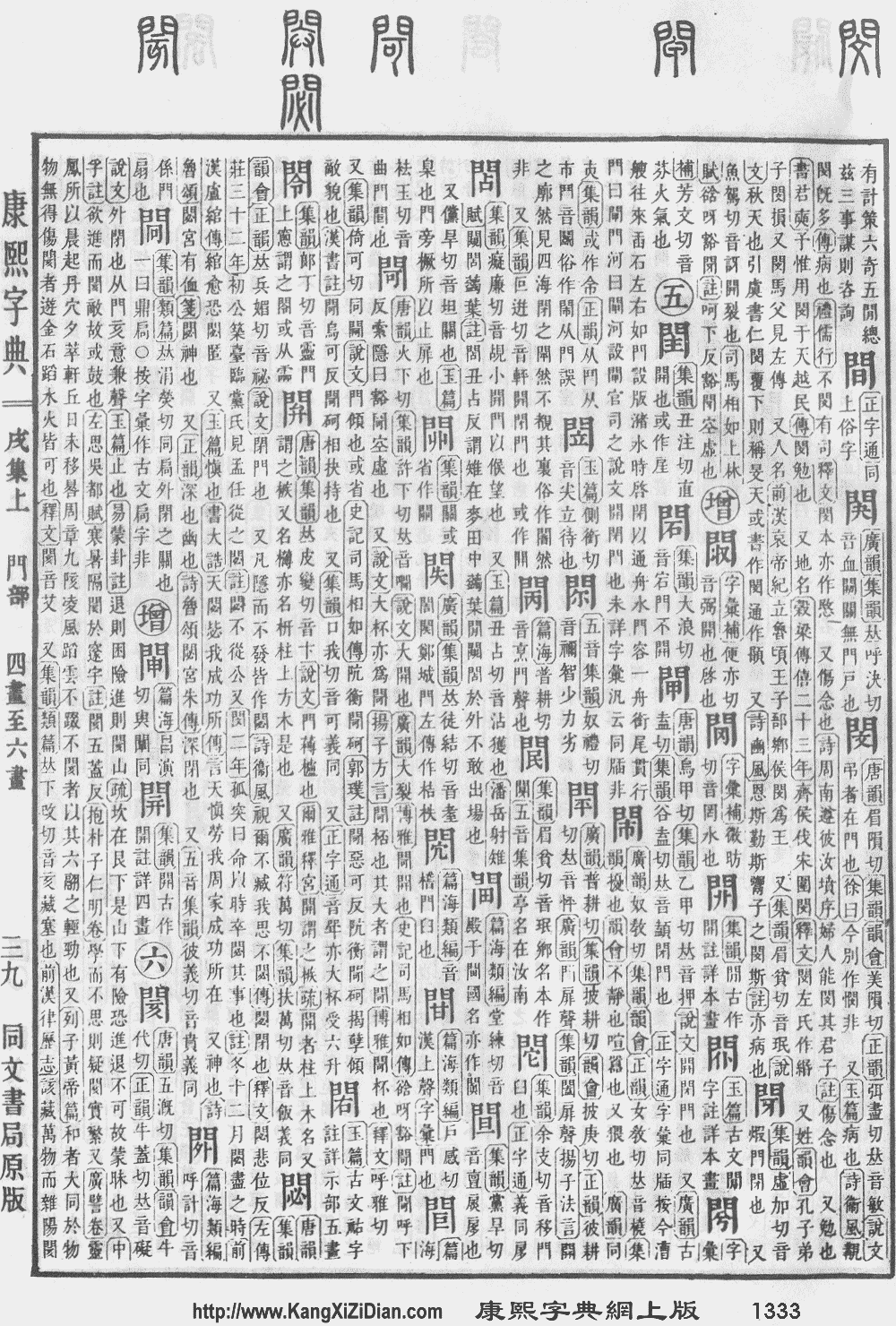
- KangXi: page 1333, character 13
- Dai Kanwa Jiten: character 41264
- Dae Jaweon: page 1839, character 14
- Hanyu Da Zidian (first edition): volume 7, page 4293, character 5
- Unihan data for U+9599
Chinese
| For pronunciation and definitions of 閙 – see 鬧 (“to be noisy; to create a disturbance; etc.”). (This character, 閙, is a variant form of 鬧.) |
Japanese
Vietnamese
Han character
- This term needs a translation to English. Please help out and add a translation, then remove the text
{{rfdef}}.
References
This article is issued from Wiktionary. The text is licensed under Creative Commons - Attribution - Sharealike. Additional terms may apply for the media files.