附
| ||||||||
Translingual
| Stroke order | |||
|---|---|---|---|
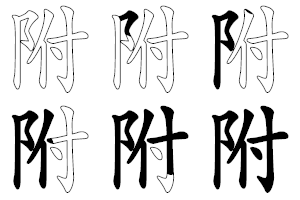 | |||
Han character
附 (Kangxi radical 170, 阜+5, 8 strokes, cangjie input 弓中人木戈 (NLODI), four-corner 74200, composition ⿰阝付)
Derived characters
References
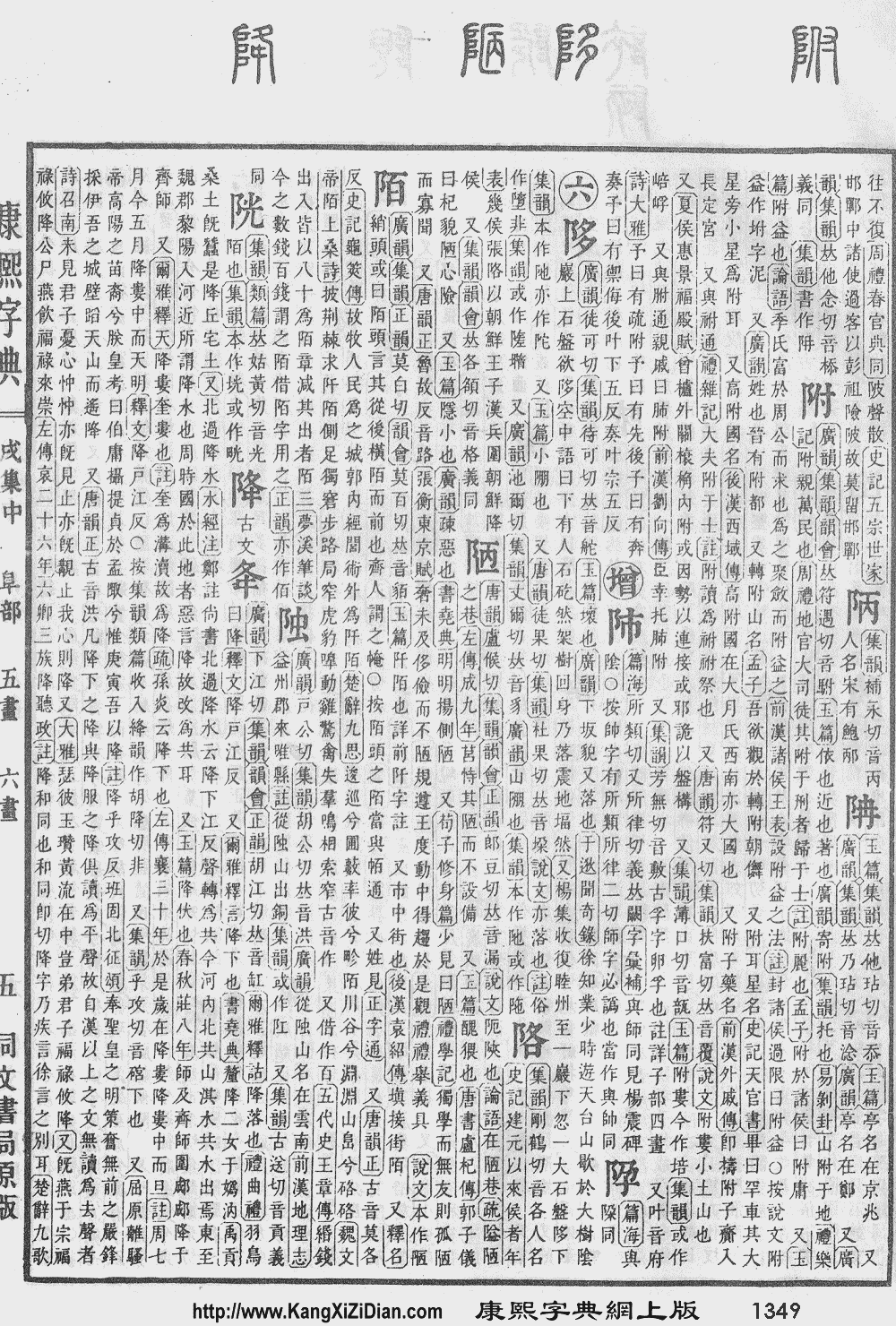
- KangXi: page 1349, character 3
- Dai Kanwa Jiten: character 41606
- Dae Jaweon: page 1851, character 4
- Hanyu Da Zidian (first edition): volume 6, page 4122, character 2
- Unihan data for U+9644
Chinese
| simp. and trad. |
附 | |
|---|---|---|
Glyph origin
Characters in the same phonetic series (付) (Zhengzhang, 2003)
Phono-semantic compound (形聲, OC *bos) : semantic 阝 + phonetic 付 (OC *pos).
Pronunciation
Definitions
附
Synonyms
- (to attach):
- (to come near):
Synonyms of 附
Compounds
Derived terms from 附
|
|
|
Japanese
Readings
From Middle Chinese 附 (MC bɨoH); compare Mandarin 附 (fù):
- Go-on: ぶ (bu)←ぶ (bu, historical)
- Kan-on: ふ (fu, Jōyō)←ふ (fu, historical)
From Middle Chinese; compare Mandarin 附 (bù):
- Go-on: ぶ (bu)←ぶ (bu, historical)
- Kan-on: ほう (hō)←ほう (fou, historical)
From native Japanese roots:
Compounds
- 附倚 (fui) (付倚)
- 附益 (fueki) (付益)
- 附加 (fuka) (付加)
- 附会 (fukai) (付会)
- 附款 (fukan) (付款)
- 附記 (fuki) (付記)
- 附驥 (fuki)
- 附議 (fugi) (付議)
- 附近 (fukin) (付近)
- 附言 (fugen) (付言)
- 附語 (fugo) (付語)
- 附合 (fugō) (付合)
- 附載 (fusai) (付載)
- 附子 (fushi) (付子)
- 附従 (fujū) (付従)
- 附上 (fujō) (付上)
- 附嘱 (fushoku) (付嘱, 付属)
- 附親 (fushin) (付親)
- 附図 (fuzu) (付図)
- 附子 (busu) (付子)
- 附随 (fuzui) (付随)
- 附贅 (fuzei)
- 附設 (fusetsu) (付設)
- 附箋 (fusen) (付箋)
- 附葬 (fusō) (付葬)
- 附則 (fusoku) (付則): supplementary provision, additional clause
- 附属 (fuzoku) (付属): affiliation
- 附帯 (futai) (付帯)
- 附託 (futaku) (付託)
- 附置 (fuchi) (付置)
- 附着 (fuchaku) (付着)
- 附註 (fuchū) (付注)
- 附党 (futō) (付党)
- 附馬 (fuba) (付馬)
- 附比 (fuhi) (付比)
- 附表 (fuhyō) (付表)
- 附票 (fuhyō) (付票)
- 附憑 (fuhyō) (付憑)
- 附鳳 (fuhō) (付鳳)
- 附与 (fuyo) (付与)
- 附庸 (fuyō) (付庸)
- 附墉 (fuyō)
- 附鄘 (fuyō)
- 附隷 (furei) (付隷)
- 附婁 (furō)
- 附録 (furoku) (付録)
- 附論 (furon) (付論)
- 附和 (fuwa) (付和)
- 阿附 (afu)
- 依附 (ifu)
- 畏附 (ifu)
- 懐附 (kaifu)
- 下附 (kafu) (下付)
- 還附 (kanpu) (還付)
- 款附 (kanpu)
- 寄附 (kifu) (寄付): contribution, donation
- 帰附 (kifu) (帰付)
- 蟻附 (gifu)
- 螘附 (gifu)
- 交附 (kōfu) (交付)
- 臣附 (shinpu)
- 託附 (takufu)
- 貼附 (chōfu) (貼付)
- 添附 (tenpu) (添付)
- 貼附 (tenpu) (貼付)
- 内附 (naifu)
- 藩附 (hanpu)
- 攀附 (hanpu)
- 比附 (hifu)
- 媚附 (bifu)
- 来附 (raifu) (来付)
- 和附 (wafu) (和付)
Korean
Etymology
From Middle Chinese 附 (MC bɨoH).
Vietnamese
This article is issued from Wiktionary. The text is licensed under Creative Commons - Attribution - Sharealike. Additional terms may apply for the media files.