際

See also: 际
際 U+969B, 際
CJK UNIFIED IDEOGRAPH-969B
← 隚
[U+969A]
CJK Unified Ideographs 障 →
[U+969C]

Translingual

Han character

際 (Kangxi radical 170, 阜+11, 14 strokes, cangjie input 弓中月人火 (NLBOF), four-corner 77291, composition ⿰阝祭)

Derived characters

  • 𭳋

References

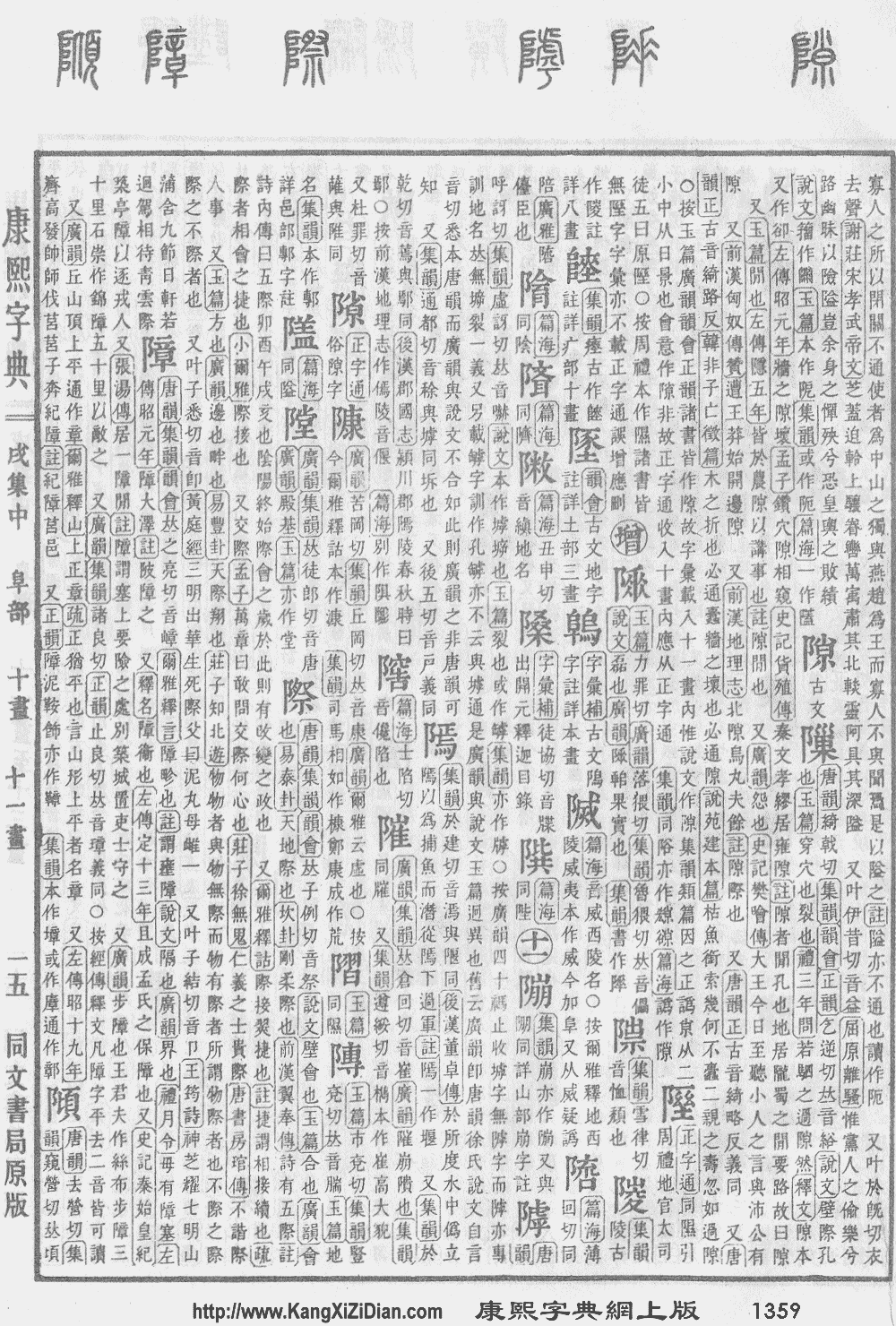
  • KangXi: page 1359, character 28
  • Dai Kanwa Jiten: character 41820
  • Hanyu Da Zidian (first edition): volume 6, page 4154, character 15
  • Unihan data for U+969B

Chinese

trad. 際
simp. 际

Glyph origin

Phono-semantic compound (形聲, OC *ʔsleds) : semantic 阝 + phonetic 祭 (OC *ʔsreːds, *ʔsleds).

Pronunciation


Rime
Character 際
Reading # 1/1
Initial (聲) 精 (13)
Final (韻) 祭 (35)
Tone (調) Departing (H)
Openness (開合) Open
Division (等) III
Fanqie 子例切
Reconstructions
Zhengzhang
Shangfang
/t͡siᴇiH/
Pan
Wuyun
/t͡siɛiH/
Shao
Rongfen
/t͡sjæiH/
Edwin
Pulleyblank
/t͡siajH/
Li
Rong
/t͡siɛiH/
Wang
Li
/t͡sĭɛiH/
Bernard
Karlgren
/t͡si̯ɛiH/
Expected
Mandarin
Reflex
jì
Expected
Cantonese
Reflex
zai3
Baxter–Sagart system 1.1 (2014)
Character 際
Reading # 1/1
Modern
Beijing
(Pinyin)
jì
Middle
Chinese
‹ tsjejH ›
Old
Chinese
/*[ts][a]p-s/
English connection

Notes for Old Chinese notations in the Baxter–Sagart system:

* Parentheses "()" indicate uncertain presence;
* Square brackets "[]" indicate uncertain identity, e.g. *[t] as coda may in fact be *-t or *-p;
* Angle brackets "<>" indicate infix;
* Hyphen "-" indicates morpheme boundary;

* Period "." indicates syllable boundary.
Zhengzhang system (2003)
Character 際
Reading # 1/1
No. 5840
Phonetic
component
祭
Rime
group
祭
Rime
subdivision
2
Corresponding
MC rime
祭
Old
Chinese
/*ʔsleds/

Definitions

際

  1. border; boundary; juncture
  2. between
  3. moment
  4. to associate
  5. to be on the occasion of
  6. to be one's lot

Compounds

Japanese

Kanji

際

(grade 5 “Kyōiku” kanji)

  1. occasion
  2. side
  3. edge
  4. verge
  5. dangerous
  6. adventurous
  7. incident
  8. time
  9. when

Readings

Etymology 1

Kanji in this term
際
さい
Grade: 5
on’yomi

(This etymology is missing or incomplete. Please add to it, or discuss it at the Etymology scriptorium.)

Noun

際(さい) • (sai) 

  1. time; occasion
    列車(れっしゃ)が発車(はっしゃ)する際(さい)
    ressha ga hassha suru sai
    when a train departs
    その際(さい)に注意(ちゅうい)しなければいけない
    sono sai ni chūi shinakereba ikenai
    you must pay attention when that happens
See also

Etymology 2

Kanji in this term
際
きわ
Grade: 5
kun’yomi

(This etymology is missing or incomplete. Please add to it, or discuss it at the Etymology scriptorium.)

Noun

際(きわ) • (kiwa) ←きは (kifa)?

  1. moment prior to something
    去(さ)り際(ぎわ)に握(あく)手(しゅ)する
    sari-giwa ni akushu suru
    to shake hands just before leaving

Korean

Hanja

際 (eumhun 즈음 제 (jeueum je))
際 (eumhun 가 제 (ga je))

  1. Hanja form? of 제 (“occasion”).
  2. Hanja form? of 제 (“border”).

Compounds

Vietnamese

Han character

際: Hán Nôm readings: tế

  1. This term needs a translation to English. Please help out and add a translation, then remove the text {{rfdef}}.
This article is issued from Wiktionary. The text is licensed under Creative Commons - Attribution - Sharealike. Additional terms may apply for the media files.