骼
| ||||||||
Translingual
Han character
骼 (Kangxi radical 188, 骨+6, 16 strokes, cangjie input 月月竹水口 (BBHER), four-corner 77264, composition ⿰骨各)
References
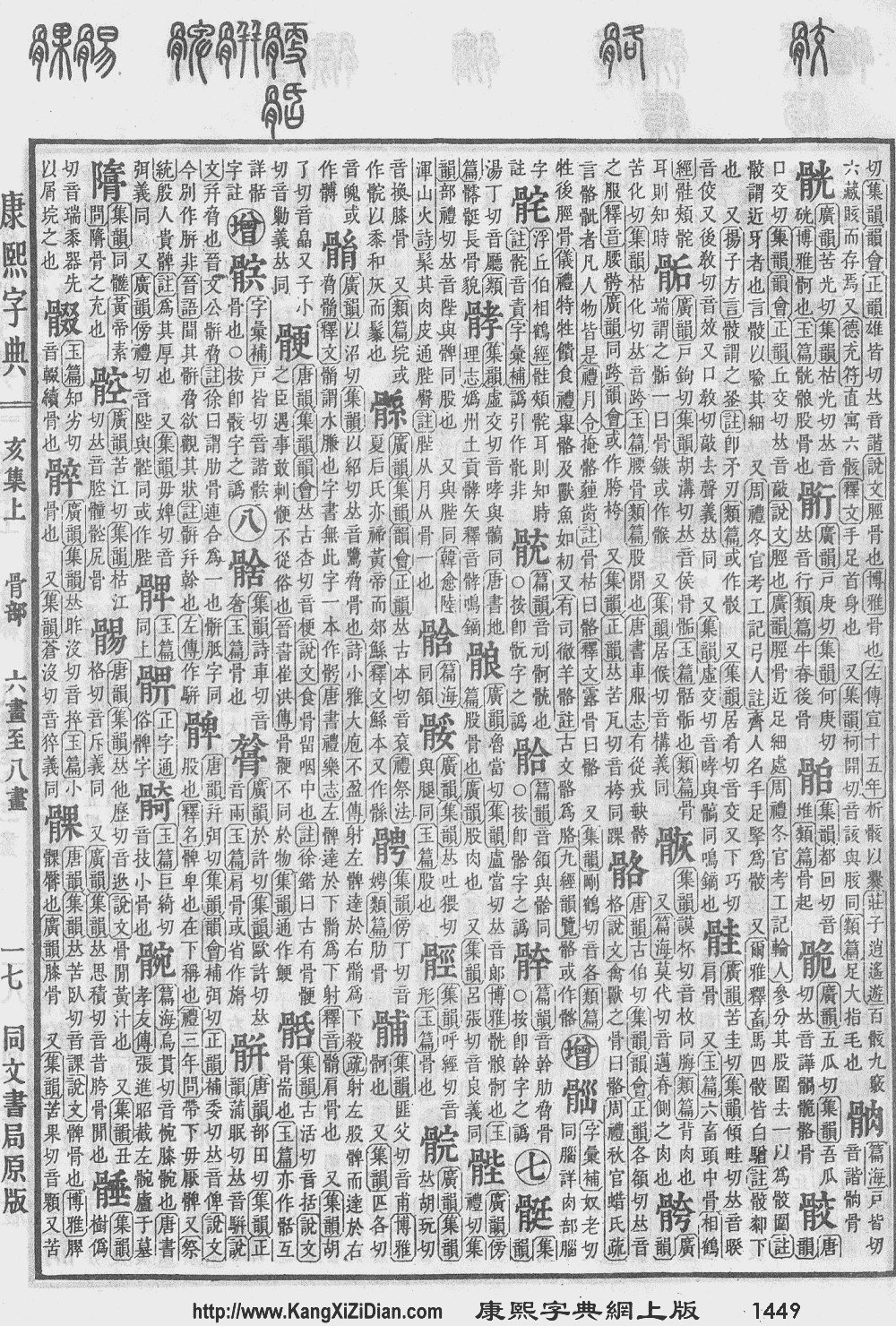
- KangXi: page 1449, character 11
- Dai Kanwa Jiten: character 45175
- Dae Jaweon: page 1975, character 19
- Hanyu Da Zidian (first edition): volume 7, page 4411, character 10
- Unihan data for U+9ABC
Chinese
| trad. | 骼 | |
|---|---|---|
| simp. # | 骼 | |
Glyph origin
| Historical forms of the character 骼 |
|---|
| Shuowen Jiezi (compiled in Han) |
| Small seal script |
 |
Characters in the same phonetic series (各) (Zhengzhang, 2003)
| Old Chinese | |
|---|---|
| 髂 | *kʰraːɡs |
| 路 | *ɡ·raːɡs |
| 輅 | *ɡ·raːɡs |
| 賂 | *ɡ·raːɡs |
| 虂 | *ɡ·raːɡs |
| 露 | *ɡ·raːɡs |
| 潞 | *raːɡs |
| 鷺 | *raːɡs |
| 璐 | *raːɡs |
| 簬 | *raːɡs |
| 簵 | *ɡ·raːɡs |
| 洛 | *ɡ·raːɡ |
| 駱 | *ɡ·raːɡ |
| 絡 | *ɡ·raːɡ |
| 酪 | *ɡ·raːɡ |
| 烙 | *ɡ·raːɡ |
| 雒 | *ɡ·raːɡ |
| 珞 | *ɡ·raːɡ |
| 硌 | *ɡ·raːɡ |
| 袼 | *ɡ·raːɡ, *klaːɡ |
| 笿 | *ɡ·raːɡ |
| 鉻 | *ɡ·raːɡ, *kraːɡ |
| 鮥 | *ɡ·raːɡ |
| 鵅 | *ɡ·raːɡ, *kraːɡ |
| 挌 | *ɡ·raːɡ, *kraːɡ |
| 落 | *ɡ·raːɡ |
| 各 | *klaːɡ |
| 胳 | *klaːɡ |
| 閣 | *klaːɡ |
| 格 | *klaːɡ, *kraːɡ |
| 擱 | *klaːɡ |
| 恪 | *kʰlaːɡ |
| 愙 | *kʰaːɡ |
| 貉 | *ɡlaːɡ, *mɡraːɡ |
| 狢 | *ɡlaːɡ |
| 佫 | *ɡlaːɡ |
| 略 | *ɡ·raɡ |
| 茖 | *kraːɡ |
| 骼 | *kraːɡ |
| 觡 | *kraːɡ |
| 蛒 | *kraːɡ |
| 敋 | *kraːɡ |
| 客 | *kʰraːɡ |
| 喀 | *kʰraːɡ |
| 揢 | *kʰraːɡ |
| 額 | *ŋɡraːɡ |
| 峉 | *ŋɡraːɡ |
| 頟 | *ŋɡraːɡ |
| 詻 | *ŋɡraːɡ |
| 垎 | *ɡraːɡ |
| 楁 | *ɡraːɡ |
Phono-semantic compound (形聲, OC *kraːɡ) : semantic 骨 (“bone”) + phonetic 各 (OC *klaːɡ)
Pronunciation
Japanese
Kanji
骼
- This term needs a translation to English. Please help out and add a translation, then remove the text
{{rfdef}}.
Korean
Hanja
骼 • (gyeok) (hangeul 격, revised gyeok, McCune–Reischauer kyŏk, Yale kyek)
- This term needs a translation to English. Please help out and add a translation, then remove the text
{{rfdef}}.
This article is issued from Wiktionary. The text is licensed under Creative Commons - Attribution - Sharealike. Additional terms may apply for the media files.