攵
| ||||||||
| ||||||||
Translingual
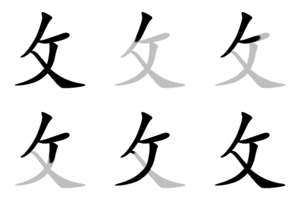
| Stroke order | |||
|---|---|---|---|
 | |||
Alternative forms
Han character
攵 (Kangxi radical 66, 攴+0, 4 strokes, cangjie input 人大 (OK) or X人大 (XOK), composition ⿱𠂉乂)
Derived characters
- Appendix:Chinese radical/攴 (most characters with radical 攴 use the form 攵)
- 𫡣, 呚, 坆, 孜, 𢎿, 㳊, 𨸩, 𪯱, 𪰋, 枚, 炇, 𭷁, 牧, 玫, 𥘦, 𤯛, 畋, 𪾇, 𭾢, 𥎪, 𬑿, 𧘶, 𮈄, 䍩, 𮊻, 致, 𠉿, 𮗡, 䚺, 𫏂, 𨈡, 𨊴, 败, 赦, 𨱝, 𣶌, 𫒋, 𫣈, 𪦐, 𤟸, 𪻰, 𩉩, 𮮦, 𣕌, 𪼂, 駇, 䰻, 𪌑, 䵇, 𪐫, 𣿊, 𫑍, 𬉘, 𪖖, 𫬚, 𬥋, 𪑛, 䱷(䲣), 𢌦, 𨻮, 變, 䖍
- 煞, 㷺, 𦱿, 𡨥, 潃, 𡽪, 㿂, 𢣈, 𬿮, 𠾀, 徹, 撤, 澈, 㬚, 㯙, 𪹲, 瞮, 䒆, 轍(辙), 𠩺, 㲠, 㹈, 㣲, 幑, 徴, 徾, 鰴, 務
Descendants
References
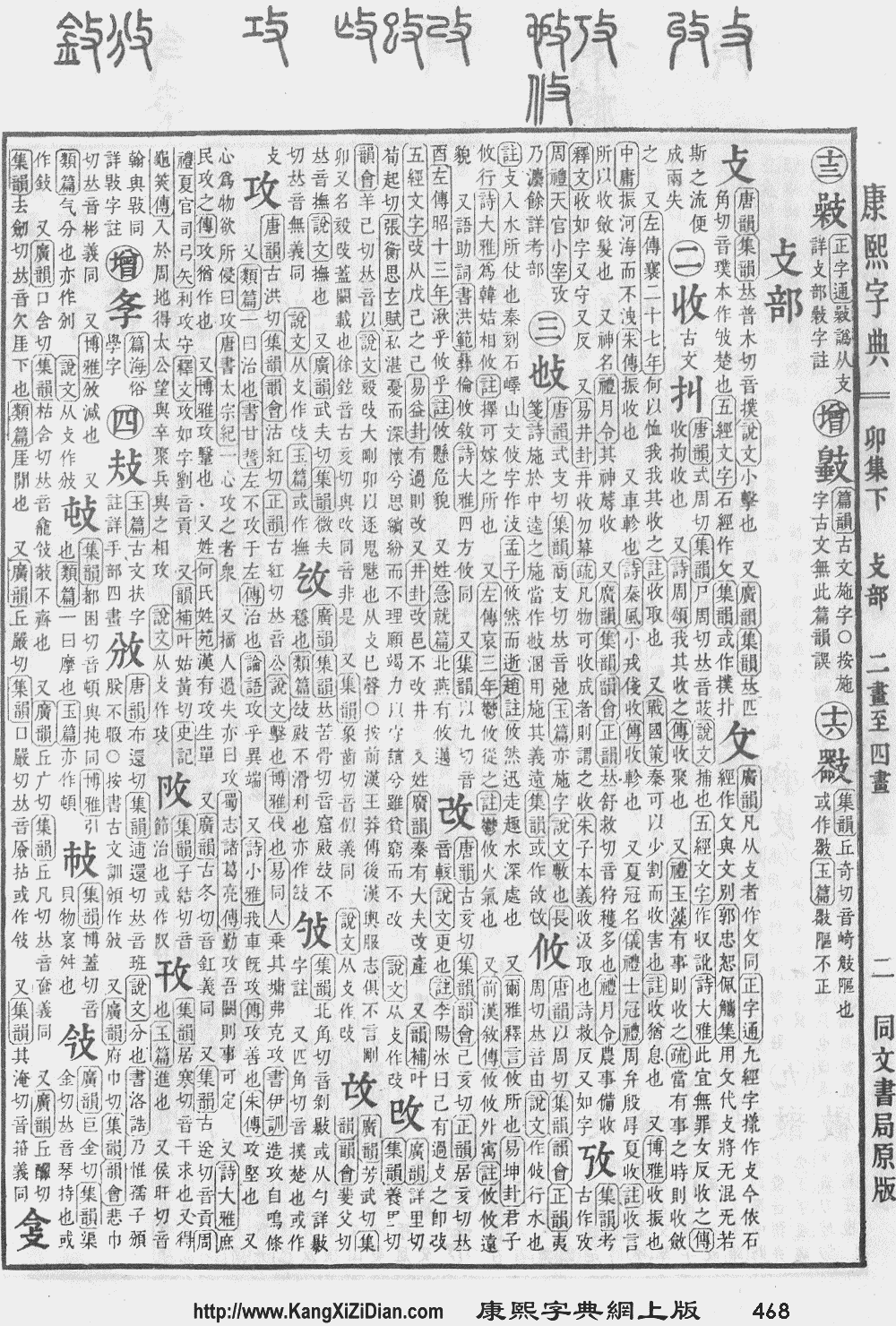
- KangXi: page 468, character 5
- Dai Kanwa Jiten: character 13109
- Dae Jaweon: page 815, character 34
- Hanyu Da Zidian (first edition): volume 2, page 1447, character 9
- Unihan data for U+6535
Chinese
Etymology 1
| For pronunciation and definitions of 攵 – see 攴 (“to hit lightly; to tap”). (This character, 攵, is a variant form of 攴.) |
Etymology 2
| For pronunciation and definitions of 攵 – see 文 (“mark, pattern, design, tattoo, decoration; etc.”). (This character, 攵, is a variant form of 文.) |
Usage notes
As a component of other characters, 攵 can be referred to as 反文旁 (fǎnwénpáng) or 反文.
Japanese
Vietnamese
This article is issued from Wiktionary. The text is licensed under Creative Commons - Attribution - Sharealike. Additional terms may apply for the media files.