凵
See also: ㄩ
| ||||||||
| ||||||||
 | ||||||||
Translingual
| Stroke order | |||
|---|---|---|---|
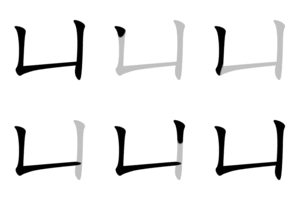 | |||
Han character
凵 (Kangxi radical 17, 凵+0, 2 strokes, cangjie input 女中 (VL) or X女中 (XVL), four-corner 22770, composition ⿰𠃊丨)
- Kangxi radical #17, ⼐.
- Shuowen Jiezi radical №23
Derived terms
References
- KangXi: page 134, character 39
- Dai Kanwa Jiten: character 1800
- Dae Jaweon: page 300, character 25
- Hanyu Da Zidian (first edition): volume 1, page 306, character 15
- Unihan data for U+51F5
- Unihan data for U+2F81D
Chinese
| simp. and trad. |
凵 | |
|---|---|---|
Glyph origin
| Historical forms of the character 凵 | ||||||
|---|---|---|---|---|---|---|
| Shang | Warring States | Shuowen Jiezi (compiled in Han) | Liushutong (compiled in Ming) | |||
| Oracle bone script | Chu slip and silk script | Small seal script | Transcribed ancient scripts | |||
 |
 |
 |
 | |||
| ||||||
|
References: Mostly from Richard Sears' Chinese Etymology site (authorisation),
| ||||||


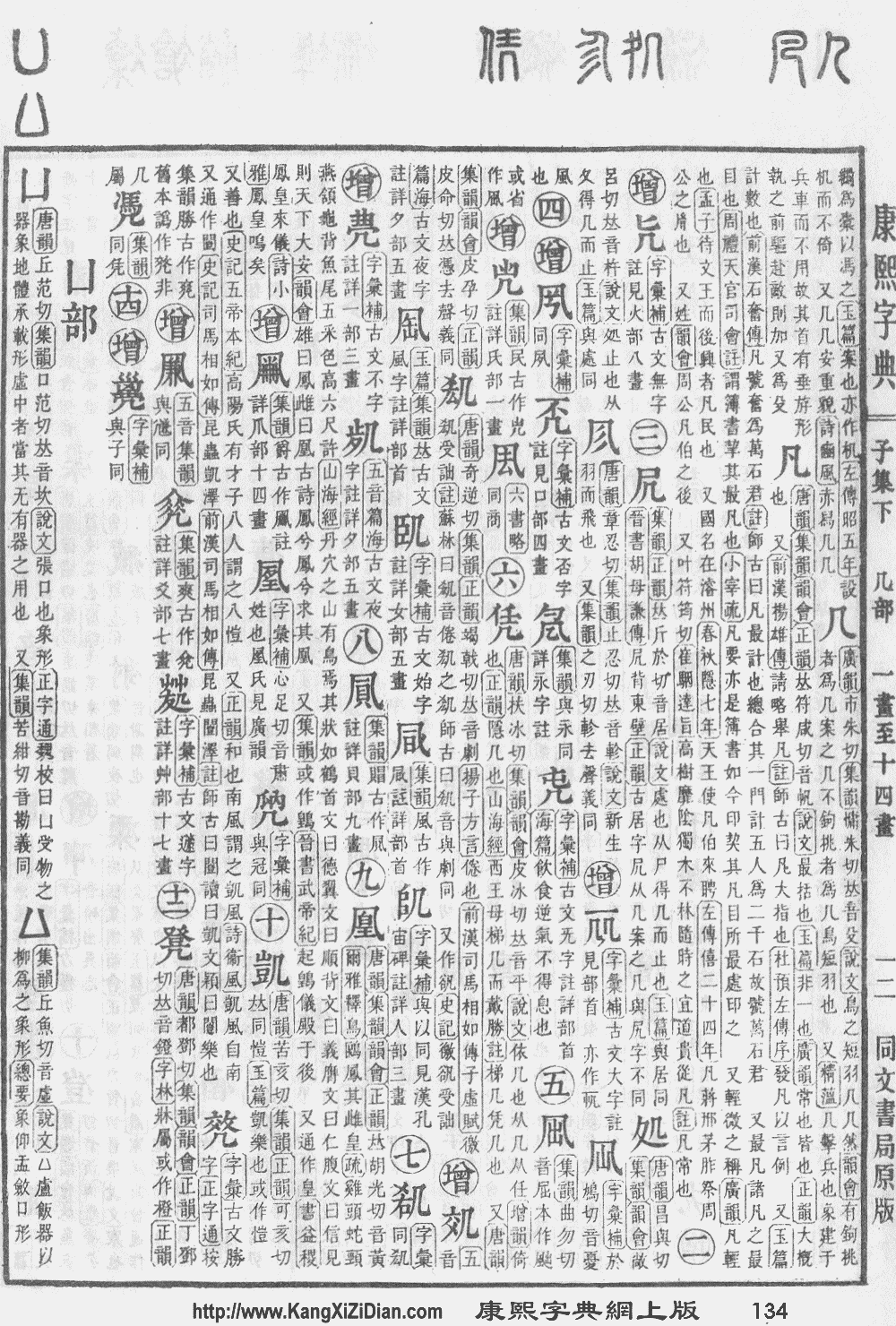
Pictogram (象形) : a cave
Etymology 1
| For pronunciation and definitions of 凵 – see 坎 (“pit; hole; bank or ridge between fields; etc.”). (This character, 凵, is an ancient form of 坎.) |
Pronunciation
Japanese
Readings
Compounds
- 凵構え (kan-gamae)
- 凵繞 (kannyō)
Korean
Vietnamese
Han character
凵: Hán Việt readings: khảm (
- chữ Hán form of khảm (“receptacle; an open aperture”).
References
- Trần (2004).
- Bonet (1899).
- Génibrel (1898).
This article is issued from Wiktionary. The text is licensed under Creative Commons - Attribution - Sharealike. Additional terms may apply for the media files.