犯
| ||||||||
 | ||||||||
Translingual
Han character
犯 (Kangxi radical 94, 犬+2, 5 strokes, cangjie input 大竹尸山 (KHSU), four-corner 47212, composition ⿰犭㔾)
Derived characters
- 𠱍, 𣳜
References
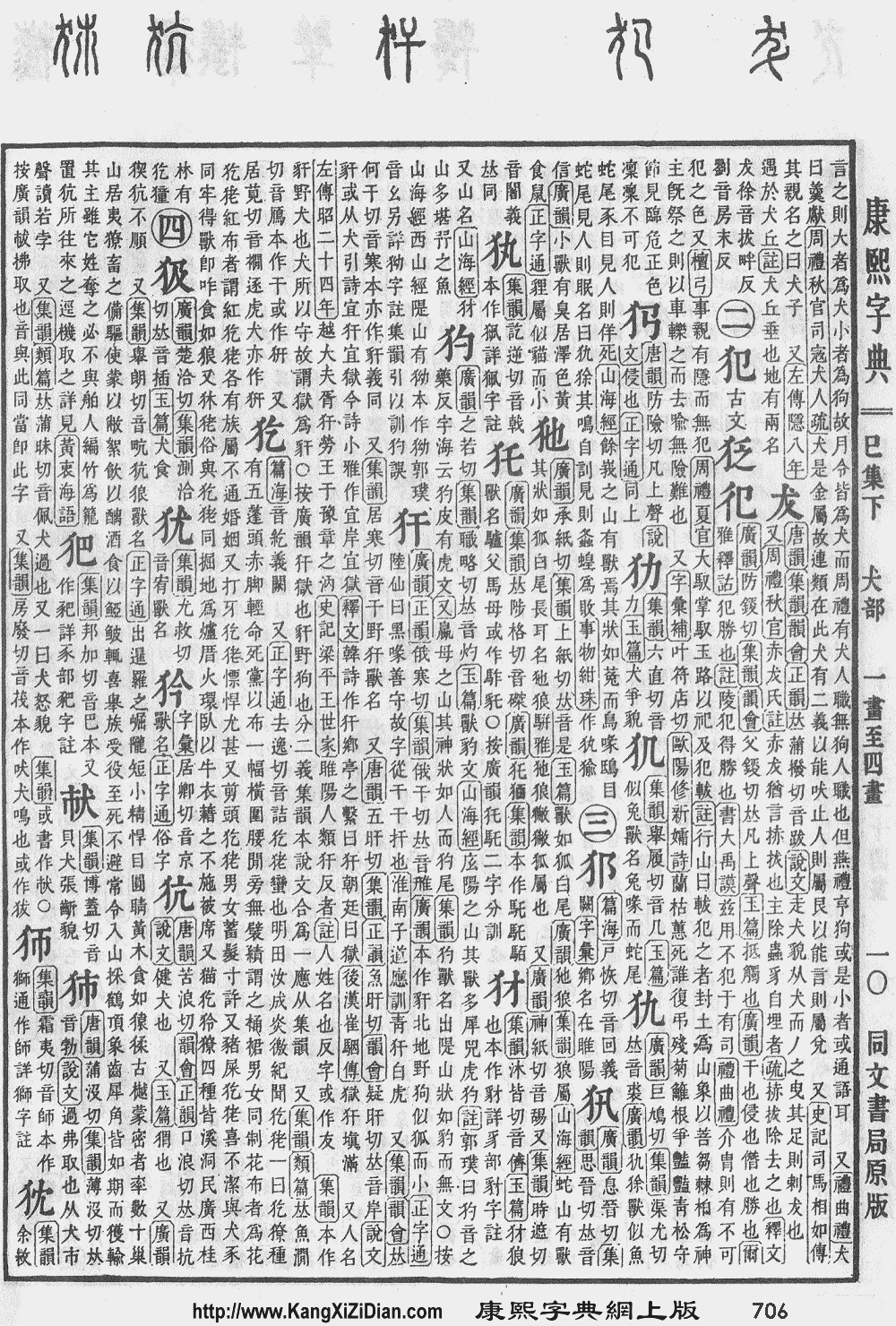
- KangXi: page 706, character 2
- Dai Kanwa Jiten: character 20238
- Dae Jaweon: page 1118, character 17
- Hanyu Da Zidian (first edition): volume 2, page 1331, character 8
- Unihan data for U+72AF
- Unihan data for U+FA9F
Chinese
| simp. and trad. |
犯 | |
|---|---|---|
Glyph origin
| Historical forms of the character 犯 |
|---|
| Shuowen Jiezi (compiled in Han) |
| Small seal script |
 |
Characters in the same phonetic series (氾) (Zhengzhang, 2003)
Phono-semantic compound (形聲, OC *bomʔ) : semantic 犬 + phonetic 𢎘 ().
Etymology
"To pass over" > "to offend against, oppose". Compare 氾.
This character originally had bilabial nasal (*-m) final in Old and Middle Chinese, but had undergone dissimilation (from bilabial plosive *b-) to become *-n in most dialects. However, there are still some dialects that retain this feature, such as Meixian and Teochew dialect. Similar dissimilation happened in 帆.
Pronunciation
Definitions
犯
Synonyms
- (to violate):
- (criminal):
- (to be worth):
Descendants
Compounds
Derived terms from 犯
|
|
|
Japanese
Readings
Compounds
Etymology
| Kanji in this term |
|---|
| 犯 |
| はん Grade: 5 |
| kan’on |
/pɨɐm/ → /pamʉ/ → /famʉ/ → /haɴ/
From Middle Chinese, 犯 (MC bɨɐmX).
Derived terms
Derived terms
- 危険犯 (kiken-han)
- 教唆犯 (kyōsa-han)
- 強力犯 (gōriki-han)
- 財政犯 (zaisei-han)
- 集合犯 (shūgō-han)
- 状態犯 (jōtai-han)
- 即時犯 (sokuji-han)
- 法定犯 (hōtei-han)
Korean
Etymology
From Middle Chinese 犯 (MC bɨɐmX).
Pronunciation
- (SK Standard/Seoul) IPA(key): [pɘ(ː)m]
- Phonetic hangul: [범(ː)]
- Though still prescribed in Standard Korean, most speakers in both Koreas no longer distinguish vowel length.
Hanja
Compounds
Compounds
- 범금 (犯禁, beomgeum)
- 범소 (犯所, beomso)
- 범월 (犯越, beomwol)
- 범인 (犯人, beomin)
- 범접 (犯接, beomjeop)
- 범죄 (犯罪, beomjoe)
- 범행 (犯行, beomhaeng)
- 경범 (輕犯, gyeongbeom)
- 공범 (共犯, gongbeom)
- 방범 (防犯, bangbeom)
- 수범 (首犯, subeom)
- 잡범 (雜犯, japbeom)
- 재범 (再犯, jaebeom)
- 전범 (戰犯, jeonbeom)
- 죄범 (罪犯, joebeom)
- 주범 (主犯, jubeom)
- 중범 (重犯, jungbeom)
- 침범 (侵犯, chimbeom)
- 범죄성 (犯罪性, beomjoeseong)
- 간통범 (姦通犯, gantongbeom)
- 강간범 (強姦犯, gangganbeom)
- 강도범 (強盜犯, gangdobeom)
- 교사범 (敎唆犯, gyosabeom)
- 군사범 (軍事犯, gunsabeom)
- 납치범 (拉致犯, napchibeom)
- 도망범 (逃亡犯, domangbeom)
- 방임범 (放任犯, bang'imbeom)
- 사기범 (詐欺犯, sagibeom)
- 사칭범 (詐稱犯, sachingbeom)
- 살인범 (殺人犯, sarinbeom)
- 상습범 (常習犯, sangseupbeom)
- 생계범 (生計犯, saenggyebeom)
- 성인범 (成人犯, seong'inbeom)
- 소년범 (少年犯, sonyeonbeom)
- 우범자 (虞犯者, ubeomja)
- 유괴범 (誘拐犯, yugoebeom)
- 인질범 (人質犯, injilbeom)
- 전문범 (專門犯, jeonmunbeom)
- 전쟁범 (戰爭犯, jeonjaengbeom)
- 절도범 (竊盜犯, jeoldobeom)
- 정치범 (政治犯, jeongchibeom)
- 질주범 (疾走犯, jiljubeom)
- 탈주범 (脫走犯, taljubeom)
- 폭파범 (爆破犯, pokpabeom)
- 폭행범 (暴行犯, pokhaengbeom)
- 현행범 (現行犯, hyeonhaengbeom)
- 협박범 (脅迫犯, hyeopbakbeom)
- 확신범 (確信犯, hwaksinbeom)
- 흉악범 (凶惡犯, hyung'akbeom)
- 간명범의 (干名犯義, ganmyeongbeomui)
- 방외범색 (房外犯色, bang'oebeomsaek)
- 사불범정 (邪不犯正, sabulbeomjeong)
- 일생불범 (一生不犯, ilsaengbulbeom)
- 일죄재범 (一罪再犯, iljoejaebeom)
- 중노난범 (衆怒難犯, jungnonanbeom)
- 죄중우범 (罪中又犯, joejung'ubeom)
Vietnamese
This article is issued from Wiktionary. The text is licensed under Creative Commons - Attribution - Sharealike. Additional terms may apply for the media files.