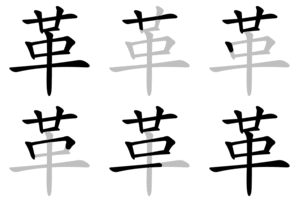
革

See also: 堇 and ䷰
革 U+9769, 革
CJK UNIFIED IDEOGRAPH-9769
← 靨
[U+9768]
CJK Unified Ideographs 靪 →
[U+976A]
⾰ U+2FB0, ⾰
KANGXI RADICAL LEATHER
← ⾯
[U+2FAF]
Kangxi Radicals ⾱ →
[U+2FB1]

Translingual

Stroke order

Han character

革 (Kangxi radical 177, 革+0, 9 strokes, cangjie input 廿中十 (TLJ), four-corner 44506)

  1. Kangxi radical #177, ⾰.

Derived characters

References

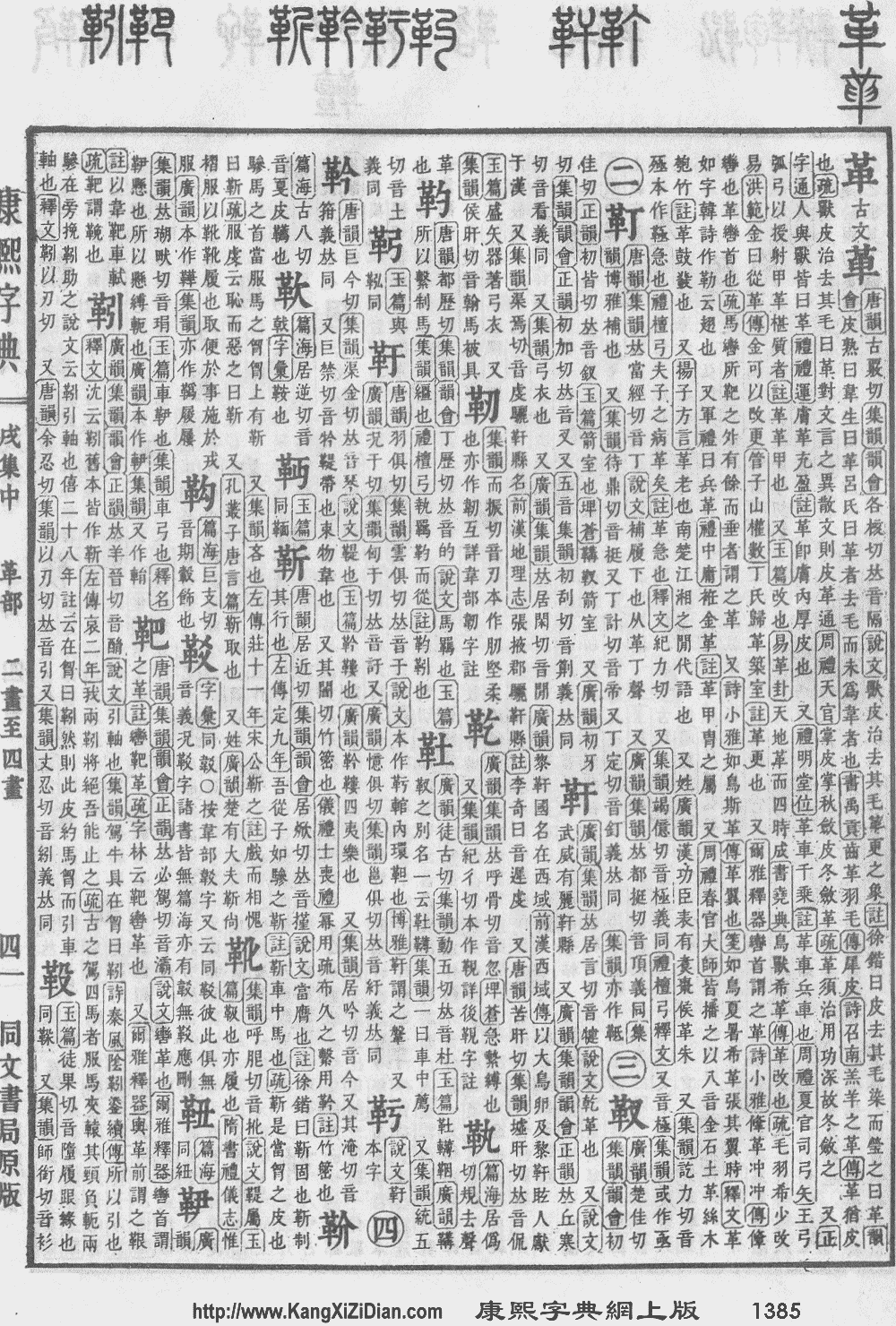
  • KangXi: page 1385, character 1
  • Dai Kanwa Jiten: character 42710
  • Dae Jaweon: page 1899, character 15
  • Hanyu Da Zidian (first edition): volume 7, page 4325, character 1
  • Unihan data for U+9769

Chinese

simp. and trad.
革
alternative forms 䪂
𩎎

Glyph origin

Historical forms of the character 革
Shuowen Jiezi (compiled in Han)
Small seal script

Pictogram (象形) – a stretched animal hide: the upper is head, the bottom is the tail and legs.

Compare 皮 (pí), which also features a hide.

Pronunciation


Note: gaap3 - variant.
Note:
  • 4kaq - colloquial;
  • 4keq - literary.

  • Dialectal data
Variety Location 革
Mandarin Beijing /kɤ³⁵/
Harbin /kɤ²¹³/
Tianjin /kɤ⁴⁵/
Jinan /kə²¹³/
Qingdao /kə⁵⁵/
Zhengzhou /kɤ²⁴/
Xi'an /kei²¹/
Xining /kɨ⁴⁴/
Yinchuan /ka¹³/
/kə¹³/
Lanzhou /kə¹³/
Ürümqi /kɤ²¹³/
/kei⁴⁴/
Wuhan /kɤ²¹³/
Chengdu /ke³¹/
Guiyang /kɛ²¹/
Kunming /kə³¹/
Nanjing /kəʔ⁵/
Hefei /kɐʔ⁵/
Jin Taiyuan /kaʔ²/
Pingyao /kʌʔ¹³/
Hohhot /kaʔ⁴³/
Wu Shanghai /kəʔ⁵/
Suzhou /kəʔ⁵/
Hangzhou /kɑʔ⁵/
Wenzhou /ka²¹³/
Hui Shexian /kʰɛʔ²¹/
Tunxi /ka⁵/
Xiang Changsha /kə²⁴/
Xiangtan /kæ²⁴/
Gan Nanchang /kiɛʔ⁵/
Hakka Meixian /ket̚¹/
Taoyuan /ket̚²²/
Cantonese Guangzhou /kap̚³/
Nanning /kak̚³³/
Hong Kong /kak̚³/
Min Xiamen (Min Nan) /kik̚³²/
Fuzhou (Min Dong) /kaiʔ²³/
Jian'ou (Min Bei) /kɛ²⁴/
Shantou (Min Nan) /kek̚²/
Haikou (Min Nan) /kek̚⁵/
/kɔk̚⁵/

Rime
Character 革
Reading # 1/1
Initial (聲) 見 (28)
Final (韻) 耕 (119)
Tone (調) Checked (Ø)
Openness (開合) Open
Division (等) II
Fanqie 古核切
Baxter keak
Reconstructions
Zhengzhang
Shangfang
/kˠɛk̚/
Pan
Wuyun
/kᵚæk̚/
Shao
Rongfen
/kɐk̚/
Edwin
Pulleyblank
/kəɨjk̚/
Li
Rong
/kɛk̚/
Wang
Li
/kæk̚/
Bernard
Karlgren
/kæk̚/
Expected
Mandarin
Reflex
ge
Expected
Cantonese
Reflex
gak1
Baxter–Sagart system 1.1 (2014)
Character 革 革
Reading # 1/2 2/2
Modern
Beijing
(Pinyin)
gé gé
Middle
Chinese
‹ kɛk › ‹ kɛk ›
Old
Chinese
/*kˁrək/ /*kˁrək/
English hide, skin change (v.)

Notes for Old Chinese notations in the Baxter–Sagart system:

* Parentheses "()" indicate uncertain presence;
* Square brackets "[]" indicate uncertain identity, e.g. *[t] as coda may in fact be *-t or *-p;
* Angle brackets "<>" indicate infix;
* Hyphen "-" indicates morpheme boundary;

* Period "." indicates syllable boundary.
Zhengzhang system (2003)
Character 革
Reading # 1/1
No. 3835
Phonetic
component
革
Rime
group
職
Rime
subdivision
0
Corresponding
MC rime
隔
Old
Chinese
/*krɯːɡ/

Definitions

革

  1. leather; animal hide
  2. (historical) leather armour and weaponry
  3. (historical) ornament on the front of the cart
  4. † Alternative form of 勒 (lè, “headstall”).
  5. to change; to alter; to reform
  6. to remove; to expel
    革職/革职  ―  gézhí  ―  to dismiss; to remove from office
    革扯 [Cantonese]  ―  gaak3 ce2 [Jyutping]  ―  to fire; to dismiss; to remove from office
  7. 49th hexagram of the I Ching
  8. a surname

Compounds

Pronunciation


Definitions

革

  1. † Alternative form of 亟 (jí, “terminally ill; critical”).

Compounds

References

Japanese

Kanji

革

(grade 6 “Kyōiku” kanji)

  1. leather; animal hide; pelt
  2. become serious
  3. change; alter

Readings

Compounds

Etymology

Kanji in this term
革
かわ
Grade: 6
kun’yomi

Specialization of 皮(かわ) (kawa, “skin”).

Pronunciation

  • (Tokyo) かわ​ [kàwáꜜ] (Odaka – [2])[1]
  • IPA(key): [ka̠ɰᵝa̠]

Noun

革(かわ) • (kawa) ←かは (kafa)?

  1. leather
    革(かわ)の表(ひょう)紙(し)
    kawa no hyōshi
    leather book cover

References

  1. 2006, 大辞林 (Daijirin), Third Edition (in Japanese), Tōkyō: Sanseidō, →ISBN

Korean

Hanja

革 • (hyeok, geuk) (hangeul 혁, 극, revised hyeok, geuk, McCune–Reischauer hyŏk, kŭk, Yale hyek, kuk)

  1. This term needs a translation to English. Please help out and add a translation, then remove the text {{rfdef}}.

Vietnamese

Han character

革: Hán Nôm readings: cách

  1. This term needs a translation to English. Please help out and add a translation, then remove the text {{rfdef}}.
This article is issued from Wiktionary. The text is licensed under Creative Commons - Attribution - Sharealike. Additional terms may apply for the media files.