核

See also: 覈
核 U+6838, 核
CJK UNIFIED IDEOGRAPH-6838
← 样
[U+6837]
CJK Unified Ideographs 根 →
[U+6839]

Translingual

Han character

核 (Kangxi radical 75, 木+6, 10 strokes, cangjie input 木卜女人 (DYVO), four-corner 40982, composition ⿰木亥)

Derived characters

  • 𫈺

References

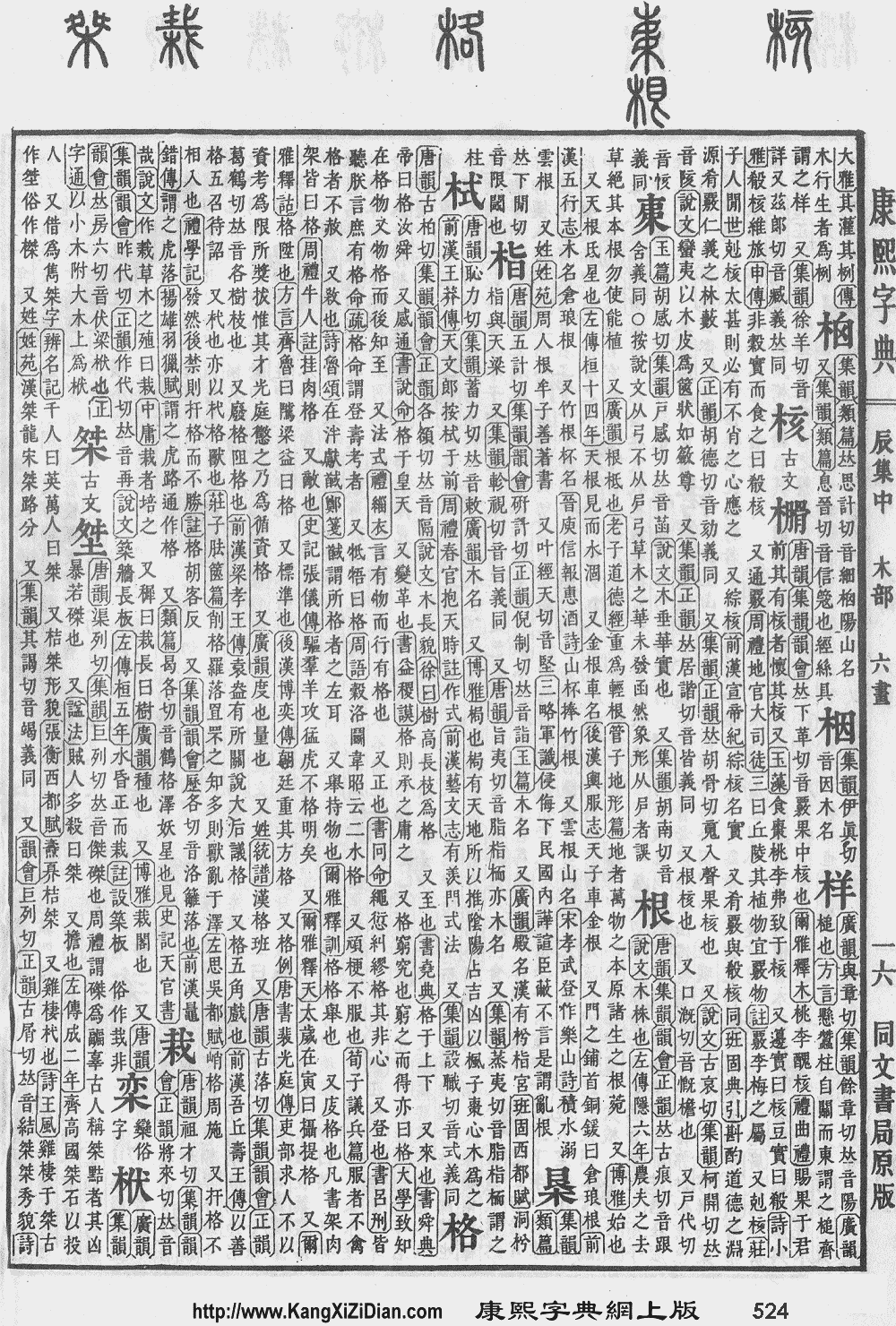
  • KangXi: page 524, character 4
  • Dai Kanwa Jiten: character 14743
  • Dae Jaweon: page 912, character 7
  • Hanyu Da Zidian (first edition): volume 2, page 1206, character 4
  • Unihan data for U+6838

Chinese

Glyph origin

Phono-semantic compound (形聲, OC *ɡuːd, *ɡrɯːɡ) : semantic 木 (“tree”) + phonetic 亥 (OC *ɡɯːʔ) – a kind of tree. Modern meanings are borrowed.

Etymology 1

The definitions related to “to examine” come from the “kernel” sense, i.e. “to go to the core” (Schuessler, 2007).

Generally thought to be of Sino-Tibetan origin. It has been compared to Tibetan རག་ཙེ (rag tse), Karbi rak (Gong, 2002; Schuessler, 2007). However, Hill (2012) rejects the connection to the Tibetan word because most words ending with ཙེ (tse) are loanwords from Chinese words ending with the 子 suffix.

Smith (2011) groups this word with the following terms into a word family meaning “root, germ, generative core”:

  • 荄 (OC *kɯː, “grassroot”) and its derivative 根 (OC *kɯːn, “root”),
  • 骸 (OC *ɡrɯː, “(human) bones”) (also noted by Schuessler, 2007),
  • 孩 (OC *ɡɯː, “child”),
  • 亥 (OC *ɡɯːʔ, “sprouting stage”), i.e. "the moon’s first appearance" > "twelfth earthly branch".

Pronunciation 1

simp. and trad.
核
alternative forms 𣝗


Note:
  • wat6 - “seed; kernel”;
  • hat6 - “nucleus; nuclear”.
Note:
  • fu̍t - “seed; kernel”;
  • ha̍k - only in 核卵.
  • Jin
    • (Taiyuan)+
      • Wiktionary: heh5 / geh5
      • Sinological IPA (old-style): /xəʔ⁵⁴/, /kəʔ⁵⁴/
Note: geh5 - used in 核桃.
Note:
  • hu̍t - vernacular (“seed”);
  • ha̍t - vernacular (“swelling in the lymph glands”);
  • he̍k/hia̍k - literary.
Note: hug8 - “seed”.
  • Wu
    • (Shanghainese)
      • Wiktionary: 5hheq; 5ngeq; 5hhueq
      • Sinological IPA (key): /ɦəʔ¹²/, /ŋəʔ¹²/, /ɦɯə̯ʔ¹²/

  • Dialectal data
Variety Location 核
Mandarin Beijing /xɤ³⁵/
Harbin /xɤ²⁴/
Tianjin /xɤ⁴⁵/ ~算
/xu⁴⁵/ 棗~兒
Jinan /xə⁴²/
Qingdao /xɛ⁴²/ ~心
/xuə⁴²/ ~桃
Zhengzhou /xai⁴²/
Xi'an /xai²¹/ ~算
/xu²⁴/ 桃~儿
Xining /xɛ⁴⁴/
Yinchuan /xa¹³/ ~算
/xɛ¹³/ ~算
/xə¹³/ ~算
/xɯ¹³/ ~桃
Lanzhou /xə⁵³/
/xu⁵³/
Ürümqi /xɤ⁵¹/
/xu⁵¹/
Wuhan /xɤ²¹³/
Chengdu /xe³¹/
Guiyang /xɛ²¹/
Kunming /xə³¹/
Nanjing /xəʔ⁵/
Hefei /xɐʔ⁵/
Jin Taiyuan /xəʔ²/ ~算
/kəʔ⁵⁴/ ~桃
Pingyao /kʌʔ⁵³/ ~桃
/kʰʌʔ¹³/ 審~
Hohhot /xaʔ⁴³/ ~算
/xu³¹/ 棗~子
Wu Shanghai /ɦəʔ¹/
/ŋəʔ¹/
/ɦuəʔ¹/
Suzhou /ŋəʔ³/
Hangzhou /ɦɑʔ²/
Wenzhou /jy²¹³/
Hui Shexian /xɛʔ²¹/ ~對
/xɛ²²/ 山~桃
Tunxi /xə¹¹/
/uən²⁴/
Xiang Changsha /xə²⁴/
Xiangtan /hæ²⁴/
Gan Nanchang /hɛʔ²/
Hakka Meixian /hak̚⁵/
Taoyuan /het̚²²/
Cantonese Guangzhou /hɐt̚²/ ~對
/wɐt̚²/ 桃~
Nanning /wɐt̚²²/
Hong Kong /hɐt̚²/ ~對
/wɐt̚²/ 桃~
Min Xiamen (Min Nan) /hik̚⁵/
Fuzhou (Min Dong) /houʔ⁵/
Jian'ou (Min Bei) /xo⁴⁴/ 名
/xɛ²⁴/ 動
Shantou (Min Nan) /hek̚²/
/huk̚⁵/
Haikou (Min Nan) /hut̚⁵/

Baxter–Sagart system 1.1 (2014)
Character 核
Reading # 1/1
Modern
Beijing
(Pinyin)
hé
Middle
Chinese
‹ hɛk ›
Old
Chinese
/*[ɡ]ˁ<r>ək/
English kernel fruit; scrutinize

Notes for Old Chinese notations in the Baxter–Sagart system:

* Parentheses "()" indicate uncertain presence;
* Square brackets "[]" indicate uncertain identity, e.g. *[t] as coda may in fact be *-t or *-p;
* Angle brackets "<>" indicate infix;
* Hyphen "-" indicates morpheme boundary;

* Period "." indicates syllable boundary.
Zhengzhang system (2003)
Character 核
Reading # 1/2
No. 4334
Phonetic
component
骨
Rime
group
物
Rime
subdivision
2
Corresponding
MC rime
搰
Old
Chinese
/*ɡuːd/
Notes 𣝗字訓讀
Definitions

核

  1. seed; pit; stone; kernel; core; nut (Classifier: 粒 c)
    𦧲返啲核出嚟 [Cantonese, trad. and simp.]
    From:
    loe1 faan1 di1 wat6 ceot1 lai4 [Jyutping]
    spit the seeds/pits back out
  2. (computing) -core
    See also: 核心
    4核  ―  4-hé  ―  quad-core
  3. (physics, chemistry, biology) nucleus
  4. (physics) nuclear
  5. (mathematics, algebra, linear algebra) kernel
Synonyms

Pronunciation 2

simp. and trad.
核
alternative forms 覈


  • Dialectal data
Variety Location 核
Mandarin Beijing /xɤ³⁵/
Harbin /xɤ²⁴/
Tianjin /xɤ⁴⁵/ ~算
/xu⁴⁵/ 棗~兒
Jinan /xə⁴²/
Qingdao /xɛ⁴²/ ~心
/xuə⁴²/ ~桃
Zhengzhou /xai⁴²/
Xi'an /xai²¹/ ~算
/xu²⁴/ 桃~儿
Xining /xɛ⁴⁴/
Yinchuan /xa¹³/ ~算
/xɛ¹³/ ~算
/xə¹³/ ~算
/xɯ¹³/ ~桃
Lanzhou /xə⁵³/
/xu⁵³/
Ürümqi /xɤ⁵¹/
/xu⁵¹/
Wuhan /xɤ²¹³/
Chengdu /xe³¹/
Guiyang /xɛ²¹/
Kunming /xə³¹/
Nanjing /xəʔ⁵/
Hefei /xɐʔ⁵/
Jin Taiyuan /xəʔ²/ ~算
/kəʔ⁵⁴/ ~桃
Pingyao /kʌʔ⁵³/ ~桃
/kʰʌʔ¹³/ 審~
Hohhot /xaʔ⁴³/ ~算
/xu³¹/ 棗~子
Wu Shanghai /ɦəʔ¹/
/ŋəʔ¹/
/ɦuəʔ¹/
Suzhou /ŋəʔ³/
Hangzhou /ɦɑʔ²/
Wenzhou /jy²¹³/
Hui Shexian /xɛʔ²¹/ ~對
/xɛ²²/ 山~桃
Tunxi /xə¹¹/
/uən²⁴/
Xiang Changsha /xə²⁴/
Xiangtan /hæ²⁴/
Gan Nanchang /hɛʔ²/
Hakka Meixian /hak̚⁵/
Taoyuan /het̚²²/
Cantonese Guangzhou /hɐt̚²/ ~對
/wɐt̚²/ 桃~
Nanning /wɐt̚²²/
Hong Kong /hɐt̚²/ ~對
/wɐt̚²/ 桃~
Min Xiamen (Min Nan) /hik̚⁵/
Fuzhou (Min Dong) /houʔ⁵/
Jian'ou (Min Bei) /xo⁴⁴/ 名
/xɛ²⁴/ 動
Shantou (Min Nan) /hek̚²/
/huk̚⁵/
Haikou (Min Nan) /hut̚⁵/

Rime
Character 核
Reading # 1/1
Initial (聲) 匣 (33)
Final (韻) 耕 (119)
Tone (調) Checked (Ø)
Openness (開合) Open
Division (等) II
Fanqie 下革切
Reconstructions
Zhengzhang
Shangfang
/ɦˠɛk̚/
Pan
Wuyun
/ɦᵚæk̚/
Shao
Rongfen
/ɣɐk̚/
Edwin
Pulleyblank
/ɦəɨjk̚/
Li
Rong
/ɣɛk̚/
Wang
Li
/ɣæk̚/
Bernard
Karlgren
/ɣæk̚/
Expected
Mandarin
Reflex
hé
Expected
Cantonese
Reflex
hak6
Baxter–Sagart system 1.1 (2014)
Character 核
Reading # 1/1
Modern
Beijing
(Pinyin)
hé
Middle
Chinese
‹ hɛk ›
Old
Chinese
/*[ɡ]ˁ<r>ək/
English kernel fruit; scrutinize

Notes for Old Chinese notations in the Baxter–Sagart system:

* Parentheses "()" indicate uncertain presence;
* Square brackets "[]" indicate uncertain identity, e.g. *[t] as coda may in fact be *-t or *-p;
* Angle brackets "<>" indicate infix;
* Hyphen "-" indicates morpheme boundary;

* Period "." indicates syllable boundary.
Zhengzhang system (2003)
Character 核
Reading # 2/2
No. 4843
Phonetic
component
亥
Rime
group
職
Rime
subdivision
0
Corresponding
MC rime
覈
Old
Chinese
/*ɡrɯːɡ/
Definitions

核

  1. to examine; to check; to verify
  2. rigorous; detailed; reliable
Usage notes

Compounds

Etymology 2

simp. and trad.
核

Pronunciation


Definitions

核

  1. a kind of tree
  2. Alternative form of 荄 (gāi).

Etymology 3

simp. and trad.
核

Pronunciation


Definitions

核

  1. eaves of a house

References

Japanese

Kanji

核

(common “Jōyō” kanji)

Readings

Compounds

Pronunciation

Kanji in this term
核
かく
Grade: S
on’yomi

Noun

核(かく) • (kaku) 

  1. atomic nucleus
  2. (algebra) kernel
  3. (astronomy) core, nucleus
  4. cell nucleus

Synonyms

References

  1. 2006, 大辞林 (Daijirin), Third Edition (in Japanese), Tōkyō: Sanseidō, →ISBN

Korean

Hanja

核 • (haek, hol) (hangeul 핵, 홀, revised haek, hol, McCune–Reischauer haek, hol, Yale hayk, hol)

  1. This term needs a translation to English. Please help out and add a translation, then remove the text {{rfdef}}.

Vietnamese

Han character

核: Hán Nôm readings: hạch

  1. This term needs a translation to English. Please help out and add a translation, then remove the text {{rfdef}}.

References

This article is issued from Wiktionary. The text is licensed under Creative Commons - Attribution - Sharealike. Additional terms may apply for the media files.