丈
| ||||||||
Translingual
| Stroke order | |||
|---|---|---|---|
 | |||
Han character
丈 (Kangxi radical 1, 一+2, 3 strokes, cangjie input 十大 (JK), four-corner 50000, composition ⿻𠂇㇏)
Further reading
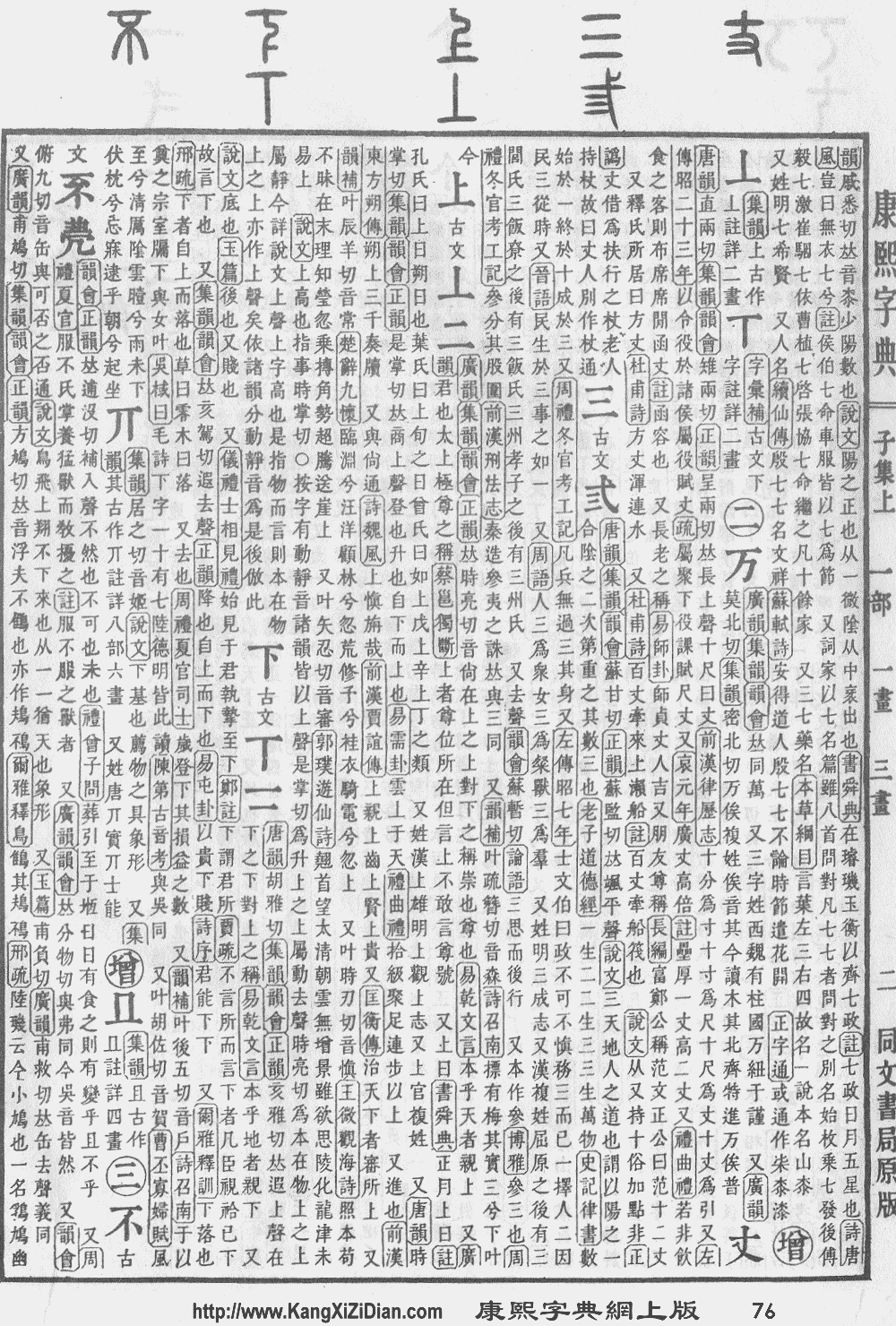
- KangXi: page 76, character 4
- Dai Kanwa Jiten: character 11
- Dae Jaweon: page 137, character 8
- Hanyu Da Zidian (first edition): volume 1, page 9, character 2
- Unihan data for U+4E08
Chinese
| simp. and trad. |
丈 | |
|---|---|---|
| alternative forms | 𠀋 | |
Glyph origin
| Historical forms of the character 丈 | |||||
|---|---|---|---|---|---|
| Western Zhou | Shuowen Jiezi (compiled in Han) | Liushutong (compiled in Ming) | |||
| Bronze inscriptions | Small seal script | Transcribed ancient scripts | |||
 |
 |
 | |||
| |||||
|
References: Mostly from Richard Sears' Chinese Etymology site (authorisation),
| |||||


Characters in the same phonetic series (丈) (Zhengzhang, 2003)
Ideogrammic compound (會意) : 十 (“ten”) + 又 (“hand”) – ten chi (尺) is one zhang (丈).
Etymology
- "gentleman, older man, husband"
- From Proto-Sino-Tibetan *(z)rjaŋ (“uncle, superior”) (Schuessler (2007), STEDT; compare Proto-Sino-Tibetan *s-tjaŋ (“upper part, rise, raise, top, summit”)). Cognate with 尚 (OC *djaŋ, *djaŋs) "upwards", Tibetan ཨ་ཞང (a zhang, “maternal uncle”), Burmese အရှင် (a.hrang, “master, lord”), etc.
- "unit of measurement"
- From Proto-Sino-Tibetan, compare Mizo ṭâng " kai (“to measure (v.), a measure (n.) from the tip of the middle finger from one side to a spot between the breast bone and the other side's armpit”) (Schuessler, 2007)
Pronunciation
Definitions
丈
- A unit of measurement.
- The zhang, a traditional Chinese unit of length equal to 10 chi (尺)
- The mainland zhang, a unit of length standardized in 1984 as 3 1/3 meters.
- Synonym: 市丈 (shìzhàng)
- The Taiwanese zhang, a unit of length standardized as 3 1/33 meters, identical to the Japanese jō.
- The Hong Kong jeuhng, standardized as 3.71475 meters.
- to survey (land); to measure
- gentleman; man; husband
- 丈夫 ― zhàngfū ― husband
Compounds
Japanese
| Shinjitai | 丈 |  |
| Kyūjitai [1][2][3] |
丈󠄁 丈+ 󠄁?(Adobe-Japan1) |
 |
| 丈󠄃 丈+ 󠄃?(Moji_Joho) | ||
| The displayed kanji may be different from the image due to your environment. See here for details. | ||
Readings
Alternative forms
Compounds
Etymology 1
From Middle Chinese 丈 (MC ɖɨɐŋX).
Noun
- jō, a traditional Japanese unit of length based on 10 shaku, standardized as equal to 31⁄33 meters.
Etymology 2
| Kanji in this term |
|---|
| 丈 |
| たけ Grade: S |
| kun’yomi |
| Alternative spelling |
|---|
| 長 |
⟨take2⟩ → /takje/ → /take/
Cognate with 高 (taka, “height”), 高い (takai, “high”), and 長ける (takeru, “to be high”).
Noun
丈 • (take)
- height
- 970-999, Utsubo Monogatari (Toshikage)
- いひ教ふる事もなくておほしたつるに、年にもあはず、丈たかく心かしこし。
- (please add an English translation of this usage example)
- 970-999, Utsubo Monogatari (Toshikage)
Etymology 3
| Kanji in this term |
|---|
| 丈 |
| だけ Grade: S |
| kun’yomi |
| For pronunciation and definitions of 丈 – see the following entry. | ||
| ||
| (This term, 丈, is an alternative spelling of the above term.) |
Usage notes
- This term is often spelled in hiragana. The kanji spelling is rarely used.
Compounds
- はちじょう (hachijō)
References
- Kōno, Tama (c. 970–999) Nihon Koten Bungaku Taikei 10: Utsubo Monogatari 1 (in Japanese), Tōkyō: Iwanami Shoten, published 1959, →ISBN.
- 白川静 (Shirakawa Shizuka) (2014), “丈”, in 字通 普及版 (Jitsū fukyūban, “Jitsū trade edition”) (in Japanese), Tōkyō: Heibonsha, →ISBN
- 1914, 漢和大辭書 (Kanwa Dai Jisho, “The Great Kanji-Japanese Dictionary”) (in Japanese), page 23 (paper), page 61 (digital), Tōkyō: 興文社 (Kōbunsha)
- 1927, 新漢和辭典 (Shin Kanwa Jiten, “The New Kanji-Japanese Dictionary”) (in Japanese), page 20 (paper), page 22 (digital), Ōsaka: 松雲堂 (Shōundō)
- 2006, 大辞林 (Daijirin), Third Edition (in Japanese), Tōkyō: Sanseidō, →ISBN
- 2011, 新明解国語辞典 (Shin Meikai Kokugo Jiten), Seventh Edition (in Japanese), Tōkyō: Sanseidō, →ISBN
Korean
References
Vietnamese
Han character
丈: Hán Việt readings: trượng
丈: Nôm readings: trượng
- This term needs a translation to English. Please help out and add a translation, then remove the text
{{rfdef}}.
References
This article is issued from Wiktionary. The text is licensed under Creative Commons - Attribution - Sharealike. Additional terms may apply for the media files.