大
| ||||||||
| ||||||||
Translingual
| Stroke order | |||
|---|---|---|---|
 | |||
| Stroke order | |||
|---|---|---|---|
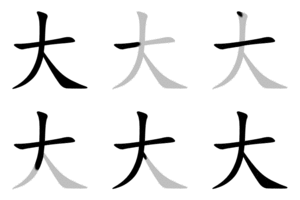 | |||
Han character
大 (Kangxi radical 37, 大+0, 3 strokes, cangjie input 大 (K), four-corner 40030 or 40800, composition ⿻一人 or ⿸𠂇㇏)
- Kangxi radical #37, ⼤.
Derived characters
- Appendix:Chinese radical/大
- 达, 庆 (Simplified from 達, 慶)
- 㐲, 𫥰, 𠯈, 𡉑, 𡚻, 𢁖, 𫸥, 㣕, 忕, 𢪂, 汏, 𫔺, 𫻨, 𭥏, 杕, 𣧂, 𬌚, 𪼳, 𭾚, 𮀋, 𥝛, 𮕨, 𬚓, 𦨐, 𮗹, 軑(轪), 釱, 𭖯, 𮌙, 馱(驮), 䲦, 𬵃(𬶃), 𪐝, 𠏥, 𠧭, 䲪
- 犬, 矢, 㕦, 尖, 𢎴, 芖, 𠛇, 戻, 旲, 𬋻, 㺯, 𡭟, 𥝚, 𥤮, 𦉼, 𬺛, 𡧠, 类, 美, 耎, 𦤀, 𬟧, 䙲, 𠧵, 𩵋, 𡟗, 𦳣, 䯨, 𥈀, 𮮰, 𪉗, 𥮯, 𣊖, 樊, 𫂎, 𩃙, 𤳦, 𤾪, 𪚔, 𧹈
- 冭, 厺, 圶, 㞭, 𪩣, 𪵪, 𤆍, 𬉵, 𤯗, 𭀢, 㭐, 羍, 𦏷, 耷, 𧈹, 牵, 𧥢, 𩇩, 𣫵, 𥆗, 𩡱, 𩾪, 𪐡, 𬹞, 𡗜, 爽, 㻎, 𥇛, 𠾖, 𨳓, 因, 輋(𪨶)
References
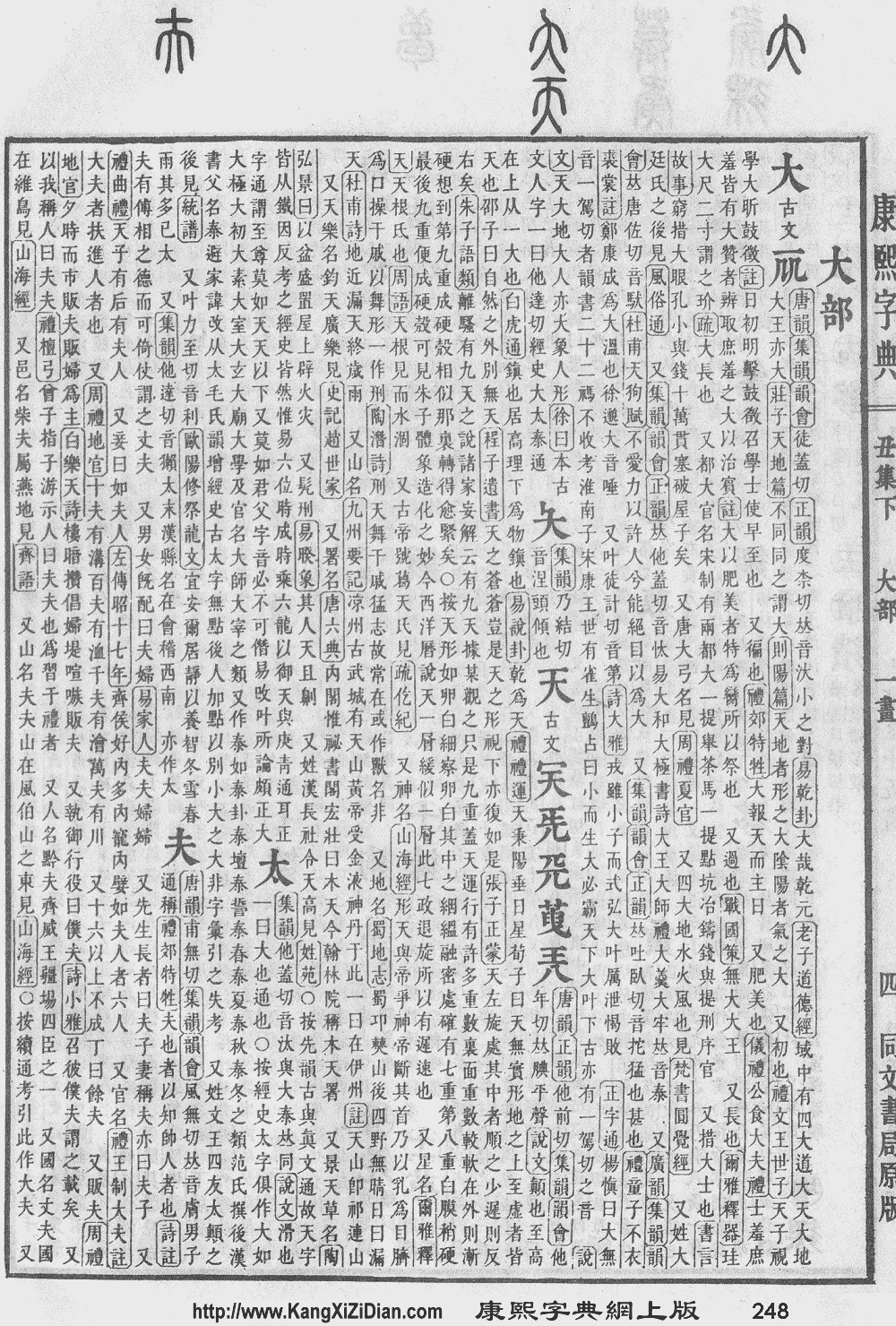
- KangXi: page 248, character 1
- Dai Kanwa Jiten: character 5831
- Dae Jaweon: page 492, character 25
- Hanyu Da Zidian (first edition): volume 1, page 520, character 1
- Unihan data for U+5927
Chinese
| simp. and trad. |
大 | |
|---|---|---|
| alternative forms | 亣 𠘲 | |
Glyph origin
| Historical forms of the character 大 | |||||||||||
|---|---|---|---|---|---|---|---|---|---|---|---|
| Shang | Western Zhou | Spring and Autumn | Warring States | Shuowen Jiezi (compiled in Han) | Liushutong (compiled in Ming) | Libian (compiled in Qing) | |||||
| Bronze inscriptions | Oracle bone script | Bronze inscriptions | Oracle bone script | Bronze inscriptions | Bronze inscriptions | Chu slip and silk script | Qin slip script | Shizhoupian script | Small seal script | Transcribed ancient scripts | Clerical script |
 |
 |
 |
 |
 |
 |
 |
 |
 |
 |
 |
 |
Ideogram (指事) : a person 人 with arms stretched out as far as possible, implying the meaning of big/great/large.
Compare with 尢, which is a man with bent legs.
Compare also 文, which is a man with arms outstretched and a crest or tattoo on his chest, and to 夭, which is a man with arms outstretched and leaning to side (running).
Etymology
Cognate with 太 (OC *tʰaːds, “too, excessively”), 泰 (OC *tʰaːds, “big”). Wang (1982) also lists 誕 (OC *l'aːnʔ, “big, magniloquent, ridiculous”) as a cognate, which Schuessler (2007) suggests is cognate with 延 (OC *lan, *lans, “to extend”) instead. There are no unambiguous Tibeto-Burman cognates. Proto-Tibeto-Burman *taj (“big”), from which came Written Tibetan མཐེ་བོ (mthe bo, “thumb”), Anong tʰɛ (“big, large, great”), Mikir tʰè, ketʰè (“big, large, great”), Burmese တယ် (tai, “very”), is often compared with. There is no final –s in the Tibeto-Burman words, but a –y, which, according to James Matisoff, “indicates emergent quality in stative verbs”. Also compare Chinese 多 (OC *ʔl'aːl, “many, much”), 都 (OC *taː, “all”).
Pronunciation 1
Definitions
大
- of great size; big; large; huge
- big; great
- great of its kind
- in an extreme manner; greatly
- 大哭 ― dà kū ― to cry violently
- 大吃一驚/大吃一惊 ― dàchīyījīng ― to be greatly shocked
- 大不相同 ― dà bù xiàngtóng ― to be greatly different
- 你可不知道,他昨兒過來大折騰了一場。好家伙,差點兒沒把這兒拆嘍! [dialectal Mandarin, trad.]
- Nǐ kě bù zhīdào, tā zuór guòlai dà zhēteng le yī chǎng. Hǎojiāhuo, chàdiǎnr méi bǎ zhèr chāi lou! [Pinyin]
- You don't even know, yesterday he came over and wildly stirred up trouble. Oh my God, he almost tore this place apart!
你可不知道,他昨儿过来大折腾了一场。好家伙,差点儿没把这儿拆喽! [dialectal Mandarin, simp.]
- main; major
- Antonym: 小 (xiǎo)
- well-known; successful (only applied to some occupations)
- mature; grown up
- (Cantonese) to grow up
- (Cantonese) to be older than
- (dialectal) father
- (dialectal) father's elder or younger brother
- (Cantonese, slang) to intimidate; to threaten
- (Cantonese) only so big
- (Cantonese, euphemistic) number two
- Short for 大學/大学 (dàxué, “university”). Used only in the abbreviation of the name.
- 北大 ― Běidà ― Peking University
- 45th tetragram of the Taixuanjing; "greatness" (𝌲)
- a surname
Synonyms
Compounds
|
|
|
Pronunciation 2
Definitions
大
Pronunciation 3
Pronunciation 4
| For pronunciation and definitions of 大 – see 太 (“too; so; etc.”). (This character, 大, is an ancient form of 太.) |
| For pronunciation and definitions of 大 – see 泰 (“big; large; great; extensive; etc.”). (This character, 大, is an ancient form of 泰.) |
References
- “大”, in 漢語多功能字庫 (Multi-function Chinese Character Database), 香港中文大學 (the Chinese University of Hong Kong), 2014–
- Dictionary of Chinese Character Variants (教育部異體字字典), A00848
Japanese
Readings
- Go-on: だ (da); だい (dai, Jōyō)
- Kan-on: た (ta); たい (tai, Jōyō)
- Kun: おお (ō, 大, Jōyō)←おほ (ofo, 大, historical); おおきい (ōkii, 大きい, Jōyō)←おほきい (ofokii, 大きい, historical); おおいに (ōini, 大いに, Jōyō)←おほいに (ofoini, 大いに, historical)
- Nanori: うふ (ufu); お (o); た (ta); たかし (takashi); とも (tomo); はじめ (hajime); ひろ (hiro); ひろし (hiroshi); ふとし (futoshi); まさ (masa); まさる (masaru); もと (moto); ゆたか (yutaka); わ (wa)
Prefix
大 • (dai-)
Suffix
大 • (-dai)
- Abbreviation of 大学 (daigaku, “university”).
- 東大 ― Tōdai ― Tokyo Univ.
- 阪大 ― Handai ― Osaka Univ.
- 北大 ― Hokudai ― Hokkaido Univ.
- 北陸大 ― Hokurikudai ― Hokuriku Univ.
Usage notes
This is often the second half of the two-character shorthand name of universities, for example 東大 (Tōdai, “Tokyo University”). Reading of first character often changes from kun'yomi to on'yomi.
Derived terms
- 大陰唇 (daiinshin, “labia majora”)
- 大家族 (daikazoku, “extended family”)
- 大学 (daigaku, “university”)
- 大寒 (daikan, “midwinter”)
- 大規模 (daikibo, “large-scale”)
- 大工 (daiku, “carpenter”)
- 大黒天 (daikokuten, “god of wealth”)
- 大根 (daikon, “daikon”)
- 大罪 (daizai, “serious crime”)
- 大事 (daiji, “important; serious”)
- 大小 (daishō, “various sizes; large and small; a pair of swords worn together”)
- 大丈夫 (daijōbu, “all right; okay; safe”)
- 大臣 (daijin, “cabinet minister”)
- 大前庭腺 (daizenteisen, “Bartholin's gland”)
- 大胆 (daitan, “bold; daring”)
- 大動脈 (daidōmyaku, “aorta”)
- 大同小異 (daidōshōi, “with only minor differences”)
- 大統領 (daitōryō, “president”)
- 大脳 (dainō, “brain”)
- 大名 (daimyō, “feudal lord”)
- 大理石 (dairiseki, “marble”)
- 大主教 (daishukyō, “archbishop”)
- 大天使 (daitenshi, “archangel”)
- 大安 (taian, “lucky day”)
- 大意 (taii, “schema”)
- 大河小説 (taiga shōsetsu, “saga novel”)
- 大火 (taika, “large fire”)
- 大会 (taikai, “convention; rally”)
- 大海 (taikai, “ocean”)
- 大観 (taikan, “broad overview”)
- 大気 (taiki, “atmosphere”)
- 大儀 (taigi, “state ceremony”)
- 大義 (taigi, “justice”)
- 大逆 (taigyaku, “high treason”)
- 大挙 (taikyo, “in force”)
- 大虚 (taikyo, “Taikyo”)
- 大局 (taikyoku, “general situation”)
- 大群 (taigun, “large herd; large flock; large crowd”)
- 大軍 (taigun, “large army”)
- 大系 (taikei, “compendium”)
- 大言壮語 (taigensōgo, “boasting; bragging”)
- 大綱 (taikō, “fundamental principals; general outline”)
- 大佐 (taisa, “colonel; navy captain”)
- 大差 (taisa, “great difference”)
- 大使 (taishi, “ambassador”)
- 大志 (taishi, “ambition”)
- 大樹 (taiju, “huge tree”)
- 大衆 (taishū, “general public”)
- 大暑 (taisho, “midsummer's day”)
- 大将 (taishō, “general; admiral”)
- 大食 (taishoku, “gluttony”)
- 大西洋 (taiseiyō, “Atlantic Ocean”)
- 大切 (taisetsu, “important; valuable”)
- 大戦 (taisen, “great battle; great war”)
- 大洋 (taiyō, “ocean”)
- 大陸 (tairiku, “continent”)
- 大量 (tairyō, “a large amount”)
Etymology 2
| Kanji in this term |
|---|
| 大 |
| おお Grade: 1 |
| kun’yomi |
/opo/ → /ofo/ → /owo/ → /oː/
From Old Japanese 大 (opo), from Proto-Japonic *əpə.
Derived terms
- 大きい (ōkī, “big, large, broad, immense”)
- 大きな (ōkina, “big, large”)
- 多く (ōku, “mostly, a lot, majority”)
- 大字 (ōaza, “larger section of a village”)
- 大穴 (ōana, “large hole, deficit”)
- 大-海原 (ō-unabara)
- 大海 (ōumi, “ocean; fabric pattern”)
- 大火事 (ō-kaji, “big fire”)
- 大河 (ōkawa, “river”)
- 大君 (ōkimi, “emperor; king”)
- 大口 (ōguchi, “large amount; big mouth; big talk”)
- 大喧嘩 (ō-genka, “big fight”)
- 大阪 (Ōsaka)
- 大騒ぎ (ō-sawagi)
- 大潮 (ōshio, “spring or flood tide”)
- 大地震 (ō-jishin, “huge earthquake”)
- 大関 (ōzeki, “second highest sumo rank”)
- 大掃除 (ō-sōji, “through cleanups”)
- 大騒動 (ō-sōdō, “huge mess”)
- 大道具 (ō-dōgu, “stage settings”)
- 大幅 (ōhaba, “full-width; drastic”)
- 大判 (ōban, “big size”)
- 大様 (ōyō, “large-hearted; generous”)
- 大業 (ōwaza, “great feat”)
Korean
Etymology
From Middle Chinese 大 (MC dɑiH).
| Historical Readings | ||
|---|---|---|
| Dongguk Jeongun Reading | ||
| Dongguk Jeongun, 1448 | 땡〮 (Yale: ttáy) | |
| Middle Korean | ||
| Text | Eumhun | |
| Gloss (hun) | Reading | |
| Sinjeung Yuhap, 1576 | 크다 (Yale: khuta) | 대 (Yale: tay) |
Pronunciation
- (in 大口, 大邱, 大斗, 大文, and 大田):
- (SK Standard/Seoul) IPA(key): [tɛ] ~ [te̞]
- Phonetic hangul: [대/데]
- (big; main; etc.):
- (SK Standard/Seoul) IPA(key): [tɛ(ː)] ~ [te̞(ː)]
- Phonetic hangul: [대(ː)/데(ː)]
- Though still prescribed in Standard Korean, most speakers in both Koreas no longer distinguish vowel length.
Compounds
- 대량 (大量, daeryang, “large quantity”)
- 대가 (大家, daega, “expert”)
- 대인 (大人, daein, “adult”)
- 대학 (大學, daehak, “college; university”)
- 대사 (大使, daesa, “ambassador”)
- 대음순 (大陰脣, daeeumsun, “labia majora”)
- 대통령 (大統領, daetongnyeong, “president”)
- 방대 (厖大, bangdae, “vastness”)
- 적소성대 (積小成大, jeoksoseongdae)
- 전권대사 (全權大使, jeon'gwondaesa)
Okinawan
Compounds
Pronunciation
- IPA(key): /deː/
Etymology 2
From Proto-Ryukyuan *opo, from Proto-Japonic *əpə.
Pronunciation
- IPA(key): /ʔuɸu/
Vietnamese
Han character
大: Hán Việt readings: đại (
大: Nôm readings: đại[1][2][3][4], đài[1][2], dãy[3][5], dảy[3], đẫy[3]
References
- Nguyễn (2014).
- Nguyễn et al. (2009).
- Trần (2004).
- Taberd & Pigneau de Béhaine (1838).
- Hồ (1976).